
Bring Back the Yukata: Japan Needs Better Summer Workwear
Archived Content: This article was published over 30 days ago. Travel rules and prices may have changed.Check official sources.
Cool biz is no longer good enough in the summer heat. We need to bring back the humble yukata for our own collective comfort.
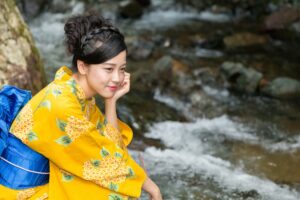
I hate summer in Japan with a passion that burns as hot as the season itself, or at least I would if the heat and humidity didn’t sap away all my energy. I realize, having grown up with milder summers, that I am naturally less adapted to Japanese summers than those who grew up here.
Shortly after moving to Japan and realizing I was completely unprepared for the sweltering misery, I felt it necessary to buy an entire summer wardrobe of light linen and cotton because nothing else was bearable in this hellish heat.
Yet when I have to be outside in the summer and see regular businesswear, sometimes even suit jackets and stockings, I can’t help but wonder why so many Japanese companies require their employees to be so uncomfortable in the worsening heat.
And the conclusion I consistently reach is that we need to radically change how we dress in the summer, particularly at work. I say this with complete sincerity: we need to bring back the yukata.
What is a Yukata?
[

](http://cdn.gaijinpot.com/app/uploads/sites/4/2026/05/iStock-Satoshi-K-yukata-in-japan.jpeg)Why are we only wearing these for fun?
The breezy yukata is the summer version of a kimono. Makers usually use lightweight cotton or linen. The word yukata literally means “bathing clothes,” because people first wore them as bathrobes. Over time, yukata became casual summer wear.
Today, people do not wear yukata every day. However, they remain popular at summer festivals, fireworks displays and other warm-weather events. Thus, the yukata has essentially been regulated to special occasions.
But Yukata are not the only traditional summer clothes. Many people also wear jinbei, a matching set of knee-length shorts and a loose tunic. People usually wear jinbei at home, around town or while running errands in summer.
But the yukata is the most formal traditional summer clothing, and is therefore the most practical candidate to replace Cool Biz.
Summer in Japan
[

](http://cdn.gaijinpot.com/app/uploads/sites/4/2026/05/iStock-Yuto-photographer-summer-in-japan-salaryman-sweating.jpeg)It’s brutal
Japan’s climate ranges from subtropical in southern Okinawa Prefecture to nearly subarctic in northern Hokkaido. But throughout most of Japan, temperatures and humidity run high in the summer, and stepping outside often feels like stepping into a sauna.
Mean daily maximum temperatures reach above 30 degrees Celsius (86 Fahrenheit) in August, the hottest month of the year, and the humidity makes it feel several degrees hotter.
Such weather has been typical of Japanese summers since the 1800s, when weather records began, and the heat is only getting worse due to climate change.
The summer of 2025 was the hottest summer on record, with more than 100,000 people hospitalized for heatstroke, up 3% from the year before.
Cool Biz is Corny
[

](http://cdn.gaijinpot.com/app/uploads/sites/4/2026/05/iStock-maruco-summer-woman-japan.jpeg)Shoulders? Scandalous!
Despite this steady descent into the ninth circle of hell, everything is still business as usual, or “Cool Biz” as usual. Cool Biz is the dress code that many Japanese companies impose upon their employees.
Japan’s Ministry of the Environment initially introduced it to its staff to both save energy and adapt to summer heat. Its promotion eventually caught on at workplaces across the country.
The Cool Biz dress code is basically just corporate businesswear minus the jacket and tie (if you wear one), and with shorter sleeves. Men are still required to wear long trousers, and many companies even require women to wear stockings when wearing skirts.
Despite the geta’s long history as Japan’s footwear, sandals are also not allowed. But Japan has a garment in its past that, if brought back into common use, would make office life in the summer much more bearable for everyone.
If Japan Were Really Cool, It’d Bring Back Yukata
[

](http://cdn.gaijinpot.com/app/uploads/sites/4/2026/05/iStock-recep-bg-foreigner-wearing-yukata-in-Japan.jpeg)This guy gets it.
Western businesswear doesn’t at all resemble the practical summer clothing of people who have adapted their wardrobe to hot weather. For millennia, people have relied on loose garments made of light cotton and linen to keep cool.
In contrast, modern businesswear often uses synthetic fabrics. Even cotton businesswear can feel thick and stiff. That is part of the look. Suits traditionally used wool, which works well in cold weather. But copying that style in summer makes little sense.
Japan often talks about “work-life balance” to combat karoshi, or death from overwork. Yet many women still have to wear nylons in temperatures above 30°C. That says a lot about how some workplaces treat employee comfort.
Still, energy saving can drive real change. Cool Biz proves that. It gave companies a practical reason to loosen dress codes during summer.
[
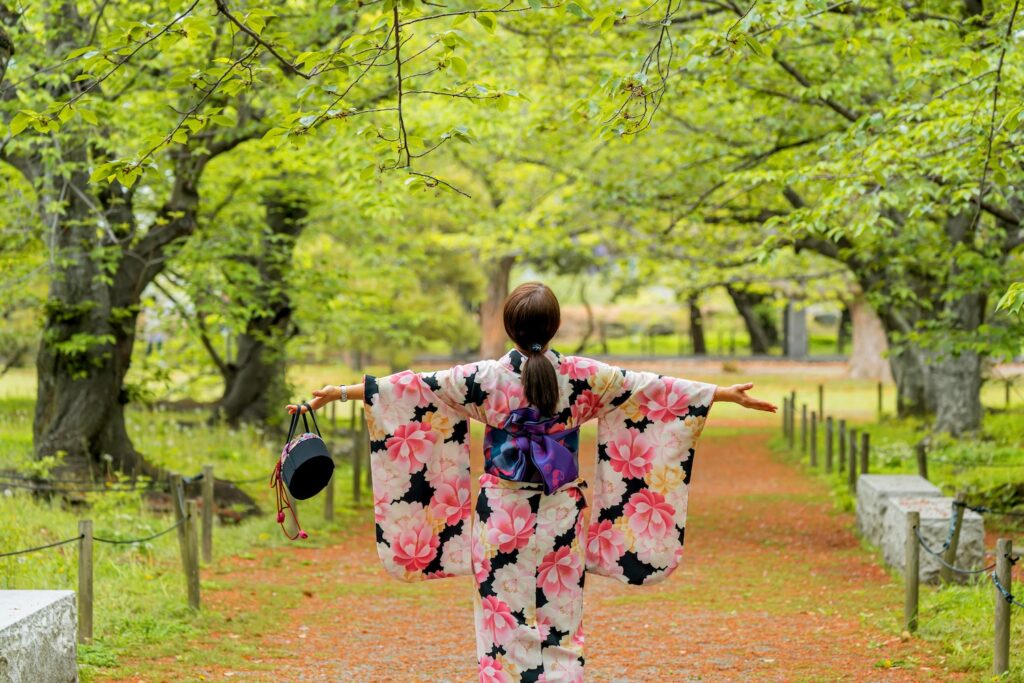
](http://cdn.gaijinpot.com/app/uploads/sites/4/2026/05/iStock-PuiStocker65-yukata-in-japan.jpeg)Feeling free.
If the Ministry of Environment is so intent on saving energy, then workplaces that enforce a dress code should have employees wear yukata instead. If employees wear such a loose, breathable garment, companies can keep the office temperature even higher, thereby improving employee well-being!
The usual defense for wearing Western business attire in summer is “tradition.” But in Japan, that argument is more complicated than it sounds. The modern suit is not some timeless workplace uniform. Western clothing, including businesswear, spread during the Meiji era as part of a government-backed push to modernize and Westernize the country. In other words, Japan already had its own summer clothing traditions long before the suit became the default.
Over time, garments like yukata, developed for Japan’s climate and everyday life, were pushed into the realm of festivals, ceremonies and special occasions.
Cool Biz offers some relief, but not enough. If workplaces are serious about comfort, energy savings and Japanese tradition, why not bring yukata back for formal situations in summer?
Beyond the Yukata
[

](http://cdn.gaijinpot.com/app/uploads/sites/4/2025/07/iStock-Hanafujikan-summer-heat-most-dangerous-things-in-Japan.jpeg)Holy crap.
I’m not actually advocating that everyone in Japan wear a yukata to work in the summer. I do think that continuing to wear Western businesswear despite rising temperatures is not only ridiculous but also, frankly, dystopian.
It would probably benefit many if the yukata replaced Western businesswear as summer workwear, and its status as a traditional warm-weather dress makes it a useful starting point. But many people find even the yukata stiff and uncomfortable, so it isn’t for everyone. It is only one of many options.
I’m lucky that my workplace isn’t strict about what I wear, so in summer I mostly wear linen wrap dresses, which are somewhat similar to yukata. Other cultures that have adapted Western-style clothing to the heat can also serve as useful inspiration.
The Aloha shirt is a good example that is also accepted at many Japanese workplaces. There are so many other options too—tunics, long but loose trousers, shift dresses, long flowy skirts, your national dress, and more.
The objective is to dress more practically for the heat, even at work, by wearing light, breezy clothing, and to push back against the reign of dreary, uncomfortable, plastic businesswear.
Ideally, if your employer really cares about your well-being, you should be able to wear whatever is most comfortable for you in the summer, even at work. But if your workplace has a strict corporate dress code, it might be worth pointing out the harm this code imposes in the summer, and telling them they should let you wear a yukata instead.
How to Rent (or Buy) a Yukata
[

](http://cdn.gaijinpot.com/app/uploads/sites/4/2026/05/iStock-recep-bg-yukata-in-summer-foreigner.jpeg)Did I mention they’re stylish?
Some ryokan, especially those in onsen towns, include a yukata in your room. If you’re planning to rent a yukata on a major holiday or for a popular festival, be ready to make an advance reservation.
If you are buying online, search in Japanese. The most useful term is 浴衣 セット (yukata set), which usually means a beginner-friendly bundle. Many sets include the yukata, *obi *(sash) and geta sandals, while fuller sets may also include a bag, waist cords or a dressing guide.
Some men’s starter sets include a ワンタッチ帯 (one-touch obi), geta, a fan and a drawstring bag.
For women, try レディース 浴衣 セット. For men, search メンズ 浴衣 セット. If you are nervous about tying the obi, add 作り帯 (pre-tied obi) or ワンタッチ帯 to your search. These are much easier for beginners and reduce the chance of the outfit coming undone halfway through a festival.
Some women’s sets also include waist cords and a dressing booklet, which is useful if you are wearing one for the first time.
Before buying or renting, check the size guide carefully. Some listings use height ranges, while others use “free size,” which often fits a limited range.
Useful search terms:
Japanese Search TermRomajiEnglish Meaning浴衣セットyukata settoYukata set浴衣初心者 セットyukata shoshinsha settoBeginner yukata setメンズ浴衣 セットmenzu yukata settoMen’s yukata setレディース 浴衣 セットrediisu yukata settoWomen’s yukata set浴衣作り帯 セットyukata tsukuri obi settoYukata set with pre-tied obi浴衣ワンタッチ帯yukata wantacchi obiYukata with one-touch obi浴衣大きいサイズyukata ookii saizuLarge-size yukata浴衣小さいサイズyukata chiisai saizuSmall-size yukata綿100浴衣men hyaku yukata100% cotton yukata
Have you worn a yukata? Do you prefer it over Western businesswear? What do you like to wear in the summer? Let us know in the comments!
Note: This article content is being automatically formatted. For the original source formatting, visit the link below.
Original source:GaijinPot Blog ↗
More Japan News

Tokyo Area Events for June 2026
Experience June in Tokyo with hydrangea blooms, shrine festivals, firefly nights and food markets all around the city.

Osaka Area Events for June 2026
Check out our monthly event roundup for Osaka for June 2026.

Japan CBN Ban: What Residents and Tourists Need to Know
Japan banned CBN effective June 1, 2026. Here’s what tourists and foreign residents should know before traveling with cannabinoid products in Japan.