
Japan has new rules for bicycle riders, and these 14 things could get you a fine or a court date
Archived Content: This article was published over 30 days ago. Travel rules and prices may have changed.Check official sources.
There’s a major gray area in Japan’s new blue ticket cycling violation system. Bicycles are often a great way to thoroughly explore Japan’s local communities, providing more range than you’d get walki
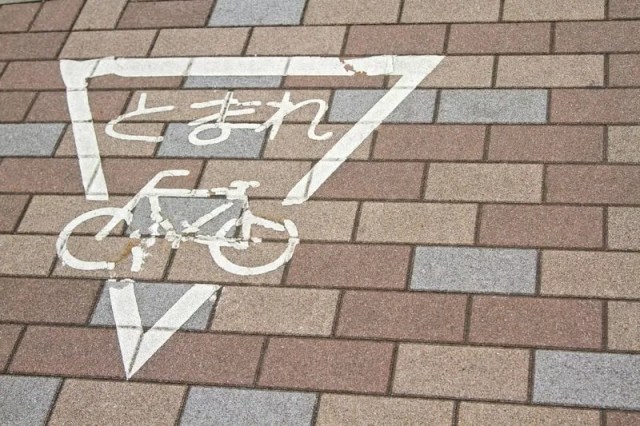
There’s a major gray area in Japan’s new blue ticket cycling violation system.
Bicycles are often a great way to thoroughly explore Japan’s local communities, providing more range than you’d get walking, more flexibility than taking the train, and less complexity to deal with than renting a car. However, bike-riding has gotten more complicated in Japan as of April 1, with the introduction of the aoi kippu, or blue ticket, system.
Under this new system, police officers in Japan can issue fines for violations of bike safety laws, similar to the authority they have to ticket automobile drivers for traffic infractions. That means that many kinds of cycling behavior that up until now carried no greater threat than a stern verbal warning could now come with a fine to be paid, so let’s take a look at what they are and how much of a penalty they carry.
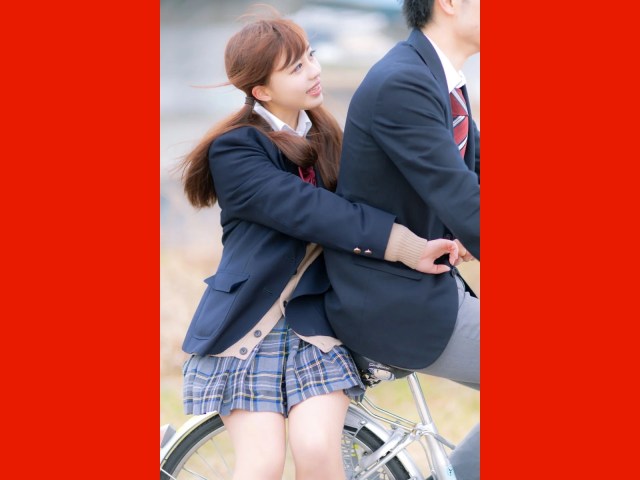
3,000-yen (US$19) fines ● Riding double (i.e. a second person bracing themselves on the rider’s shoulders or hanging on to them around the waist) ● Riding side-by-side with another cyclist
5,000-yen fines ● Using/holding an umbrella while riding ● Using earphones while riding ● Riding at night with no bike light ● Failing to come to a complete stop at a stop sign ● Running a flashing red traffic light ● Riding a bike with defective brakes
6,000-yen fines ● Running a non-flashing red light ● Riding on the right (i.e. not left) side of the road ● Obstruction of pedestrian crossing
7,000-yen fine ● Passing through closed railroad crossing gate
12,000-yen fine ● Talking on or holding a mobile phone while riding
▼ You can’t buy love, but this kind of romance will cost you 3,000 yen
There’s also a gray area to the bicycle blue ticket rules, involving riding bicycles on sidewalks. In-road bike lanes are relatively rare in Japan, and with many streets themselves already being narrow, it’s common to see cyclists on sidewalks in Japan, or at least it has been. Under the new rules, though, riding on the sidewalk is considered a violation and grounds for a 6,000-yen ticket, but there are a number of exceptions. Riding on the sidewalk is allowed in areas where signs designate it as permitted, and is always allowed for cyclists under the age of 13 or over the age of 70 (though with only cyclists 16 and older subject to blue ticket fines, the “13 and under” exemption is essentially moot). Riding on the sidewalk is also still allowed for cyclists of all ages on streets with very heavy traffic or very narrow widths, though that then leaves the situation open to a subjective judgement call by police officers. Finally, even when riding on the sidewalk is allowed, cyclists must remain on the side of the sidewalk closest to the road and ride slowly, with failure to yield to pedestrians on the sidewalk carrying the risk of a 3,000-yen ticket.
Issued tickets can be paid at post offices or banks, and if the fines are paid by their due date, the violation will not be recorded as a committed crime. Failure to pay the ticket, though, then leaves the police with the option of proceeding to a criminal trial to prosecute the cyclist.
Note: This article content is being automatically formatted. For the original source formatting, visit the link below.
Original source:SoraNews24 ↗
More Japan News

Will heat waves push European holidaymakers to ‘coolcations’?
The concept of "coolcations" — vacations in a cooler clime — has been gathering pace in recent years and appears to have exploded in 2026.

U.S. holds fire against Iran as reports emerge of stockpile concerns
The pause could reflect pressure on stockpiles of Patriot interceptors and other defensive weapons, U.S. media reports said.

Family Mart’s new Famima flagship in Tokyo has a hidden gem that most visitors miss
A must-try convenience store drink you won’t find anywhere else. Earlier this month, Family Mart shook up the convenience store scene by opening its first-ever flagship store, Famima Park Azabudai. Lo