
Japanese manhole lid raises eyebrows with fertility god symbol that looks like… well, you know
Archived Content: This article was published over 30 days ago. Travel rules and prices may have changed.Check official sources.
Festival of the Steel Phallus deity gets a steel lid in a rural city. For all its staid traditions and formal etiquette, Japanese culture can be surprisingly uninhibited in ways that can leave visito
**Festival of the Steel Phallus deity gets a steel lid in a rural city. **
For all its staid traditions and formal etiquette, Japanese culture can be surprisingly uninhibited in ways that can leave visitors from abroad clutching their pearls.
Take, for example, a new manhole lid that’s just been installed in front of Kobunoki Shrine in Ninohe City, Iwate Prefecture. This sacred place of worship is in full support of the new manhole cover, which features… a colourful and playful phallic design.
[
View this post on Instagram
](https://www.instagram.com/reel/DWS5a0iAfqL/?utm_source=ig_embed&utm_campaign=loading)
While large, glistening penises aren’t something you’re likely to find on a city-endorsed road cover in other parts of the world, here in Japan they don’t shy away from images of male genitalia, seeing them as** symbols of the fertility deity Kanamara Daimyojin**.
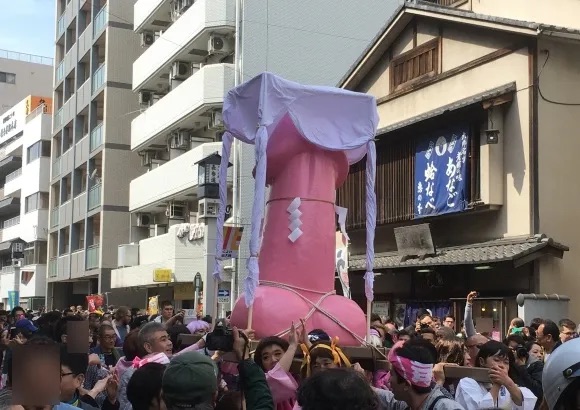
Kanamara Daimyojin, which literally translates as “Great Deity of the Metal Phallus”, is a Shinto deity associated with fertility, safe childbirth, marriage, and protection from sexually transmitted diseases. Commonly represented by a phallus symbol, Kanamara Daimyojin is most famously worshiped at the annual Kanamara Matsuri held at Kanayama Shrine in Tokyo’s neighbouring Kawasaki Prefecture.
▼ The festival, which was held on 5 April this year, features phallic floats, foods and souvenirs.
It was the parishioners’ association at Kobunoki Shrine who donated the manhole cover to the city, in the hopes that it will encourage passersby to stop and take notice of the image, which has been in the hands of a specialist designer since June last year. With its bright, neon-like colours, this manhole lid stands out on the path right in front of the shrine’s vermilion torii gate, and it’s been drawing attention since it was installed on 24 March.
The attention is a welcome draw for the rural city, which is facing**** economic challenges as younger residents move to big cities. The shrine itself is seen as an important asset for the community, so much so that it received overwhelming support for the crowdfunding campaign held to fund its recent relocation, surpassing its 10 million yen (US$63,085.71) goal.
▼ Despite the recent relocation (the below image shows the pre-construction phase in late 2024), Kobunoki Shrine has a history that can be traced back to 1854.
The shrine is now just a two-minute walk from Ninohe Station, which is a stop on the Tohoku Shinkansen line, making it easy to access from Tokyo. The trip from Japan’s capital takes about three hours, but it’ll make for a memorable destination… and the fertility god will smile on you when you get there.
Shrine Information
Kobunoki Shrine / 枋ノ木神社 Address: Iwate-ken, Ninohe-shi, Ishikiridokoro, Kobunoki 50-7 岩手県二戸市石切所字枋ノ木 50-7 Open 24 hours Website
Sources: Iwate Nippo, Kobunoki Shrine, Ready For/Ninohe Station Area Neighbourhood Association Images©SoraNews24
Note: This article content is being automatically formatted. For the original source formatting, visit the link below.
Original source:SoraNews24 ↗
More Japan News

Will heat waves push European holidaymakers to ‘coolcations’?
The concept of "coolcations" — vacations in a cooler clime — has been gathering pace in recent years and appears to have exploded in 2026.

U.S. holds fire against Iran as reports emerge of stockpile concerns
The pause could reflect pressure on stockpiles of Patriot interceptors and other defensive weapons, U.S. media reports said.

Family Mart’s new Famima flagship in Tokyo has a hidden gem that most visitors miss
A must-try convenience store drink you won’t find anywhere else. Earlier this month, Family Mart shook up the convenience store scene by opening its first-ever flagship store, Famima Park Azabudai. Lo