
Kichijoji: Tokyo’s Most Livable Neighborhood
Archived Content: This article was published over 30 days ago. Travel rules and prices may have changed.Check official sources.
Head out west for some of the city’s best parks, restaurants, boutiques and bars, all with a lovely family-friendly vibe.
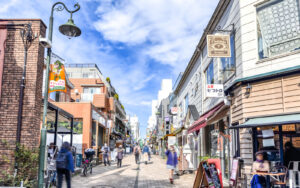
In Kichijoji, the moment your feet touch the ground, you’re within walking distance of any place you can imagine. Located in Musashino City in Western Tokyo, Kichijoji hosts lovely coffee houses, live jazz, swan boats, theaters, enticing shops and a zoo. With a warm, inviting atmosphere (thanks in part to its cosmopolitan, friendly community), Kichijoji is a magical place to explore on your own or with friends and family.
- The History of Kichijoji
- What To Do in Kichijoji
- Where To Shop in Kichijoji
- Where To Eat in Kichijoji
- Annual Events
- Getting There
The History of Kichijoji
[

](https://cdn.savvytokyo.com/app/uploads/2018/12/pixta_118120385_M.jpg)Kichijoji consistently ranks among the best areas to live in
Interestingly, the name Kichijoji comes from Lakshmi, the Hindu goddess of wealth, fortune and posterity, known as Kichijoten in Japan. Kichijoji, a temple dedicated to this goddess, was originally located in Bunkyo ward before it burned down in 1657.
After the fire, new land was distributed to those whose homes had been destroyed in Bunkyo-ku. In memory of their previous community, the relocated residents decided to name their new village after their beloved temple, Kichijoji.
Nowadays, this neighborhood consistently ranks among the best areas to live in the Tokyo metropolitan area.
What To Do in Kichijoji
[

](https://cdn.savvytokyo.com/app/uploads/2018/12/pixta_115410761_M.jpg)One of the most famous landmarks of Kichijoji is Inokashira Park.
Inokashira Park
In the heart of it all is Inokashira Park, a haven of trees, a gorgeous giant pond that fills with sakura (cherry blossom) petals in spring, and a bridge that looks like the one in Spirited Away.
Although large, Inokashira Park offers tree-lined paths for intimate strolls by the water. In a forested alcove towards the east of the park, you’ll stumble upon a Benzaiten shrine, dedicated to the goddess of “everything that flows.”
-
Address: 1-18-31 Gotenyama, Musashino, Tokyo (Map)
-
Opening Hours: 24 hours
-
Website: Official Link
Inokashira Park Zoo
In addition to breeding and conserving indigenous animals from this area, Inokashira Park Zoo was home to Hanako, the first elephant to arrive in Japan after World War II. Now, there is a statue of Hanako at the north exit of the station.
In this area, you’ll also find a beautiful botanical garden and an open-air sculpture museum with pieces by Seibo Kitamura, the man behind the famous Peace Statue in Nagasaki.
-
Address: 1-17-6 Gotenyama, Musashino, Tokyo (Map)
-
Opening Hours: 9:30 a.m. – 5 p.m. (closed on Mondays)
-
Website: Official Link
Ghibli Museum
The western side of Inokashira Park is home to the Ghibli Museum, a pocket of magic and mystery for anyone familiar with the works of Hayao Miyazaki. You need to purchase tickets in advance from Lawson Ticket. Photography is not allowed inside the museum.
-
Address: 1-1-83 Shimorenjaku, Mitaka, Tokyo (Map)
-
Opening Hours: 10 a.m. – 6 p.m. (closed on Tuesdays)
-
Website: Official Link
Uplink Kichijoji
Uplink Kichijoji is an intimate five-screen mini movie theater perfect for indie movie lovers. It offers crystal-clear sound, adding to that movie theater experience. There’s also a curated menu onsite, with items like craft beer and craft cola.
-
Address: Parco B2F, 1-5-1 Kichijoji Honcho, Musashino City, Tokyo (Map)
-
Opening Hours: varies, please see website for updates
-
Website: Official Link
Sometime
Founded in 1975 is Sometime, an institution of Kichijoji’s renowned jazz scene. Every night, this dark and moody locale comes alive with music. At its center, a beautiful grand piano sets the mood. The audience sits around or above the musicians during a performance. Sometime also holds daytime gigs on weekends and holidays and serves lunch and dinner.
-
Address: B1F, 1-11-31, Kichijoji Honcho, Musashino, Tokyo (Map)
-
Opening Hours: 12 p.m. – 10 p.m. (closed on New Year’s Day)
-
Website: Official Link
Where To Shop in Kichijoji
[

](https://cdn.savvytokyo.com/app/uploads/2018/12/pixta_125798156_M.jpg)There’s an abundance of retail chains and local boutiques to choose from
Hyakunen
Hyakunen is a little shop selling used books, magazines, DVDs, records and homemade zines, giving it an underground literary vibe. This shop also offers opportunities for readers, authors and artists to showcase their work in the store.
-
Address: 2-2-10 Murata Building 2F, Kichijoji Honcho, Musashino, Tokyo (Map)
-
Opening Hours: 12 p.m. – 8 p.m. (closed on Tuesdays)
-
Website: Official Link
Skit
Skit offers a wide selection of one-of-a-kind sneakers, including Japan favorites Asics and Onitsuka Tiger. You can also sell your old sneakers here for the right price. It’s a treasure trove for sneaker fans, including rare vintage finds.
-
Address: Tokyo D-ASSET Kichijoji 1F, 1-18-1 Kichijoji Minamicho, Musashino, Tokyo (Map)
-
Opening Hours: 11 a.m. – 7 p.m.
-
Website: Official Link
Sun Road
Take the north exit and you’ll find Sun Road, a shotengai (shopping arcade) with an array of charming storefronts. A central hub for Kichijoji, Sun Road is also jam-packed with great places to eat. There is something for everyone, from German bread and pastries to beef tongue.
-
Address: 1-15-1 Kichijoji Honcho, Musashino, Tokyo (Map)
-
Opening Hours: 24 hours
-
Website: Official Link
Nakamichi-dori
Narrow Nakamichi-dori boasts a collection of small boutiques and cute spots to eat and drink. You’ll need to set aside an entire afternoon to explore its collections of quirky postcards, one-of-a-kind Japanese homeware, vintage clothes, designer goods and cozy coffee houses.
-
Address: (Map)
-
Opening Hours: 24 hours
-
Website: Official Link
Atré, Parco, Tokyu and Coppice
Sprawling department stores Atré, Kichijoji Parco and Tokyu are conveniently located around Kichijoji Station while Coppice is a shopper’s paradise designed with families in mind. On the fifth floor of the A building of Coppice, there’s a play area for kids, a rest space for families and a baby feeding/changing station.
Atre Kichijoji
-
Address: 1-1-24 Kichijoji Minamicho, Musashino City, Tokyo (Map)
-
Opening Hours: 10 a.m. – 9 p.m.
-
Website: Official Link
Kichijoji Parco
-
Address: 1-5-1 Kichijoji Honcho, Musashino, Tokyo (Map)
-
Opening Hours: 10 a.m. – 8 p.m.
-
Website: Official Link
Tokyu Department Store
-
Address: 2-3-1 Kichijoji Honcho, Musashino, Tokyo (Map)
-
Opening Hours: 10 a..m. – 8 p.m. Website: Official Link
**Coppice Kichijoji **
-
Address: 1-11-5 Kichijoji Honcho, Musashino, Tokyo (Map)
-
Opening Hours: 10 a.m.- 8 p.m. (Mondays to Thursdays, Sundays); 10 a.m. – 9 p.m. (Fridays, Saturdays and the day before public holidays)
-
Website: Official Link
Where To Eat in Kichijoji
[

](https://cdn.savvytokyo.com/app/uploads/2018/12/pixta_122004347_M.jpg)At Temari no Ouchi, customers can play with the cats for as long as they like.
Monks Foods
Named after jazz legend Thelonious Monk but also brimming with Buddhist vibes, Monks Foods offers tasty organic meals and vegetarian options that are good for the soul. The whole operation is run by a sweet couple with some impressive musical knowledge.
-
Address: 1-2-4 Gotenyama, Musashino, Tokyo (Map)
-
Opening Hours: 11:30 a.m. – 9 p.m. (closed on Wednesdays)
-
Website: Official Link
Temari no Ouchi
The interior of Temari no Ouchi is cute, with decor that makes you feel like you’re entering a children’s book. At this cat cafe, customers can play with the cats for as long as they like. You’ll typically find cats tucked away in the clever nooks and crannies on each of the cafe’s three floors. One highlight: when the staff rings the bell for dinner time, the stampede of fluffy cats is absolutely adorable.
-
Address: Musashi Forum III, 3F, 2-13-14 Kichijoji Honcho, Musashino, Tokyo (Map)
-
Opening Hours: 12 p.m. – 8 p.m. (weekdays); 11 a.m- 8 p.m. (weekends)
-
Website: Official Link
Pepa Café Forest
Located beneath the trees in Inokashira Park, Pepa Cafe Forest offers a diverse menu in an eclectically decorated restaurant. Relax with a good Thai meal, a Vietnamese coffee or a cold Sri Lankan beer indoors during summer and winter or outside during spring or autumn.
-
Address: 4-1-5 Inokashira, Mitaka, Tokyo (Map)
-
Opening Hours: 11 a.m. – 3:30 p.m; 4:45 p.m. – 9 p.m.
-
Website: Official Link
Kooriya Peace
Kooriya Peace is open all year round, but it only seats eight. The changing menu of weird and wonderful flavors, like tomato shaved ice, keeps the neighborhood coming back for more. Thankfully, they offer takeaway too.
-
Address: Kichijoji Zo Building, 1-9-9, Kichijoji Minamicho, Musashino, Tokyo (Map)
-
Opening Hours: 10 a.m. – 8 p.m. (Tuesdays to Saturdays); 10 a.m. – 6 p.m (Sundays); closed on Mondays
-
Website: Official Link
Satou Kichijoji
Satou Kichijoji offers a local favorite: deep-fried menchikatsu (minced meat cutlet). Expect to wait in line for this one but it’s worth your while. If you’re after something more substantial, head upstairs for steak meals.
-
Address: 1−1−8, Kichijoji Honcho, Musashino, Tokyo (Map)
-
Opening Hours: 10 a.m. – 7 p.m.
-
Website: Official Link
Kichijoji Waltz
Cuisine Kichijoji Waltz has a rotating menu of select Japanese delicacies such as ayu (sweetfish) rice and a huge variety of domestic sake. Keeping in time with Kichijoji’s jazz scene beat, the music and atmosphere combined make this restaurant a favorite hideout among locals.
-
Address: M-9 Building 9F, 1-18-2 Kichijoji Honcho, Musashino, Tokyo (Map)
-
Opening Hours: 5:30 pm- 10 p.m.; irregular closing days (please make reservations)
-
Website: Official Link
Annual Events
[

](https://cdn.savvytokyo.com/app/uploads/2018/12/Kichijoji_Aki-Matsuri_42nd.jpg)Don’t miss out on the fall festival
Since 1972, Kichijoji has celebrated Kichijoji Akimatsuri (fall festival) at Musashino Hachimangu Shrine, home to the spirit of Musashino. In the winter, things get romantic with light displays at Kichijoji and Musashisakai Stations. During the colder months, the tourism office also offers a six-temple and shrine expedition. If you want to pray for a year of good luck, this is how you seal the deal.
In spring, the Kichijoji Music Festival brings jazz concerts, parades and live band performances to the neighborhood’s streets. Spring is also the time for cherry blossoms. Inokashira Park is one of Tokyo’s most popular spots for hanami (flower-viewing), with revelers queuing for the chance to rent a swan boat and gaze at the flowers from the pond.
In summer, Kichijoji joins the city’s Tanabata celebrations, where mikoshi (portable shrines) make an appearance. In August, there’s also Bon Odori, complete with dancing, games and festival food.
Getting There
[

](https://cdn.savvytokyo.com/app/uploads/2018/12/pixta_105154888_M.jpg)Easily accessible from central Tokyo
Easy to get to from Shinjuku and central Tokyo but also close to Mount Mitake and Okutama, this neighborhood is accessible from very different worlds in Tokyo.
-
From Shinjuku, take the Chuo Line, which takes about 14 minutes on a rapid train.
-
The JR Sobu Line also runs to Kichijoji station, connecting Shinjuku and Chiba. The Keio-Inokashira subway line coming from Shibuya takes about 23 minutes.
-
From both Haneda and Narita airports, buses go directly to and from Kichijoji station.
Stop by the Musashino Tourism Office, just five minutes from the north exit of Kichijoji station, for tips on making the most of your neighborhood tour. Alternatively, the official website makes planning your trip to Kichijoji simple and fun.
Want to explore beyond Tokyo? Check out our guide to Kawasaki, Japan’s art-filled industrial city.
This post was written by Jes Kalled in 2018 and updated by Suzanne Bhagan in 2026.
Note: This article content is being automatically formatted. For the original source formatting, visit the link below.
Original source:Savvy Tokyo ↗
More Japan News

Will heat waves push European holidaymakers to ‘coolcations’?
The concept of "coolcations" — vacations in a cooler clime — has been gathering pace in recent years and appears to have exploded in 2026.

U.S. holds fire against Iran as reports emerge of stockpile concerns
The pause could reflect pressure on stockpiles of Patriot interceptors and other defensive weapons, U.S. media reports said.

Family Mart’s new Famima flagship in Tokyo has a hidden gem that most visitors miss
A must-try convenience store drink you won’t find anywhere else. Earlier this month, Family Mart shook up the convenience store scene by opening its first-ever flagship store, Famima Park Azabudai. Lo