
No, that’s not French bread, it’s Japan’s crazy-big gobo!
Archived Content: This article was published over 30 days ago. Travel rules and prices may have changed.Check official sources.
Giant gobo is shocking to look at, but how does it taste? Japanese supermarkets often have their own in-house bakeries, so when our Japanese-language reporter Ikuna Kamezawa walked into her local bran
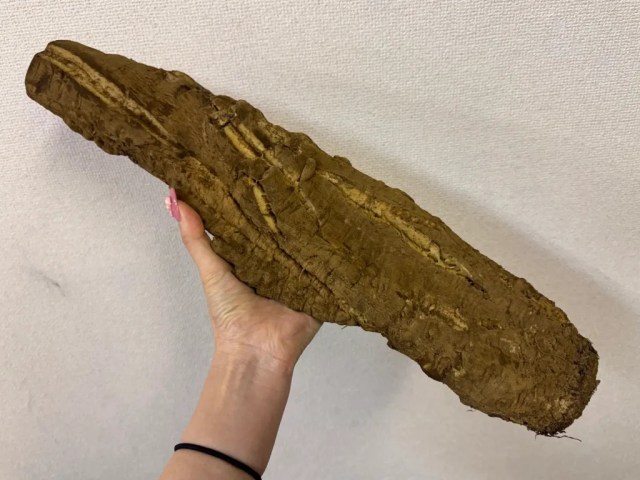
Giant gobo is shocking to look at, but how does it taste?
Japanese supermarkets often have their own in-house bakeries, so when our Japanese-language reporter Ikuna Kamezawa walked into her local branch of grocery store chain Ozeki, for a moment she thought she might be looking at an enticing loaf of crusty French bread.
Actually, make than an enticing and gigantic loaf of crusty French bread.

But actually this isn’t a baguette at all. As a mater of fact, it’s not even a kind of baked good. It’s a type of root vegetable called gobo.
Gobo, or burdock root, to use its English name, is used in a variety of traditional Japanese recipes for stewed, simmered, or stir-fried dishes. However, gobo is usually a lot smaller in size, typically about as thick as your thumb.
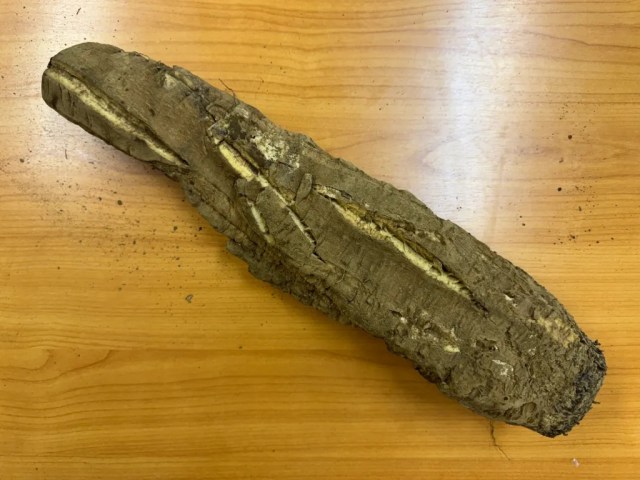
For comparison, here’s another photo of the gobo the jumbo gobo that Ikuna found next to a regular-sized version of it.
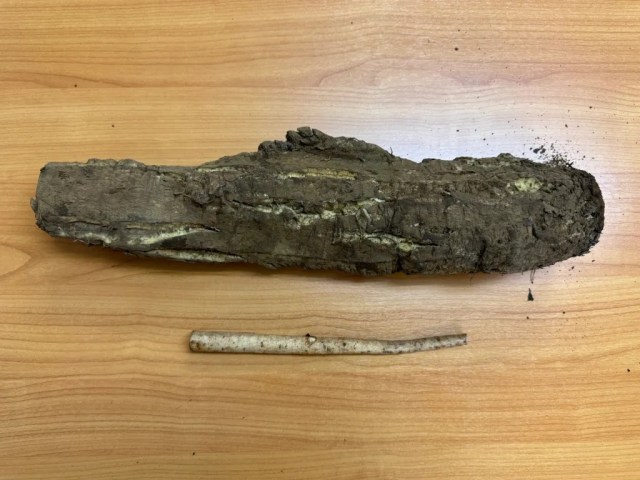
It turns out that what Ikuna found is a special version of the vegetable called** Oura gobo**, which gets its name from being most prominently grown in the Oura district of the town of Sosa, in Chiba Prefecture, Tokyo’s neighbor to the east. There are Oura gobo growers in other parts of** northern Kanto** (east Japan) too, though, and Ikuna’s was from Ibaraki Prefecture, a ways north of Tokyo.
The size isn’t the only difference between Oura and regular gobo, either. Whereas the standard variety has a smooth surface, Oura gobo has such a craggy texture that up-close it looks like the trunk or branch of a tree.
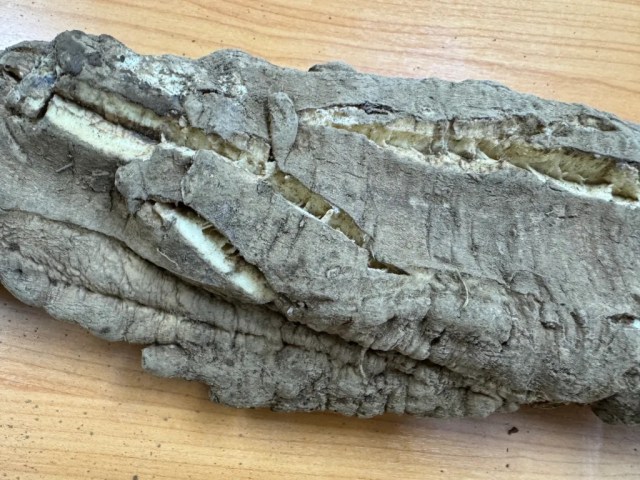
But while it may look like part of a tree, Oura gobo isn’t wood-hard. After washing it, Ikuna grabbed a kitchen knife to slice the root in half, and** it came apart with a crunching noise as she pushed the blade through**.
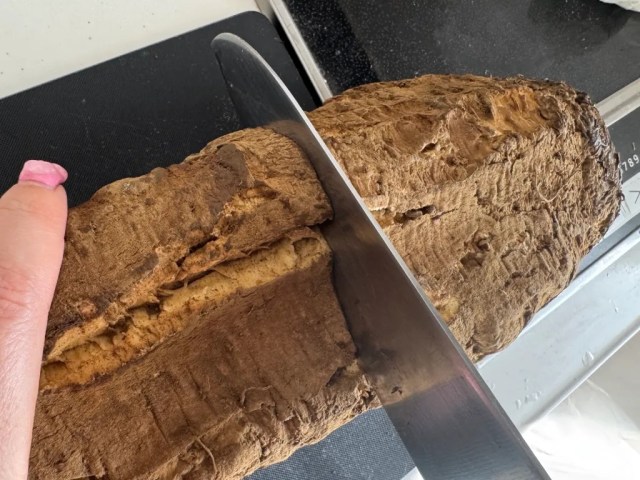
This led to another surprise, when she found out that** Oura gobo is hollow at its center!**
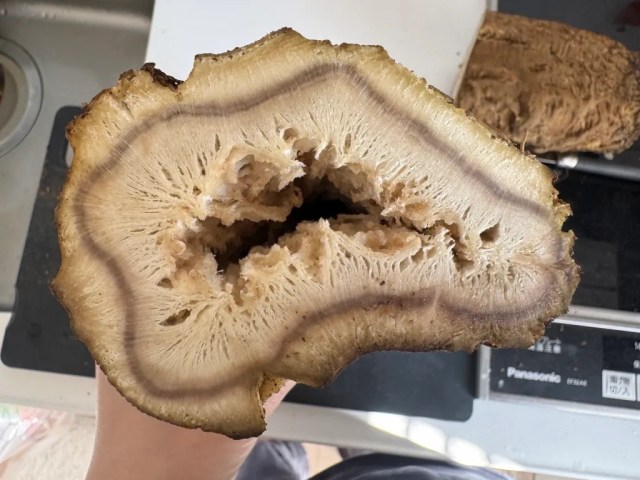
Regular gobo is solid throughout its cylindrical shape, but with Oura you have a jagged, shadow cavity inside, whose shape reminded Ikuna of a limestone cave.
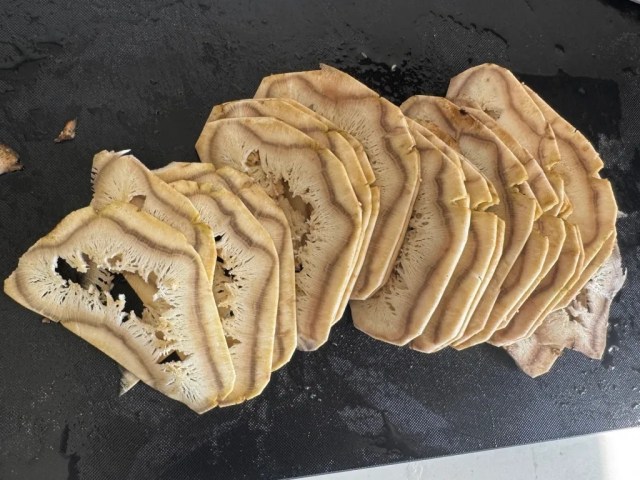
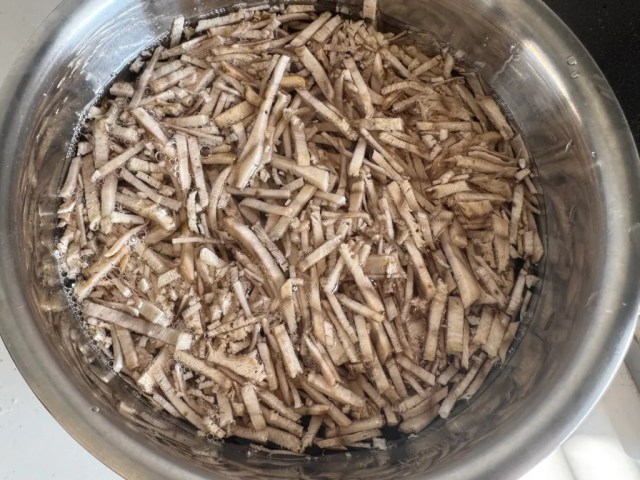
The skin of gobo isn’t eaten, so Ikuna peeled that off while considering her cooking options. Gobo can be used in various nimono (simmered dish) and soup recipes, but one of the most popular ways to eat it, and one of the easiest to make, is kinpira gobo, a stir-fry of sliced gobo and carrots. Different households make their kinpira gobo a little differently from each other, but the basic concept is to** slice the gobo, soak it in water, then stir fry it in a frying pan or wok with mirin (cooking sake), soy sauce, sesame, ad rep pepper flakes, adding sliced carrot part-way through the process**, since the carrot takes less time to cook.
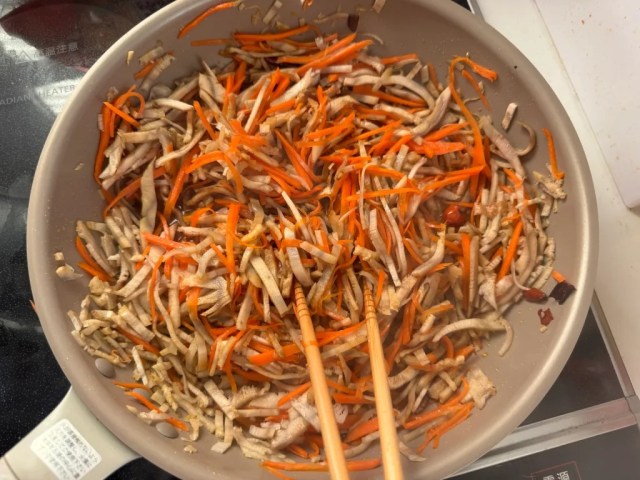
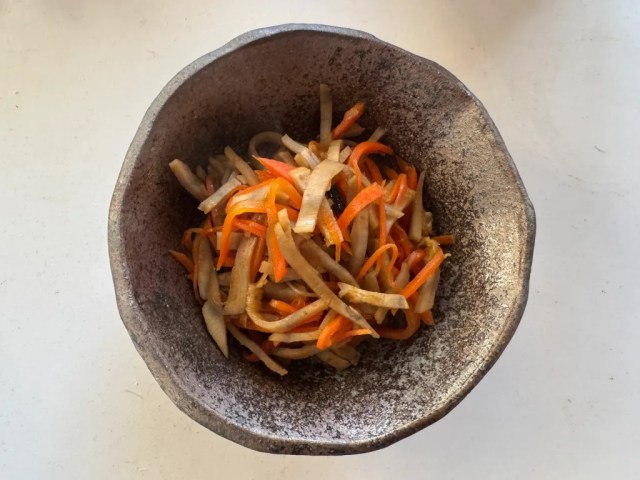
Taking a bite of the finished product, Ikuna found that Oura gobo is a little softer in texture than standard burdock root is. While still firm, the comparatively softer texture allowed more of the seasonings to seep in, with flavorful results. Since gobo itself has only a rather subdued, slightly bitter taste, the more absorbent quality of the Oura gobo is a plus.
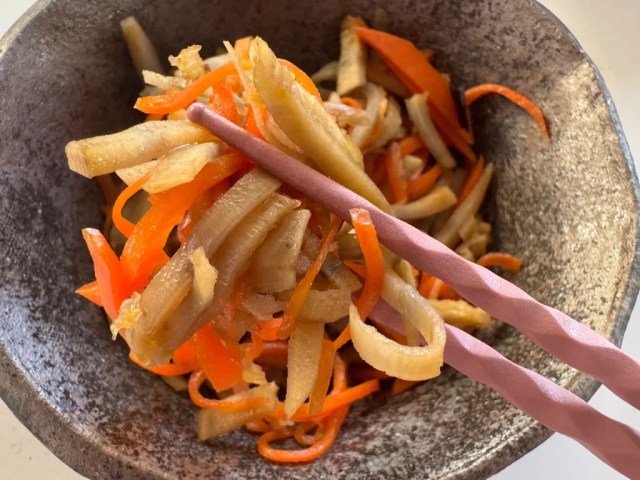
If you find yourself wanting some extra crispiness, though, it’s easy to achieve by chilling the finished kinpira gobo in the fridge after you’re done cooking it, since the dish can be enjoyed either hot or cold.
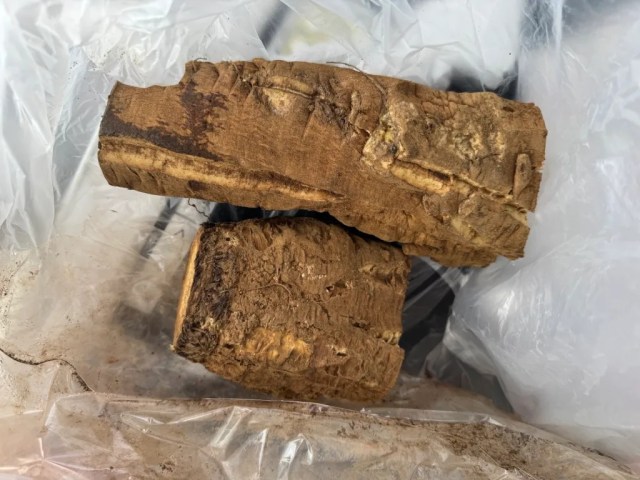
Gobo isn’t an expensive ingredient, with normal versions available for about 100 yen in Japanese grocery stores. Ikuna’s Oura one obviously was more expensive, at 539 yen (US$3.50), but it was so big that she has quite a lot left over for other cooking projects (maybe she’ll even pair it with a fresh batch of igisu).
Note: This article content is being automatically formatted. For the original source formatting, visit the link below.
Original source:SoraNews24 ↗
More Japan News

Will heat waves push European holidaymakers to ‘coolcations’?
The concept of "coolcations" — vacations in a cooler clime — has been gathering pace in recent years and appears to have exploded in 2026.

U.S. holds fire against Iran as reports emerge of stockpile concerns
The pause could reflect pressure on stockpiles of Patriot interceptors and other defensive weapons, U.S. media reports said.

Family Mart’s new Famima flagship in Tokyo has a hidden gem that most visitors miss
A must-try convenience store drink you won’t find anywhere else. Earlier this month, Family Mart shook up the convenience store scene by opening its first-ever flagship store, Famima Park Azabudai. Lo