Japan’s Centenarians Top 100,000 for the First Time—What the Numbers Actually Say
On 15 September 2026—老人の日 under Japan’s Elderly Welfare Act—the Ministry of Health, Labour and Welfare confirmed what the annual series had been approaching for years: 107,677 people aged 100 or older, the first time the stock has cleared 100,000 since counting began in 1963. The milestone is real. So is the shape of the society that produced it.
Japan’s demographic story is usually told with births and deaths. The Year the Lines Crossed walks that ledger through 2025: more deaths than births, a fertility rate that no longer replaces the population, and a marriage count that still decides almost every birth. The IPSS marriage survey asks whether the next adult cohorts still want the institution those births run through. This article sits on the other end of the same arc—the people who have already lived a century inside that system.
On 15 September 2026, MHLW released its Reiwa 8 materials for 百歳高齢者表彰—congratulatory letters from the Prime Minister and silver cups for people who turn 100 in the fiscal year and are alive on 老人の日. The accompanying stock count, drawn from Basic Resident Register reports from prefectures, designated cities, and core cities (as of 1 September 2026; ages as of 15 September), is the number English headlines led with: 107,677.
This piece reads that release the Japanist way: for what MHLW measured, what the calendar words mean, where the geography concentrates, and what English readers should not invent on top of the tables.
The number that cleared six figures
107,677 people aged 100 or older. That is +7,914 versus Reiwa 7’s 99,763—the first crossing of 100,000 since the series began in 1963. Kyodo and ministry framing treat the rise as the 56th consecutive annual increase from 1970 onward.
Centenarians: five milestones on the climb
People aged 100+ in Japan at key MHLW reporting points (Basic Resident Register; overseas Japanese residents excluded from the stock count). Milestone totals as published in the MHLW Reiwa 8 packet (current methodology: ages as of 15 September; earlier years as historically reported).
1963 (S38)
Series begins
1981 (S56)
Past 1,000
1998 (H10)
Past 10,000
2012 (H24)
Past 50,000
2026 (R8)
Past 100,000
First time over 100,000 since the series began in 1963 — up from 99,763 in Reiwa 7. Fifty-six consecutive annual increases from 1970 onward.
Source: MHLW 令和8年度百歳の高齢者へのお祝い状及び記念品の贈呈について (2026-09-15); PDF 001750292.pdf
The MHLW press materials themselves mark the climb in plain Japanese: 153 when the Elderly Welfare Act era began (昭和38), past roughly 1,000 in 昭和56 (~1,072 in 1981), 10,158 in 平成10 (1998), 51,376 in 平成24 (2012), and now 107,677 in 令和8.
-
Stock count
107,677 people aged 100+ (as of 1 Sep 2026; ages as of 15 Sep). Overseas Japanese residents are excluded from this stock.
-
Year-on-year
+7,914 from Reiwa 7’s 99,763 — first time over 100,000 since 1963.
-
Sex split
Men 13,379; women 94,298 (87.6%).
-
表彰 recipients
54,294 people turning 100 this fiscal year and alive on 老人の日 (+1,984) — PM letter + silver cup.
-
Rate
87.51 centenarians per 100,000 people nationally.
That is longevity success on a scale Japan’s own series could not have imagined in 1963. It is also a demographic shape: a country that keeps more people alive to 100 while births and marriages tell a different story about the decades ahead.
(MHLW press page; MHLW PDF 001750292)
老人の日 is not 敬老の日
English coverage often collapses September’s elder-honouring language into one “Respect for the Aged” blur. The statute does not.
老人の日 (Rōjin no Hi) falls on 15 September under the Elderly Welfare Act (老人福祉法). MHLW’s centenarian congratulations are timed to that day: recipients are people who reach (or are expected to reach) 100 in the fiscal year and are alive on 老人の日. The purpose language in the Act is about deepening public understanding of elder welfare and encouraging older people themselves toward fuller lives—not about a national holiday travel surge.
敬老の日 (Keirō no Hi, Respect for the Aged Day) is a national holiday on the third Monday of September—in 2026, 21 September, inside Silver Week. Its Cabinet Office purpose centres on honouring elders who have contributed to society and celebrating longevity. Families visit; municipalities hold ceremonies; trains fill for hometown trips.
Same month. Same cultural register of respect. Different legal hooks, different dates, different logistics. If you are planning travel around “Respect for the Aged,” you want 敬老の日 and Silver Week. If you are reading the centenarian stock release, you want 老人の日 on the 15th.
Women, letters, and silver cups
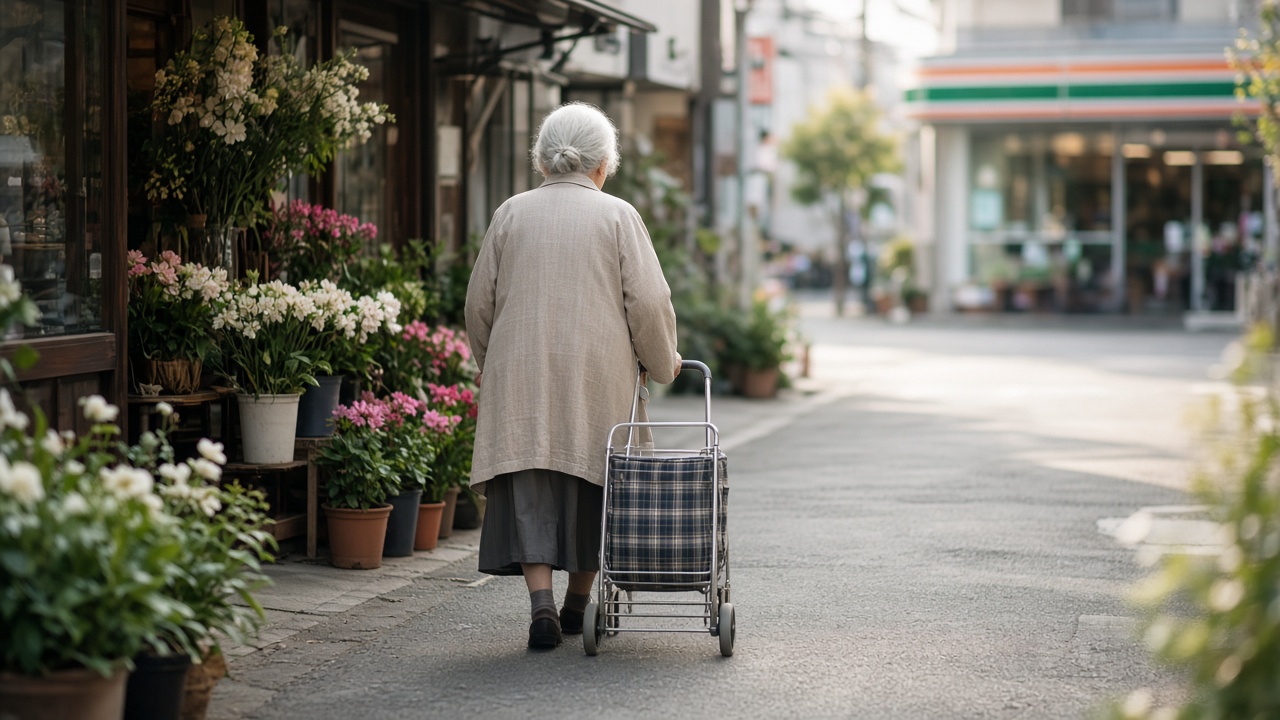
Of the 107,677 people aged 100+, 94,298 are women (87.6%) and 13,379 are men. That skew is not new in the MHLW series; it is the durable texture of Japan’s extreme longevity.
Who are Japan’s centenarians?
Sex split of people aged 100+ as of 1 September 2026 (ages as of 15 September). Total: 107,677.
94,298
women (87.6%)
13,379
men (~12.4%)
Women account for 87.6% of Japan’s 100+ population — a long-standing pattern in the MHLW series, not a one-year quirk.
Source: MHLW 令和8年度百歳の高齢者へのお祝い状及び記念品の贈呈について (2026-09-15); PDF 001750292.pdf
Separately, FY2026 百歳高齢者表彰 covers 54,294 people (+1,984 from the prior year): those turning 100 this fiscal year who are alive on 老人の日. Domestic recipients are 54,231; overseas Japanese add 63. Congratulatory content is a Prime Minister’s letter plus a silver cup, handed through prefectural governors and mayors of designated and core cities (and through the Foreign Ministry for overseas recipients).
Life expectancy context from the same MHLW packet cites the 令和7年簡易生命表: women 87.33, men 81.35 (shown on the Reiwa 7 row; Reiwa 8 life-expectancy cells are blank in the published table). Centenarian counts and period life expectancy are related stories, not the same number—one is a stock of people who already reached 100; the other is a summary of mortality rates in a given year.
Where the rates pile up—and where the counts do
Nationally there are 87.51 people aged 100+ per 100,000 population. The population base in MHLW’s table is 123,050 thousand, from the Somusho 2025 census flash published 29 May 2026.
Centenarians per 100,000 people
Top five prefectures by rate, national average (87.51), and Saitama as the low end. Population base: 123,050 thousand (Somusho 2025 census flash, published 2026-05-29).
Shimane
highest (14th year)
Kōchi
Tottori
Kagoshima
Nagano
National
baseline
Saitama
lowest
Also high rate
Kōchi 169.52 · Tottori 152.48 · Kagoshima 148.31 · Nagano 146.85
Lowest rates
Saitama 51.27 · Aichi 57.79 · Osaka 60.06 · Tokyo 62.40 · Chiba 62.89
Rate ≠ count. Tokyo leads in absolute numbers (8,890) while ranking near the bottom on a per-100,000 basis — big young metros dilute the rate.
Source: MHLW 令和8年度百歳の高齢者へのお祝い状及び記念品の贈呈について (2026-09-15); PDF 001750292.pdf
Highest rates: Shimane 186.65, Kōchi 169.52, Tottori 152.48, Kagoshima 148.31, Nagano 146.85.
Lowest rates: Saitama 51.27, Aichi 57.79, Osaka 60.06, Tokyo 62.40, Chiba 62.89.
Jiji notes that Shimane’s top rate is the prefecture’s 14th consecutive year in that position—worth citing for the streak, attributed to Jiji rather than invented as an MHLW table footnote.
Absolute counts tell a different map. Leaders: Tokyo 8,890; Kanagawa 5,943; Hokkaido 5,433; Osaka 5,264; Fukuoka 4,632. Big prefectures hold more centenarians because they hold more people. Rate and count are both true; neither cancels the other.
How the count is built
The stock figure is not a census field trip and not a media estimate. MHLW aggregates Basic Resident Register reports from prefectures, designated cities, and core cities, with a snapshot date of 1 September 2026 and ages computed as of 15 September 2026 (老人の日). Overseas Japanese residents are out of the 100+ stock. The 表彰 list is a different object: fiscal-year turners who are alive on that day, including a small overseas cohort.
That methodology note matters when English headlines say “Japan has 100,000 centenarians.” They mean: registered residents inside Japan, reported up through the municipal–prefectural chain MHLW uses for this series—not every Japanese national worldwide, and not a living-conditions survey of how many of those 107,677 still drive, farm, or live alone.
The population denominator for rates is likewise explicit in the packet: 123,050 thousand from the Somusho 2025 census flash (published 29 May 2026). Rates move when either the numerator (centenarians) or the denominator (prefectural population) moves. Depopulating rural prefectures can look “older” on a per-100,000 basis even when absolute counts are modest—which is exactly why Shimane can lead the rate table while Tokyo leads the headcount.
Absolute leaders vs rate leaders
If you only remember one geographic sentence from this release, make it two:
- Rate leaders cluster in the Sea of Japan / western rural belt and a few long-lived prefecture brands: Shimane, Kōchi, Tottori, Kagoshima, Nagano.
- Count leaders are Japan’s demographic heavyweights: Tokyo, Kanagawa, Hokkaido, Osaka, Fukuoka.
| Rank (count) | Prefecture | People 100+ |
|---|---|---|
| 1 | Tokyo | 8,890 |
| 2 | Kanagawa | 5,943 |
| 3 | Hokkaido | 5,433 |
| 4 | Osaka | 5,264 |
| 5 | Fukuoka | 4,632 |
Tokyo’s 8,890 centenarians at a rate of only 62.40 per 100,000 is not a contradiction. It is arithmetic: a huge, relatively young metro still holds more hundred-year-olds in raw numbers than a small, aged prefecture—while the share of the local population that has reached 100 is far higher in Shimane’s 186.65.
Travel and culture writing that treats “oldest Japan” as a single prefecture pin usually collapses those two maps. Keep them apart.
The oldest faces in the release
MHLW’s packet names the domestic oldest woman and oldest man, with brief facility notes from their municipalities. No invented quotes—only what the ministry materials report.
- Oldest woman: 岸本ふよ (Fuyo Kishimoto), 114, Kyoto (born 20 December 1911). Domestic oldest since 27 August 2026. Living in a Kyoto facility; meals partly in her room and lunch in the living room with other residents; reported to finish meals and, on good days, to reply with thanks.
- Oldest man: 加藤光 (Hikaru Kato), 112, Kumamoto (born 2 May 1914). Japan’s oldest man since 8 February 2026. Living calmly in a facility; manages much of his daily care himself; enjoys family visits twice a week; continues room exercises.
These sketches humanise the stock without turning the article into a longevity-influencer story. The policy object remains the 107,677 and the care system around them.
Longevity success, care demand, and what not to claim
Celebrate the milestone without cheerleading. Japan did something historically rare: it kept enough people alive, for long enough, that a six-figure centenarian stock became a statistical fact rather than a curiosity.
Hold the other side of the ledger in the same frame. More people at 100 means more people who may need nursing, medical, and family care—sometimes for years. That demand is qualitative and obvious from the age structure; this article does not invent long-term care insurance yen figures the MHLW centenarian release does not provide. For the births-and-deaths side of the same society, see The Year the Lines Crossed; for whether younger adults still intend to form the households that once supplied informal care, see the IPSS marriage survey.
Residents and long-term visitors feel that texture in ordinary ways: more wheelchair space on local buses, fuller day-service vans in the morning, municipal keirō ceremonies that have more names to read, and family calendars that stretch across prefectures when the person being honoured is 100 rather than 70. None of that requires a fabricated insurance price tag to be true.
Health minister Kenichiro Ueno, quoted by Jiji, said he was pleased that so many people have been active for a long time, and that a longer health span supporting society is significant. Soft cite; not this article’s thesis. The thesis is simpler: the official series crossed 100,000, women still dominate the stock, rates cluster in older rural prefectures while counts cluster in big metros, and 老人の日 is not Silver Week’s 敬老の日.
Avoid the overclaim that “Japan is the healthiest country.” Period life expectancy and centenarian stocks are impressive; they are not a global ranking stamped on this press release, and they coexist with care shortages, regional depopulation, and a fertility-marriage complex that is still rewriting the next fifty years.
What English readers should take away
-
1
Trust the primary
Use MHLW’s 107,677 / +7,914 / 87.6% women figures; do not round into folklore.
-
2
Separate the September words
老人の日 = 15 Sep (Elderly Welfare Act). 敬老の日 = third Monday (national holiday; Silver Week in 2026).
-
3
Rate vs count
Shimane leads the rate; Tokyo leads the headcount.
-
4
Two ledgers
Longevity stock up; births/marriages tell another story—link both.
-
5
Care without fake yen
More centenarians imply more care demand; skip invented LTC insurance totals.
What to watch next
If you follow Japan for living, policy, or travel, treat the 100,000 crossing as a baseline stamp, not a vibe:
- Next year’s stock and 表彰 totals — the series has risen for 56 consecutive years in the Kyodo/ministry framing; the interesting question is the pace of +7,914-class jumps as wartime birth cohorts fully age in.
- Rate leaders’ streak — Shimane’s 14th year at the top (Jiji) is a run worth tracking against out-migration and care-capacity stories in the San’in region.
- Care workforce and housing — qualitative pressure rises with the stock; look to separate MHLW long-term care publications for yen and worker counts, not this congratulations release.
- Marriage and births — the other Japanist demography pair: population crossing and IPSS marriage intentions. Centenarians are the long right tail of a distribution whose left side is still thinning.
- September calendar literacy — travellers confusing 老人の日 with Silver Week’s 敬老の日 will mis-time both congratulations coverage and holiday trains. Use Silver Week 2026 for the holiday cluster.
FAQ
Has Japan really never had 100,000 centenarians before?
Not in this MHLW series. The ministry’s materials mark 2026 as the first year the stock exceeds 100,000 since the count began in 1963, rising from 99,763 in Reiwa 7.
Is 老人の日 the same as Respect for the Aged Day?
No. 老人の日 is 15 September under the Elderly Welfare Act and anchors the centenarian congratulations. 敬老の日 (Respect for the Aged Day) is the national holiday on the third Monday of September—21 September in 2026, inside Silver Week.
Why do women make up nearly nine in ten centenarians?
MHLW reports 94,298 women and 13,379 men (87.6% women). That share has been high for decades in the same series; it reflects long-run mortality differences, not a one-year reporting artefact.
Which prefecture is “oldest”?
Depends what you mean. Shimane has the highest rate per 100,000 (186.65)—Jiji says for the 14th consecutive year. Tokyo has the largest absolute count (8,890).
Are overseas Japanese included?
Overseas Japanese residents are excluded from the 100+ stock count of 107,677. The separate 表彰 recipient total (54,294) does include 63 overseas Japanese alongside 54,231 domestic recipients.
Does this mean Japan’s care crisis is solved?
No. A larger centenarian population is longevity success and, simultaneously, more potential care demand. This release does not publish a yen total that “solves” long-term care; do not invent one.
Bottom line
Japan’s official centenarian series crossed 100,000 for the first time: 107,677 people aged 100+, +7,914 in a year, 87.6% women, 87.51 per 100,000 nationally, with Shimane still leading the rate table and Tokyo leading the headcount. The congratulations of 老人の日—letters and silver cups for 54,294 new hundred-year-olds—are a civic ritual on 15 September, distinct from Respect for the Aged Day inside Silver Week.
Hold the celebration and the shape together. The country that can count six-figure centenarians is the same country whose births, deaths, and marriage intentions are rewriting who will stand beside the next cohort of elders. The numbers are enough. They do not need myth on top.
The floor did not inch—it cleared six figures. 107,677 people aged 100 or older is longevity Japan can measure; the care, families, and birth ledger around them are the rest of the story the same week’s other statistics keep telling.
Sources and further reading
- Ministry of Health, Labour and Welfare (MHLW) — 令和8年度百歳の高齢者へのお祝い状及び記念品の贈呈について (press page, 15 September 2026); PDF 001750292 (stock 107,677; +7,914; sex split; prefecture rates and counts; 表彰 54,294; oldest residents; life-expectancy note from 令和7年簡易生命表)
- Jiji Press — Japan's Centenarian Population Tops 100,000 for 1st Time (Shimane highest rate for 14th consecutive year; Health Minister Kenichiro Ueno comment)
- Population base — Somusho / Statistics Bureau 2025 census flash (published 2026-05-29), as cited in the MHLW table (123,050 thousand)
- The Japanist — The Year the Lines Crossed; IPSS marriage intentions survey 2026; Silver Week 2026 (敬老の日 vs travel calendar)
Method note: Centenarian stock figures are Basic Resident Register reports from prefectures, designated cities, and core cities as of 1 September 2026; ages as of 15 September 2026; overseas Japanese excluded from the 100+ stock. Life expectancy figures shown on the Reiwa 7 row of MHLW’s packet (women 87.33, men 81.35) come from the 令和7年簡易生命表; Reiwa 8 life-expectancy cells in that table are blank. All headline statistics in this article are taken from those primary materials—no invented LTC insurance yen totals, no global “healthiest country” ranking.
Continue Reading
Japan’s Singles Are Opting Out of Marriage—What the New Government Survey Actually Says
IPSS’s 17th National Fertility Survey (June 2025 fieldwork, released 11 September 2026): marriage intention among 18–34-year-olds falls below 80% for the first time since 1982—75.1% of men, 77.8% of women—plus never-marry intent, online meeting, and what the numbers do not mean.
The Year the Lines Crossed: How Japan Became a Country of More Deaths Than Births
In 2005, deaths first exceeded births in Japan. Official figures through 2025: 671,236 births, a 1.14 fertility rate, a 918,000-person natural decline — and why the marriage count still decides the next generation.

Japan Wanted Foreigners. Now It Is Deciding How Many Is Too Many.
Foreign residents passed four million while Japan’s population fell 3.1 million. Now a government panel is studying a cap on the foreign share of the population, with a basic policy due before April 2027. The official numbers, the new rules, and what they signal.

If you're looking for nicely crafted Japan tours, check out: Arigato Travel's experiences.Partner link