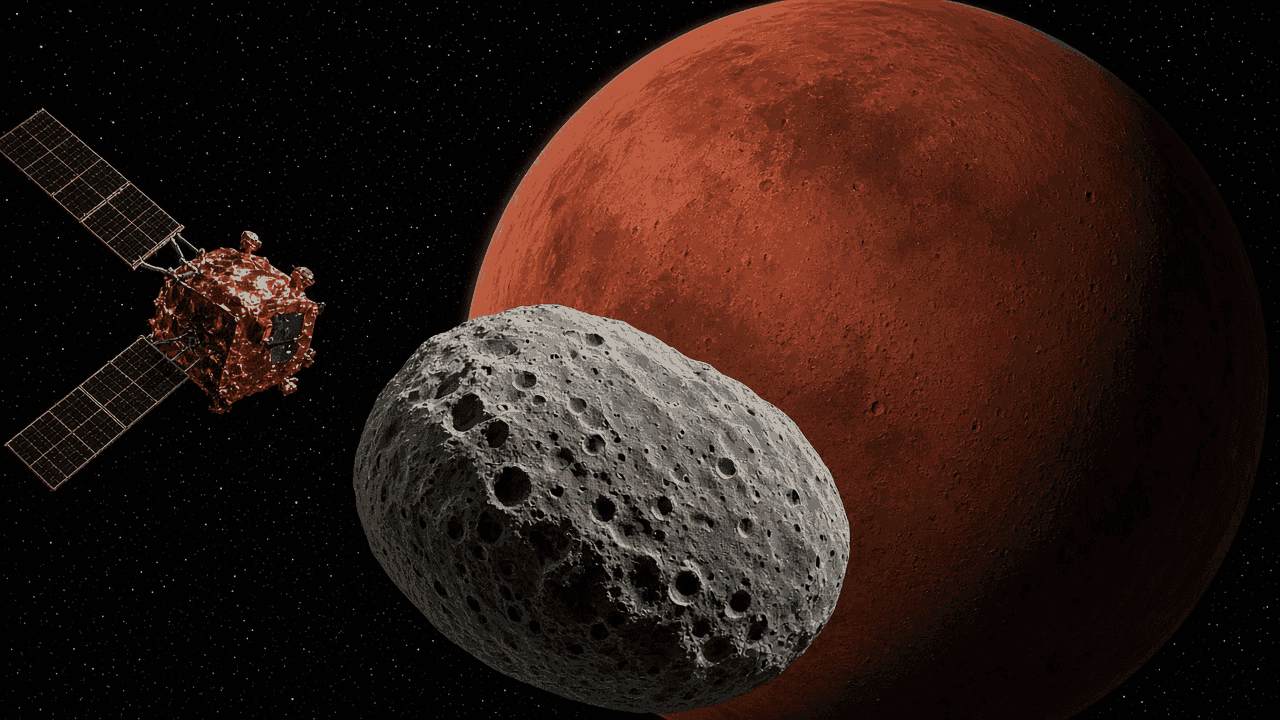
Early on October 20, 2026, Japan launched a spacecraft called MMX toward Mars. Its job is to visit Mars's small moon Phobos, drop off a little rover, land, scoop up some soil and bring it back to Earth in 2031. No mission has ever brought anything home from Mars or its moons. Here is what MMX is, why scientists care about a lumpy 27-kilometre moon, and the timeline, explained simply.
We checked every fact in this guide against official sources: the Japan Aerospace Exploration Agency (JAXA) and its space science institute ISAS, the European Space Agency (ESA) and the German Aerospace Center (DLR). Links are at the end.
The short answer
-
Launched October 20, 2026
Lift-off was at 04:41:03 Japan time from the Tanegashima Space Center in Kagoshima, on JAXA's H3 rocket (flight No. 10).
-
The launch worked
About 71 minutes after lift-off the spacecraft separated from the rocket and was put on its planned path to Mars.
-
Destination: Phobos
The bigger of Mars's two moons, only about 27 km across. MMX will also study the smaller moon, Deimos.
-
A sample, not just photos
MMX plans to land on Phobos and collect about 10 grams of surface material.
-
Home in 2031
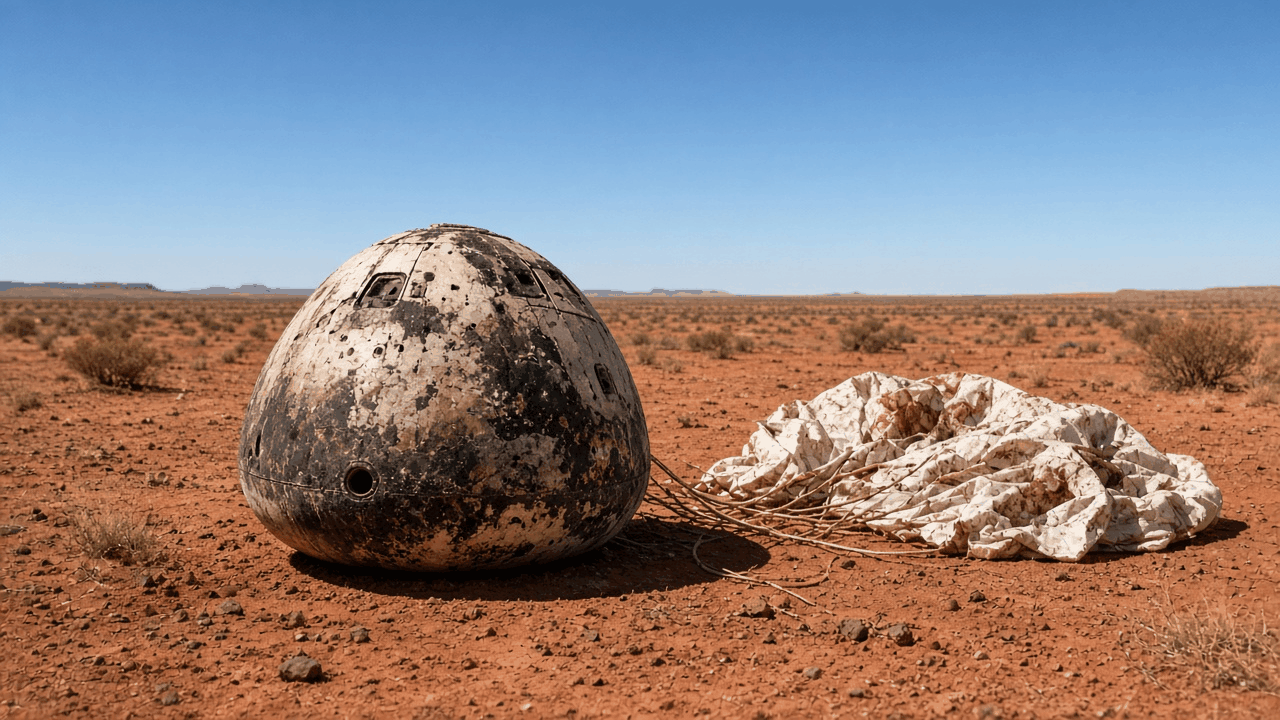
A capsule carrying the sample is due to land in Australia in 2031, about five years after launch.
-
An international team
Led by JAXA, with NASA, the French space agency CNES, DLR and ESA. France and Germany built the small rover, Idefix.
What is MMX?
MMX stands for Martian Moons eXploration. It is a JAXA robotic spacecraft that will travel to Mars, go into a special orbit near Phobos, study both of Mars's moons, land on Phobos to collect soil, and then fly the sample back to Earth (ISAS).
ISAS calls it the world's first mission to return material from the "Martian sphere", meaning Mars and the space around it. MMX does not land on Mars itself. It lands on one of its moons.
| Key fact | Detail |
|---|---|
| Launch | 04:41:03 JST, October 20, 2026 (that was 3:41 pm on October 19 in New York) |
| Launch site | Tanegashima Space Center, Kagoshima Prefecture |
| Rocket | H3, flight No. 10, in its most powerful "H3-24L" form: two main engines, four solid boosters, long nose cone |
| Arrival at Mars | August 2027 (ESA) |
| Rover drop on Phobos | Around the turn of 2028–29 |
| Sample collection | By 2030, through two landings |
| Sample size | About 10 grams |
| Return to Earth | 2031, capsule landing in Australia |
| Partners | JAXA (lead), NASA, CNES, DLR, ESA |
| Science instruments | 11 in total: 7 on the main spacecraft, 4 on the rover |
The H3 details come from JAXA's launch plan (JAXA). The timeline and instrument count come from ESA and JAXA's MMX site.
Why go to a moon of Mars?
Mars has two moons, Phobos ("fear") and Deimos ("terror"). They are small and oddly shaped. Phobos is up to about 27 km across and Deimos about 15 km (DLR).
Nobody knows for sure where they came from. There are two main ideas (ESA):
- Captured asteroids. They were passing rocks that Mars's gravity caught.
- Leftovers from a giant crash. A huge impact on Mars threw debris into orbit, and the debris clumped together into moons.
Photos from a distance have not settled it. A real sample, studied in labs on Earth, should. And the answer matters beyond Phobos. JAXA's mission team says the moons may help explain how Mars, and rocky planets like Earth, got their water and the ingredients for life (JAXA MMX).
What happens between now and 2031?
MMX, step by step: from Tanegashima to Phobos and back
Only the launch has happened. Every later date is a plan and can change.
-
20 Oct 2026 · done
Launch on H3 flight No. 10 from Tanegashima (04:41:03 JST). Separation and planned orbit confirmed.
-
Aug 2027
Arrives in orbit around Mars after a trip of about a year.
-
From Sep 2027
Starts orbiting near Phobos and studying it up close.
-
Turn of 2028–29
Drops the Idefix rover onto Phobos for about 100 days of driving.
-
By 2030
Lands on Phobos twice to collect about 10 g of surface material.
-
2030
Leaves the Mars system, flying past Deimos on the way.
-
2031
Sample capsule lands in Australia, then goes to Japan.
Source: JAXA launch result (20 October 2026) and MMX mission site; ESA (13 October 2026); DLR (19 October 2026).
The trip to Mars takes about a year. ESA says MMX should reach Mars orbit in August 2027 and start circling near Phobos from September 2027.
It will then spend years studying Phobos up close from a "quasi-satellite orbit", a loop that keeps it near the moon. This is a first: no spacecraft has orbited Phobos like this before (ESA).
Around the turn of 2028–29, MMX will drop the small Idefix rover onto Phobos from about 40 to 100 metres up. It will bounce, settle, turn itself the right way up, open its solar panels and explore for about 100 days (DLR). ESA puts the release in early 2029.
By 2030, the main spacecraft will land on Phobos twice to collect its sample (JAXA). Then it heads home, flying past Deimos along the way. In 2031, a capsule with the sample will come down in Australia. The sample then goes to Japan to be opened, catalogued and shared with partner scientists (ESA).

How is landing on Phobos different from landing on the Moon?
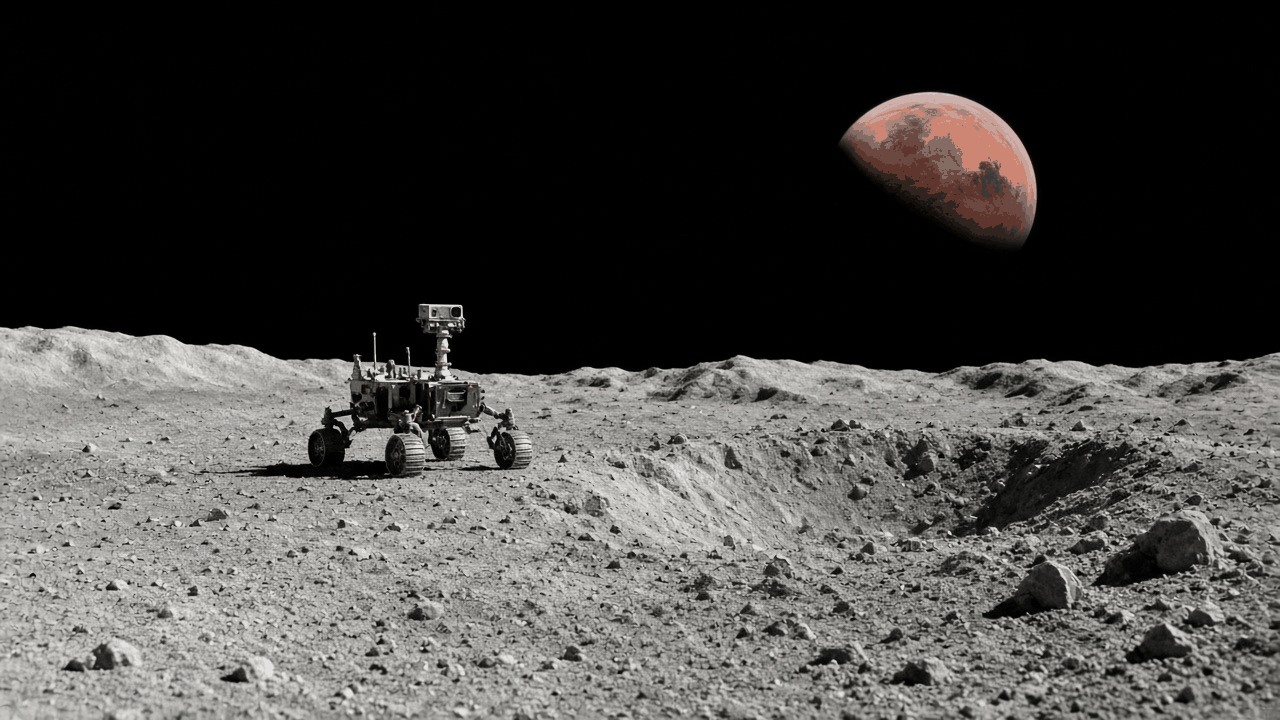
Phobos is tiny, so its gravity is incredibly weak, less than one-thousandth of Earth's (DLR). The 25-kilogram Idefix rover will weigh about as much as 15 grams there, roughly a few coins (ESA).
That sounds easy, but it is not. With almost no gravity, a rover or a lander can bounce off. Temperatures also swing by more than 200°C over Phobos's day and night, which together last only about seven hours (DLR). JAXA and its partners built special technology to land, move and collect samples in these conditions.
How does MMX compare with Japan's Hayabusa missions?
Japan has done this kind of thing before, just closer to home. Hayabusa2 visited the asteroid Ryugu, and in December 2020 its capsule landed in Australia with 5.4 grams of material. Its goal had been just 0.1 grams (JAXA).
MMX aims for about 10 grams, from much farther away, and from a body that circles a planet.
How much will MMX bring back?
Sample mass in grams. MMX’s figure is a target; Hayabusa2’s 5.4 g is what actually came home.
Source: JAXA Hayabusa2 project page; JAXA MMX mission site; ESA (at least 10 g).
| Target | Asteroid Ryugu | Phobos, a moon of Mars |
|---|---|---|
| Launched | December 3, 2014, H-IIA | October 20, 2026, H3 |
| Sample | 5.4 g returned (goal: 0.1 g) | About 10 g planned |
| Capsule landing | Australia, December 6, 2020 | Australia, 2031 (planned) |
Why does this matter to Japan?
MMX is the biggest mission into the Solar System that JAXA has ever taken on (DLR). It is also a big moment for the H3, Japan's new main rocket: on October 20, 2026 it sent a spacecraft on its way to another planet, with the rocket flying as planned (JAXA).
For the public, MMX also has friendly faces. JAXA astronauts Yoneda Ayu and Suwa Makoto were named MMX ambassadors in January 2026 (ISAS).
FAQ
When did MMX launch?
At 04:41:03 Japan time on October 20, 2026, on an H3 rocket from the Tanegashima Space Center. The spacecraft separated from the rocket about 71 minutes later and was put on its planned path.
What does MMX stand for?
Martian Moons eXploration. It is a JAXA mission to Mars's two moons, Phobos and Deimos.
Will MMX land on Mars?
No. It lands on Phobos, the larger of Mars's two moons, to collect a sample. It studies Mars and Deimos from a distance.
When will the Phobos sample reach Earth?
In 2031. A capsule is planned to land in Australia, and the sample will then be taken to Japan.
How much sample will MMX bring back?
About 10 grams of material from the surface of Phobos.
What is Idefix?
A small 25-kilogram rover built by the French space agency CNES and the German Aerospace Center DLR. MMX will drop it onto Phobos around the turn of 2028–29 to explore for about 100 days.
Is this the first sample return from the Mars system?
Yes. JAXA's ISAS says MMX will be the world's first mission to return material from the Martian sphere.
Bottom line
MMX is on its way. If the next five years go to plan, MMX will bring back the first-ever sample from the Mars system, and with it, perhaps, the answer to a simple question: where did Mars's moons come from?
A year to get there, three years of exploring, a year to come home: MMX's sample of Phobos is due back on Earth in 2031.
Sources and further reading
- JAXA — Launch result of the MMX spacecraft aboard H3 Launch Vehicle flight No.10 (October 20, 2026: lift-off 04:41:03 JST from Tanegashima; separation about 71 min 13 s after lift-off; planned orbit); 2026 launch plan for H3/MMX (Japanese) (October 18, 2026: H3-24L with two LE-9 engines, four SRB-3 boosters and long fairing); MMX mission site (schedule; about 10 g from two soft landings; capsule recovery in Australia in 2031); Hayabusa2 project page (5.4 g returned vs 0.1 g goal; capsule recovered in Australia, December 6, 2020; launched December 3, 2014 on H-IIA)
- ISAS/JAXA — Martian Moons eXploration (MMX) (world's first return of material from the Martian sphere; aims; ambassadors named January 13, 2026)
- European Space Agency — Mars moon lander set to launch on 19 October (October 13, 2026: partners; origin theories; 11 instruments; 25 kg Idefix weighs about 15 g on Phobos; Mars orbit August 2027; Phobos orbit from September 2027; Idefix early 2029; landing 2030; at least 10 g returned in 2031)
- German Aerospace Center (DLR) — MMX mission successfully launched: Idefix rover on its way to Phobos (October 19, 2026: moon sizes; gravity under 1/1000 of Earth's; 200°C swings over about seven hours; rover drop from 40–100 m, about 100 days; JAXA's largest Solar System mission)
Method note: Future dates are the mission's plans as published by JAXA, ESA and DLR at launch, and can change. Where partners describe a date slightly differently (for example, the Idefix release), we give both. Illustrations are artist's impressions, not mission photos.
Continue Reading
 Illustration, not a photo: this image was generated with AI.
Japan’s Centenarians Top 100,000 for the First Time—What the Numbers Actually Say
MHLW’s Reiwa 8 release (15 September 2026): 107,677 people aged 100+, first time over 100,000 since 1963—+7,914 from 99,763, 87.6% women, Shimane’s rate lead, and why 老人の日 is not Silver Week’s 敬老の日.
 Illustration, not a photo: this image was generated with AI.
Japan’s Singles Are Opting Out of Marriage—What the New Government Survey Actually Says
IPSS’s 17th National Fertility Survey (June 2025 fieldwork, released 11 September 2026): marriage intention among 18–34-year-olds falls below 80% for the first time since 1982—75.1% of men, 77.8% of women—plus never-marry intent, online meeting, and what the numbers do not mean.
 Illustration, not a photo: this image was generated with AI.
The Year the Lines Crossed: How Japan Became a Country of More Deaths Than Births
In 2005, deaths first exceeded births in Japan. Official figures through 2025: 671,236 births, a 1.14 fertility rate, a 918,000-person natural decline — and why the marriage count still decides the next generation.

If you're looking for nicely crafted Japan tours, check out: Arigato Travel's experiences.Partner link