Everything That Changed in Japan on October 1, 2026: Minimum Wage, the ¥1.06 Million Wall, Chu-hi Tax and More
Along with April 1, October 1 is a day when Japan often flips a lot of switches at once. This year the minimum wage started rising (Tokyo goes to ¥1,280 an hour), the income line that kept many part-timers out of company insurance disappeared, canned chu-hi got a bigger tax, about 3,000 food and drink products got pricier, and the summer help with power bills ended. Here is each change in plain English, with what it means for you, whether you are visiting, living here, working part-time or running a business.
Most of these changes were decided months ago. They just all arrived on the same day. Some of them help your wallet. Some of them hurt it. A couple of them, like the new rules on customer harassment, change how people treat each other at the shop counter.
We checked every number in this guide against the original source: the labour ministry, the Japan Pension Service, the Ministry of Finance, the National Tax Agency, the trade ministry, the Immigration Services Agency, JR Central and Teikoku Databank. The links are at the end.
The short answer
If you only have a minute, these are the changes that matter most.
-
Minimum wage: up ¥54 to ¥65
The national average is now ¥1,177 an hour. Tokyo is ¥1,280. But only 15 prefectures switched on October 1. The rest follow through December 2.
-
The ¥1.06 million wall is gone
Part-timers no longer need to earn ¥88,000 a month to be put on company health and pension insurance. Working 20+ hours a week at a bigger employer is now enough.
-
Chu-hi tax up, beer tax down
The tax in a 350 ml can of chu-hi rose from ¥28 to ¥35. All beer-type drinks now pay the same ¥54.25 a can.
-
3,153 food and drink price rises
Teikoku Databank counted 3,153 products going up in October, about 10% on average. Drinks and alcohol were the biggest group.
-
Customer harassment rules
Every employer must now protect staff from abusive customers, with a clear policy and someone to talk to.
-
Power and gas help ended
The government discount on electricity and city gas only covered July to September use.
-
Visa fees jumped
Permanent residency now costs ¥200,000 (it was ¥10,000). Visa renewals cost ¥10,000 to ¥75,000 at the counter, depending on how long you get.
1. Minimum wages are going up, one prefecture at a time
Japan does not have one minimum wage. It has 47, one for each prefecture. Every year, a national panel suggests how much they should rise. Then each prefecture sets its own number and its own start date.
This year, every prefecture rose by at least ¥54 an hour. The national weighted average is now ¥1,177, up ¥56 or 5.0%. ("Weighted" means bigger prefectures count more, because more people work there.) The labour ministry says that is the second-biggest rise since the current system began in 1978.
The top rates:
- Tokyo: ¥1,280 (was ¥1,226)
- Kanagawa: ¥1,279 (was ¥1,225)
- Osaka: ¥1,231 (was ¥1,177)
The lowest is Miyazaki at ¥1,085. The biggest rise was in Saga, +¥65, to ¥1,095.
Japan’s new minimum wage, prefecture by prefecture
Hourly minimum wage for fiscal 2026. Darker means higher. Every prefecture rises by ¥54 to ¥65, but the gap between Tokyo and the cheapest regions stays at about ¥200 an hour.
Highest
¥1,280
Tokyo
National average
¥1,177
up ¥56
Lowest
¥1,085
Miyazaki
- ¥1,085–1,099 (18)
- ¥1,100–1,149 (20)
- ¥1,150–1,199 (6)
- ¥1,200–1,249 (1)
- ¥1,250–1,280 (2)
Each square is one prefecture. Open the table for names and exact rates.
All 47 prefectures: new rate, rise and start date
| Prefecture | New rate | Rise | From |
|---|---|---|---|
| Tokyo | ¥1,280 | +¥54 | 1 Oct |
| Kanagawa | ¥1,279 | +¥54 | 1 Oct |
| Osaka | ¥1,231 | +¥54 | 1 Oct |
| Saitama | ¥1,196 | +¥55 | 1 Oct |
| Aichi | ¥1,195 | +¥55 | 1 Oct |
| Chiba | ¥1,195 | +¥55 | 1 Oct |
| Kyoto | ¥1,180 | +¥58 | 16 Nov |
| Hyogo | ¥1,172 | +¥56 | 1 Oct |
| Shizuoka | ¥1,154 | +¥57 | 15 Oct |
| Mie | ¥1,143 | +¥56 | 1 Oct |
| Hiroshima | ¥1,141 | +¥56 | 11 Oct |
| Ibaraki | ¥1,136 | +¥62 | 18 Oct |
| Shiga | ¥1,136 | +¥56 | 3 Oct |
| Hokkaido | ¥1,131 | +¥56 | 1 Oct |
| Tochigi | ¥1,125 | +¥57 | 1 Oct |
| Gifu | ¥1,121 | +¥56 | 1 Oct |
| Gunma | ¥1,120 | +¥57 | 3 Oct |
| Toyama | ¥1,119 | +¥57 | 1 Oct |
| Nagano | ¥1,117 | +¥56 | 2 Oct |
| Fukuoka | ¥1,114 | +¥57 | 4 Oct |
| Ishikawa | ¥1,113 | +¥59 | 3 Oct |
| Yamanashi | ¥1,113 | +¥61 | 1 Nov |
| Fukui | ¥1,112 | +¥59 | 4 Oct |
| Niigata | ¥1,108 | +¥58 | 1 Oct |
| Nara | ¥1,107 | +¥56 | 4 Oct |
| Okayama | ¥1,104 | +¥57 | 2 Oct |
| Tokushima | ¥1,103 | +¥57 | 1 Nov |
| Wakayama | ¥1,101 | +¥56 | 3 Oct |
| Yamaguchi | ¥1,101 | +¥58 | 8 Oct |
| Miyagi | ¥1,098 | +¥60 | 1 Oct |
| Oita | ¥1,096 | +¥61 | 1 Nov |
| Saga | ¥1,095 | +¥65 | 15 Nov |
| Fukushima | ¥1,094 | +¥61 | 16 Oct |
| Ehime | ¥1,093 | +¥60 | 1 Nov |
| Kagawa | ¥1,092 | +¥56 | 1 Oct |
| Kumamoto | ¥1,092 | +¥58 | 1 Dec |
| Shimane | ¥1,092 | +¥59 | 10 Oct |
| Yamagata | ¥1,092 | +¥60 | 30 Oct |
| Akita | ¥1,090 | +¥59 | 14 Oct |
| Aomori | ¥1,090 | +¥61 | 29 Oct |
| Iwate | ¥1,090 | +¥59 | 1 Dec |
| Kagoshima | ¥1,090 | +¥64 | 25 Oct |
| Tottori | ¥1,090 | +¥60 | 3 Oct |
| Nagasaki | ¥1,087 | +¥56 | 2 Nov |
| Kochi | ¥1,086 | +¥63 | 29 Oct |
| Okinawa | ¥1,086 | +¥63 | 2 Dec |
| Miyazaki | ¥1,085 | +¥62 | 24 Oct |
Source: Ministry of Health, Labour and Welfare (MHLW), regional minimum wages for fiscal 2026: new hourly rate, previous rate and effective date for each prefecture. Until its date, a prefecture’s old rate still applies.
The map tells a simple story. Wages are highest around Tokyo, Nagoya and Osaka, where most jobs and most people are. They are lowest in Tohoku in the north-east, Shikoku, Kyushu and Okinawa.
The gap is still about ¥200 an hour between the top and the bottom. But it is slowly closing. Rural prefectures got bigger rises than Tokyo this year. The lowest rate is now 84.8% of the highest, and that ratio has improved for 12 years in a row.
The catch: most places did not change on October 1
Here is the part that confuses a lot of people. Only 15 prefectures started their new rate on October 1: Hokkaido, Miyagi, Tochigi, Saitama, Chiba, Tokyo, Kanagawa, Niigata, Toyama, Gifu, Aichi, Mie, Osaka, Hyogo and Kagawa.
Everywhere else, the new rate starts later. Kyoto waits until November 16. Iwate and Kumamoto wait until December 1. Okinawa is last, on December 2.
Until a prefecture's date arrives, the old rate is still the legal minimum there.
Not everyone got the raise on 1 October
The date each prefecture’s new minimum wage starts. Only 15 changed on 1 October. The last, Okinawa, changes on 2 December. Until its date, a prefecture’s old rate is still the legal floor.
-
1 Oct · 15 prefectures
15 of 47 in force
Tokyo Kanagawa Osaka Saitama Chiba Aichi Hyogo Mie Hokkaido Tochigi Gifu Toyama Niigata Miyagi Kagawa -
2–4 Oct · 10 prefectures
25 of 47 in force
Nagano 2 Oct Okayama 2 Oct Shiga 3 Oct Gunma 3 Oct Ishikawa 3 Oct Wakayama 3 Oct Tottori 3 Oct Fukuoka 4 Oct Fukui 4 Oct Nara 4 Oct -
8–18 Oct · 7 prefectures
32 of 47 in force
Yamaguchi 8 Oct Shimane 10 Oct Hiroshima 11 Oct Akita 14 Oct Shizuoka 15 Oct Fukushima 16 Oct Ibaraki 18 Oct -
24–30 Oct · 5 prefectures
37 of 47 in force
Miyazaki 24 Oct Kagoshima 25 Oct Aomori 29 Oct Kochi 29 Oct Yamagata 30 Oct -
1–2 Nov · 5 prefectures
42 of 47 in force
Yamanashi 1 Nov Tokushima 1 Nov Oita 1 Nov Ehime 1 Nov Nagasaki 2 Nov -
15–16 Nov · 2 prefectures
44 of 47 in force
Saga 15 Nov Kyoto 16 Nov -
1–2 Dec · 3 prefectures
47 of 47 in force
Kumamoto 1 Dec Iwate 1 Dec Okinawa 2 Dec
Source: Ministry of Health, Labour and Welfare (MHLW), regional minimum wages for fiscal 2026: new hourly rate, previous rate and effective date for each prefecture. Until its date, a prefecture’s old rate still applies.
What this means for you
If you work part-time. Check your payslip after your prefecture's date. Your hourly pay must be at least the new rate from that day. The rule covers almost every worker, including students and foreign workers. In Tokyo, ¥54 more an hour is about ¥1,080 more for a 20-hour week.
If you run a business. Update your pay rates on the right date for the prefecture where each person works, not where your head office is. A shop in Saitama pays the Saitama rate even if the company is in Tokyo.
If you are visiting. You will not see the wage rise directly. But higher labour costs can feed into prices at restaurants, shops and hotels over time. Our guide to Japan's hidden travel costs and taxes covers the bills a visitor actually pays.
If you are thinking of moving to the countryside. Lower wages in rural areas usually come with much cheaper housing. That is the trade many people make. But a cheap house is not always a cheap life. Our partner Akiya X, which lists vacant homes across rural Japan, has a clear guide to the costs that show up after the price tag: The House Is the Cheapest Part: 8 Akiya Pitfalls Foreign Buyers Miss. Its guide on why the nearest konbini matters is a good test of daily life in a small town. (Akiya X is a commercial partner of The Japanist.)
2. The ¥1.06 million wall is gone
For years, many part-timers in Japan watched one number closely: ¥1.06 million a year. That is roughly ¥88,000 a month.
Here is why. If you earned ¥88,000 a month or more at a bigger company, you were put on the company's health insurance and pension. That sounds good, and in the long run it is. But it also means premiums come out of your pay. So many people cut their hours to stay just under the line. People called it a "wall".
From October 1, 2026, the ¥88,000 pay test is abolished. The change comes from the 2025 pension reform law, according to the Japan Pension Service.
Who now joins company insurance?
You are now covered if all of these are true:
-
1
You work 20 hours or more a week
This is set by your contract, not by a busy week.
-
2
Your job is expected to last more than 2 months
Very short jobs are not included.
-
3
You are not a day-time student
Most students are still left out, as before. Night-school and correspondence students can be covered.
-
4
Your employer has 51 or more employees
Smaller employers will be added in stages, starting in October 2027.
How much you earn no longer matters. In practice, the pay line had already stopped mattering for most people. With minimum wages this high, almost anyone working 20 hours a week was earning more than ¥88,000 a month anyway. The Mainichi Shimbun reported that the wage test had effectively become obsolete by the end of March.
The next step is the company-size rule. It will be phased out on this schedule:
| From | Employers with this many staff are added |
|---|---|
| October 2027 | 36 to 50 |
| October 2029 | 21 to 35 |
| October 2032 | 11 to 20 |
| October 2035 | 10 or fewer |
What this means for you
If you work part-time 20+ hours a week at a bigger company. You will likely be enrolled in Employees' Pension and company health insurance, if you are not already. Your take-home pay drops a little. The pension premium alone is 18.3% of pay, split half and half with your employer, and health insurance comes on top. In return, you get a bigger pension later, plus sick pay and maternity pay if you ever need them. There is also help with the switch. Under a new scheme, your employer can cut your share of premiums for up to three years. The employer pays the difference first and gets it back later, so it costs the employer nothing in the end. How much you save depends on your pay, and the cut is halved in the third year.
If you are a foreign resident on National Health Insurance. Joining company insurance replaces National Health Insurance and National Pension. Tell your city office to cancel your National Health Insurance, so you do not pay twice.
If you are someone's dependent. This change is about company insurance. The ¥1.3 million line for staying on a spouse's or parent's insurance as a dependent is a separate rule, and it has not gone away.
If you are an employer. Check who on your staff now qualifies, enrol them, and explain the change to them. The labour ministry's Q&A page answers most practical questions.
3. Chu-hi costs more in tax. Beer costs less
This one is simple to see at the konbini fridge.
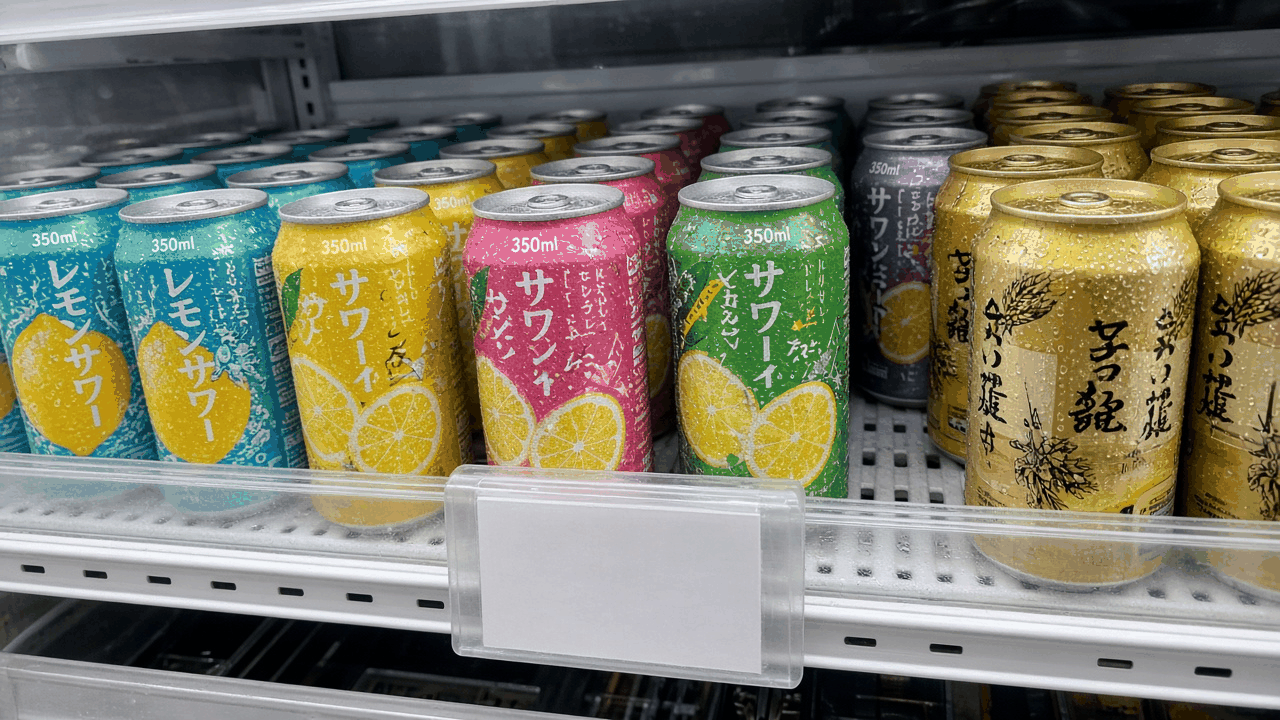
Chu-hi and other canned cocktails (Japan calls them "other sparkling liquors") now carry ¥35 of tax in a 350 ml can. Before, it was ¥28. That puts them at the same rate as sake and wine.
Japan also finished a tax reform agreed in fiscal 2017 and carried out in three steps since October 2020: all beer-type drinks are now taxed the same. Beer, happoshu (low-malt beer) and the cheap "new genre" beers now all pay ¥54.25 a can:
- Beer: tax down by ¥9.10 a can
- Happoshu and new genre: tax up by about ¥7.26 a can
The tax inside one 350 ml can
Liquor tax per can before and after 1 October 2026. All beer-type drinks now pay the same ¥54.25. The tax on chu-hi rose by ¥7. These are tax amounts, not shop prices.
-
BeerRegular beer
−¥9.10
Before¥63.35Now¥54.25 -
Happoshu and “new genre”Low-malt and beer-like drinks
+¥7.26
Before¥46.99Now¥54.25 -
Chu-hi and canned cocktailsOther sparkling drinks under 10% alcohol
+¥7
Before¥28Now¥35
Source: National Tax Agency, leaflet on the 1 October 2026 liquor tax change (per-can amounts); Ministry of Finance, liquor tax rates (beer-type drinks unified at ¥155,000 per kilolitre; other sparkling drinks ¥100,000 per kilolitre).
Keep in mind that these are tax amounts, not shop prices. Brewers and stores set their own prices, and many drink makers raised prices this autumn for other reasons too. So your favourite beer may not get cheaper, even though its tax went down.
What this means for you
If you are visiting. A chu-hi from the konbini may cost a few yen more than last year. Real beer's tax went down, so the gap between beer and the cheaper beer-like cans should narrow, though shop prices are up to brewers and stores.
If you live here and drink the cheap stuff. The price gap between "real" beer and the budget versions has shrunk. Those budget cans were cheap partly because of lower tax. That advantage is now gone.
If you sell alcohol. Shops with large stocks may have to file a tax return for stock on hand as of October 1. The National Tax Agency leaflet explains who must file.
4. About 3,000 food and drink prices went up
Credit research firm Teikoku Databank tracks price changes at 195 major food makers. For October it counted 3,153 products going up in price, with an average rise of about 10%.
That is the second-highest month of 2026, after September (4,965 products). It also means more than 3,000 price rises in two months in a row, for the first time since 2023.
The biggest groups in October:
- Alcohol and soft drinks: 1,399 products, including happoshu and third-category beers hit by the tax change, plus shochu and soft drinks.
- Seasonings: 820 products, such as mayonnaise, soy sauce and sauces.
- Processed foods: canned food, frozen and chilled food, and baby food.
Why? Teikoku Databank says higher costs for raw materials were behind 91.3% of the price rises. Energy costs were behind 63.8%, and the situation in the Middle East (through oil and naphtha used for packaging) behind 27.8%. Many products had more than one reason.
There is some good news. Teikoku Databank thinks this wave has passed its peak. It counted 1,469 rises for November, far fewer than in September and October. Counting the rises already announced through December, 2026 has 20,187 food price rises. That is the second year in a row above 20,000.
What this means for you
If you live here. Your weekly shop probably costs a little more. Supermarket own brands and konbini private-label items are worth a look, because they often stay cheaper.
If you are visiting. You may notice a few yen more on snacks and drinks. It is not a big deal for a short trip.
5. New rules against customer harassment
Japan has a word for abusive customers: kasuhara, short for "customer harassment". Think of the customer who shouts at a cashier for 30 minutes, demands the staff kneel and apologise, or threatens to post a worker's face online.
From October 1, 2026, every employer must take steps to protect staff from it. This comes from a revised labour law (the Labour Policy Comprehensive Promotion Act).
The labour ministry defines kasuhara as conduct by customers (or business partners) that goes beyond what society considers acceptable and harms the workplace. That includes behaviour on the phone and online. The ministry is clear that not every complaint is kasuhara. A reasonable complaint is fine. Abuse, threats, refusing to leave and forcing a kneeling apology are not.
-
1
A clear policy
Employers must state that they will not tolerate harassment by customers, and tell staff.
-
2
Someone to talk to
Staff need a contact point to report problems and get help.
-
3
Act quickly
When something happens, the employer must respond promptly and look after the worker.
-
4
A plan for serious cases
Employers must decide in advance how to handle especially bad cases, and tell staff. Behaviour that may be a crime can be reported to the police.
-
5
No punishment for reporting
Staff who speak up must not be treated badly for it, and their privacy must be protected.
If an employer does not do enough, the Mainichi Shimbun reports that the government can give guidance and recommend corrections, and that organisations that still fail to comply may be named publicly. The same day, employers also became responsible for protecting job seekers (for example, applicants at interviews) from sexual harassment by their staff.
What this means for you
If you are visiting. Japanese service is famously polite. Be polite back. If something goes wrong, calmly explain the problem. Employers must now back their staff up when a customer crosses the line.
If you work in a shop, restaurant or office. Ask your employer where to report problems. You have a right to that answer now.
If you run a business. Write a short policy, name a contact person, and tell your staff. The labour ministry's guide has examples.
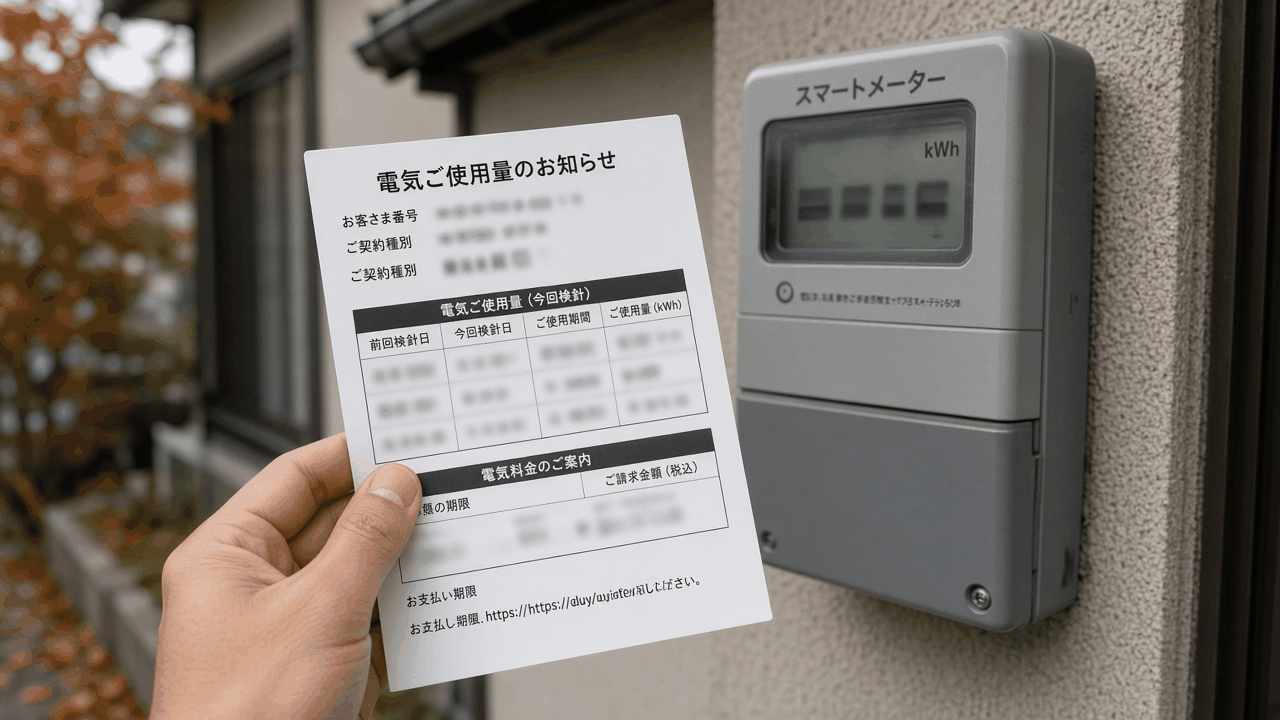
6. The summer help with power and gas bills ended
During the hottest months, the government gave households and small businesses a discount on electricity and city gas. It only covered energy used in July, August and September 2026:
| Month used | Electricity (per kWh) | City gas (per m³) |
|---|---|---|
| July | ¥3.5 off | ¥14 off |
| August | ¥4.5 off | ¥18 off |
| September | ¥3.5 off | ¥14 off |
The support was for those three months only, and the Mainichi reports that it ends from October, so there is no discount for October use. Bills often arrive a month late, so the bill you get in October may still show the September discount. The one that follows, for October use, will not.
What this means for you
If you live here. Expect your next bill to be higher, even if you use the same amount. Autumn is a good time to compare power companies. Checking your contract plan can also help.
If you are visiting. No effect on you. Hotels pay the bills.
7. Visa fees went up sharply
If you live in Japan on a residence card, this one is big.
From October 1, 2026, the Immigration Services Agency raised its fees:
- Permanent residency: ¥200,000 (was ¥10,000)
- Visa extension or change of status: now set by how long you are given. It ranges from ¥10,000 for 3 months or less up to ¥75,000 for 5 years. Before, it was a flat ¥6,000 (¥5,500 online).
Some common examples:
| Period you are given | At the counter | Online |
|---|---|---|
| 1 year | ¥33,000 | ¥27,000 |
| 3 years | ¥64,000 | ¥56,000 |
| 5 years | ¥75,000 | ¥65,000 |
Applications received by September 30 pay the old fee. Online applications are cheaper for most periods. Online payment is by convenience store or bank, plus a small transaction fee. Fees can be reduced or waived for some people in financial hardship.
We are writing a fuller guide to the new immigration fees. In the meantime, our guide to Japan's permanent residency overhaul covers the other new rules for permanent residents, from income and pension checks to longer waits for spouses.
8. Smaller changes worth knowing
A pension break for new parents
If you are self-employed, a freelancer, a farmer, a student or not working, you pay into the National Pension yourself. In fiscal 2026 that is ¥17,920 a month.
From October 1, 2026, parents in that group do not have to pay while raising a child under 1. There is no income test, but you must file a notification. Best of all, those months count as paid. Your future pension is not reduced. Ask the Japan Pension Service or your city office.
Shinkansen "Supreme Class"
JR Central launched Supreme Class on October 1: private compartments on selected Tokaido and Sanyo Shinkansen trains. Car 7 has cabins for up to two people. Car 10 has one-person cabins.
It is not cheap. Tokyo to Shin-Osaka on a Nozomi in regular season costs ¥60,500 one way for the person booking a car 7 cabin, or ¥42,100 for a car 10 cabin (JR Central prices as of June 17, 2026, booked through Express Yoyaku). A companion sharing a car 7 cabin needs their own regular ticket on top. You can only book through Express Yoyaku or smartEX, and only on selected trains. For a normal trip, the regular Green Car is still a very comfortable choice.
Property: a new tax on fees for non-residents
From October 1, 2026, real estate agent fees charged to non-residents for buying, selling or renting property in Japan are subject to consumption tax. Contracts signed by March 31, 2026, keep the old rules. Akiya X explains this and the other autumn changes for buyers in Japan's October 2026 Property Rules for Foreign Buyers.
Your October checklist
-
1
Part-timers
Find your prefecture's date on the timeline above. Check your first payslip after it.
-
2
Part-timers at bigger employers
If you work 20+ hours a week, expect to join company insurance. Ask HR what changes on your payslip.
-
3
Residents
Watch for a higher power and gas bill for October use. Budget a little more for groceries.
-
4
Visa holders
Check your card's expiry date. Budget for the new fee and consider applying online, which is cheaper.
-
5
Employers
Update pay by each prefecture's date. Check insurance enrolment. Put a customer-harassment policy and contact person in place.
-
6
Visitors
Enjoy your trip. Expect a few yen more for chu-hi and snacks. Be kind to staff.
FAQ
What is Tokyo's minimum wage from October 2026?
¥1,280 an hour, from October 1, 2026. That is up ¥54 from ¥1,226. Kanagawa is ¥1,279 and Osaka is ¥1,231. The national weighted average is ¥1,177.
When does the new minimum wage start in my prefecture?
It depends on where you work. Fifteen prefectures switched on October 1, including Tokyo, Osaka, Aichi and Hokkaido. The others follow on dates between October 2 and December 2. Okinawa is last. Until your prefecture's date, the old rate still applies. The timeline and table above list every prefecture.
Is the ¥1.06 million wall really gone?
Yes. From October 1, 2026, the rule that part-timers had to earn ¥88,000 a month (about ¥1.06 million a year) to join company health insurance and pension was abolished. You now join if you work 20+ hours a week, expect to work more than 2 months, are not a day-time student, and your employer has 51 or more employees.
Does the change affect students working part-time?
Mostly no. Day-time students are still left out of company insurance, as before (night-school and correspondence students can be covered). The minimum wage rise does apply to students, though.
How much did the tax on chu-hi go up?
The tax on a 350 ml can of chu-hi and other canned cocktails went up from ¥28 to ¥35. The shop price depends on the maker and the store.
Is beer cheaper in Japan now?
The tax on a 350 ml can of beer fell by ¥9.10, to ¥54.25. Happoshu and "new genre" beers rose to the same ¥54.25. Whether the shop price falls is up to brewers and stores. Many drink makers raised prices this autumn for other reasons.
What is kasuhara?
Kasuhara is short for "customer harassment": abusive behaviour by customers that goes beyond normal complaints. Examples include threats, shouting for a long time, or demanding a kneeling apology. From October 1, 2026, every employer in Japan must have measures to protect staff from it.
How much does permanent residency cost in Japan now?
¥200,000, up from ¥10,000, for applications received from October 1, 2026. Visa extensions and changes of status now cost ¥10,000 to ¥75,000 at the counter, depending on how long you are given.
Bottom line
October 1, 2026 was mostly about money. Workers get higher pay, but on dates that vary by prefecture. Part-timers lose the income line that made many of them cut their hours. Drinkers see the tax system tidied up, which is good news for beer and bad news for chu-hi. Households lose the summer energy discount just as another wave of food prices lands. And foreign residents now pay far more to renew a visa or apply for permanent residency.
There is also a quieter change at the counter. From now on, the person serving you has an employer who is legally required to protect them if a customer crosses the line.
Tokyo's minimum wage is now ¥1,280 an hour. But the bigger story is the calendar: only 15 prefectures got their raise on October 1. The last one arrives in December.
Sources and further reading
- Ministry of Health, Labour and Welfare (MHLW) — Fiscal 2026 regional minimum wages, national list (new and old rates and effective dates for all 47 prefectures; weighted average ¥1,177, up ¥56; lowest-to-highest ratio 84.8%); Announcement of all 47 new rates (September 3, 2026: rises of ¥54 to ¥65; second-largest national rise since 1978; ratio improved 12 years in a row); Minimum wage database, national table
- MHLW — Social insurance expansion: who is covered and Q&A (¥88,000 wage test abolished on October 1, 2026; remaining conditions; premium adjustment scheme); Schedule for removing the employer-size rule
- Japan Pension Service — Abolition of the wage requirement for short-time workers (2025 pension reform law; wage test abolished October 1, 2026); Premium adjustment scheme; National Pension premium exemption for parents of children under 1 and details
- MHLW — Customer harassment and job-seeker sexual harassment: employer duties from October 1, 2026
- Ministry of Finance — Liquor tax rates (beer-type drinks unified at ¥155,000 per kl, or ¥54.25 per 350 ml; other sparkling drinks ¥100,000 per kl, or ¥35 per 350 ml)
- National Tax Agency — Leaflet on the October 1, 2026 liquor tax change and stock-on-hand tax (beer −¥9.1 a can; happoshu and new genre about +¥7.26; chu-hi +¥7); Fiscal 2026 tax reform pamphlet (consumption tax on brokerage fees for non-residents)
- Teikoku Databank — Food price revisions survey, October 2026 (published September 30, 2026: 3,153 products in October; 1,399 alcohol and drinks; 820 seasonings; 20,187 in 2026; 1,469 in November)
- Ministry of Economy, Trade and Industry — Electricity and gas support for July to September 2026
- Immigration Services Agency — New fees from October 1, 2026 and English fee poster
- JR Central — Supreme Class (launched October 1, 2026; fares as of June 17, 2026)
- Mainichi Shimbun — Key changes affecting daily life in Japan take effect in October (October 1, 2026)
- Akiya X (partner) — The House Is the Cheapest Part: 8 Akiya Pitfalls Foreign Buyers Miss; Japan's Konbini and Your Akiya; Japan's October 2026 Property Rules for Foreign Buyers
- The Japanist — Japan's permanent residency overhaul; Japan's konbini, explained; Japan's hidden travel costs and taxes
Method note: Minimum wages are hourly rates set by each prefecture's labour bureau. The national figure is the ministry's weighted average, not a simple average of the 47 rates. "About ¥1,080 more for a 20-hour week" is our calculation (¥54 × 20 hours). Liquor tax figures are taxes per can, not retail prices. Insurance rules have more detail than we can cover here; check with your employer, the Japan Pension Service or your city office for your own case.
Continue Reading
Japan's Permanent Residency Overhaul: Every 2026–2027 Rule Change, Old vs. New
Japan is rewriting permanent residency: tougher income and pension rules, a ¥200,000 fee, spouse wait times nearly doubled, and April 2027 revocation for willful tax non-payment. Old vs. new—with official sources.
Japan’s Konbini, Explained: What 56,000 Convenience Stores Actually Do—and How to Use One Like a Local
Japan has 56,189 convenience stores (JFA, August 2026) handling over a billion bill payments a year. Why konbini became national infrastructure, the three chains that run 94% of them, what you can do there—cash, taxes, pension, parcels, tickets, printing—the etiquette, and why the network has stopped growing.
Earthquakes in Japan: The Complete Guide for Visitors and Residents
What Japan's earthquakes actually mean for you—how the Shindo scale works, what the early warning can and cannot do, what to do in a hotel, mall, train or on the coast, and how building age decides whether a house survives. With official data and the lessons of Kobe, Tōhoku, Kumamoto and Noto.

If you're looking for nicely crafted Japan tours, check out: Arigato Travel's experiences.Partner link