FestivalSpring · Kyushu
Hakata Dontaku博多どんたく港まつり · Hakata Dontaku Minato Matsuri
Fukuoka
Hakata Dontaku fills central Fukuoka with costumed parades and dance stages every May 3–4, drawing more than two million spectators over the two days.
Next edition
May 3–4, 2027
Held on these dates every year; the organizer confirms each edition.
Key facts
- When
- May 3–4 every year
- Where
- Central Fukuoka, with the main parade on Meiji-dori, Fukuoka
- Organizer
- Fukuoka Citizens' Festival Promotion Association
- Official information
- dontaku.fukunet.or.jp
Dates by year
| Year | Dates | Status |
|---|---|---|
| 2026 | May 3–4, 202665th festival | Past |
| 2027 | May 3–4, 2027 | Expected |
When it is held
Hakata Dontaku (博多どんたく港まつり, Hakata Dontaku Minato Matsuri) is held in Fukuoka on May 3 and 4 every year, during Japan's Golden Week holidays. Its full title is the Fukuoka Citizens' Festival "Hakata Dontaku Port Festival", and it is run by the Fukuoka Citizens' Festival Promotion Association. The 65th festival took place on May 3–4, 2026, with an eve event on May 2.
What happens
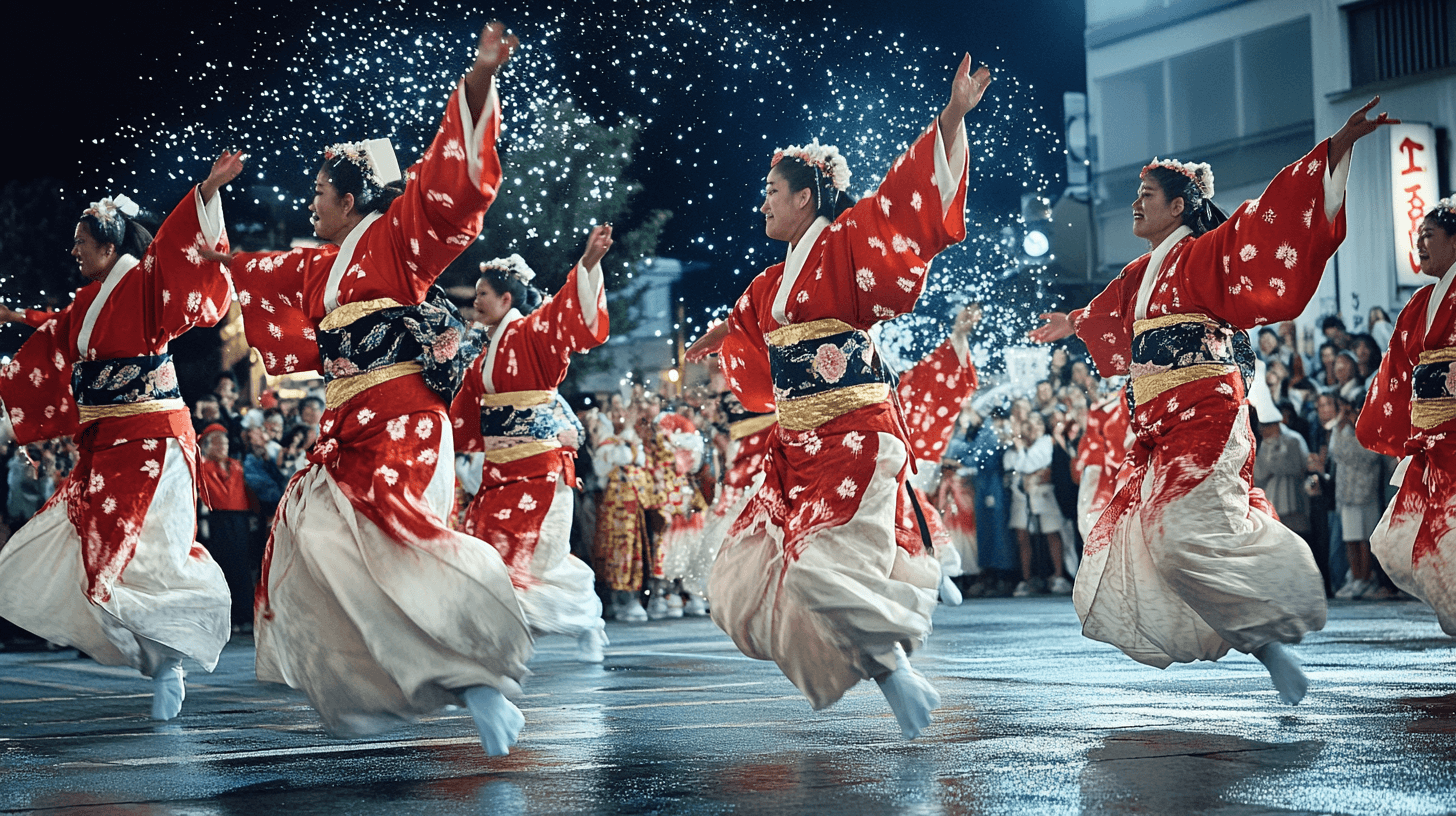
Over the two days, around 650 groups with some 33,000 performers, the dontaku-tai (どんたく隊), parade and dance through the city in costumes of their own choosing, many of them clapping wooden rice paddles (shamoji). Stages and squares are set up at about 40 locations for dance and performing arts. The festival draws more than two million spectators, and it is said to be the biggest festival in Japan during Golden Week.
Highlights of the 2026 program:
- The Dontaku parade, the main event, on Meiji-dōri between Gofukumachi and Tenjin: 1:05 to 7 pm on May 3 and 2:05 to 7 pm on May 4, with decorated "flower cars" (hana-jidōsha) and a continuous stream of dontaku groups.
- Hakata-eki-mae Dontaku Street, in front of Hakata Station, on both mornings.
- Performance stages (enbutai) around the city from 9 am to 9 pm, with hours varying by stage.
- Sō-odori (総おどり), a mass dance at several sites from 5:50 to 6:20 pm on May 4.
Hakata Matsubayashi
The festival's roots are in the Hakata Matsubayashi (博多松囃子), a folk procession said to have begun in 1179 (Jishō 3), according to the Chikuzen no Kuni Zoku Fudoki by Kaibara Ekiken. The matsubayashi still goes around the city during the festival: the three lucky gods (三福神, san-fukujin) make their rounds on both days, and in 2026 the official site showed their position live on the day.
The name
Dontaku is said to come from the Dutch word zondag, meaning Sunday or a day off.
History
The festival was halted during the Second World War. In 1946, just after the war, volunteers from the Naraya district revived it, and their homemade music rang out over a city still scarred by air raids. In 1962 it became the "Fukuoka Citizens' Festival", open to all. The 2026 festival marked 80 years since the revival.
Tips
- In 2026 the organizers added paid "walking-tour viewing seats" for the first time, combining parade viewing with a guided walk through the area's history.
- The parade route on Meiji-dōri is the easiest place to see the most groups in the least time.
- Golden Week is one of the busiest travel periods in Japan, so book transport and accommodation early.
Sources
- About Hakata Dontaku (Fukuoka Citizens' Festival Promotion Association)
- Hakata Dontaku Port Festival 2026 (Yokanavi (Fukuoka City official tourism site))
- 65th Hakata Dontaku Port Festival press release (Fukuoka Chamber of Commerce and Industry)
Facts checked against these sources on . Organizers can change dates and programs; confirm on the official site before you travel.
Related festivals
- Fukuno Yotaka Matsuri福野夜高祭Nanto, Toyama · May 1–3 every year
- Kanda Matsuri神田祭Tokyo · Mid-May; the full festival with the Shinkosai procession is held in odd-numbered years
- Nagasaki Kunchi長崎くんちNagasaki · October 7–9 every year
- Ogiyama Fire Festival扇山火まつりBeppu, Oita · Early April, during the Beppu Hatto Onsen Matsuri