FestivalFall · Kyushu
Nagasaki Kunchi長崎くんち · Nagasaki Kunchi
Nagasaki
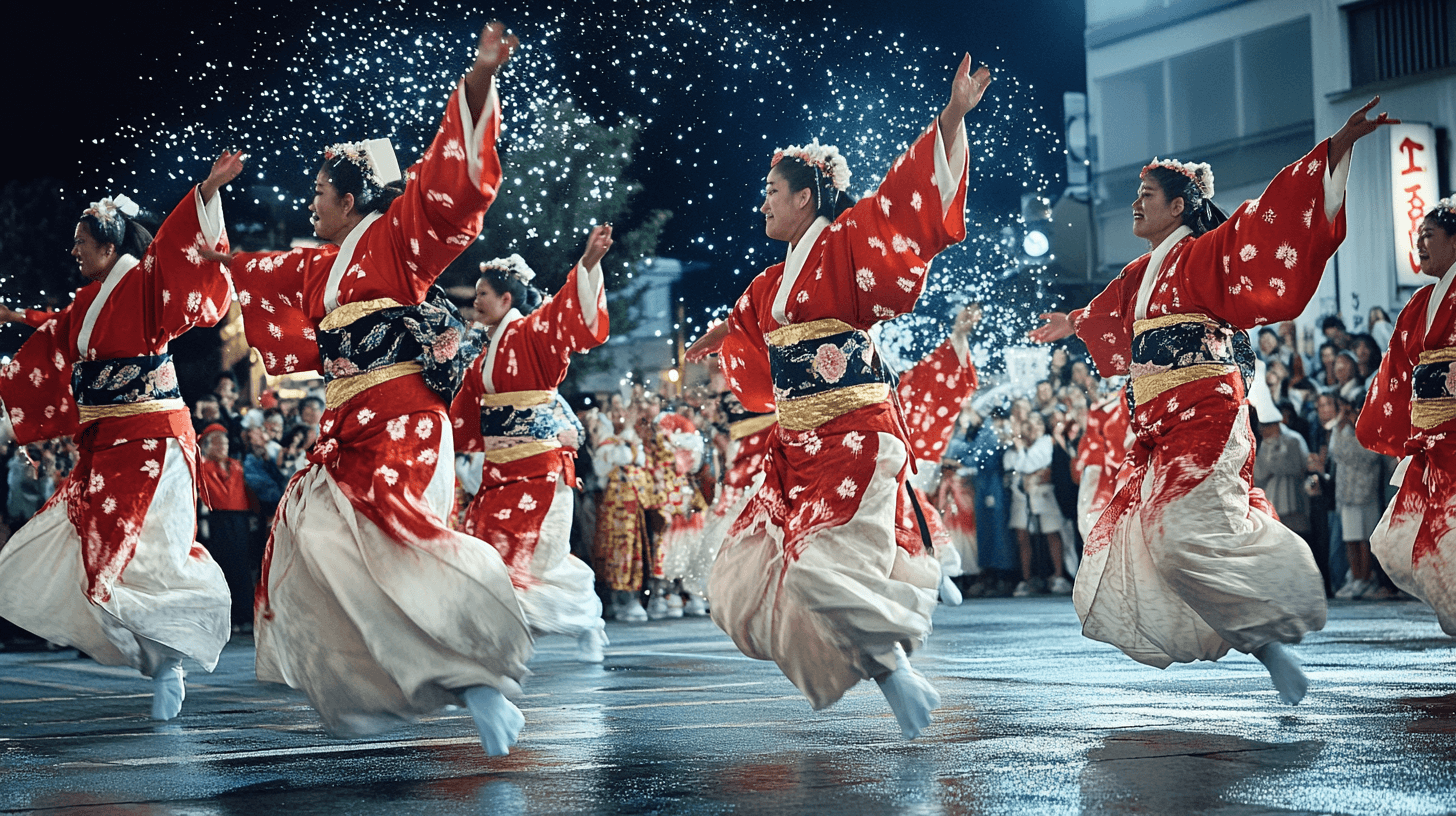
Nagasaki Kunchi is Suwa Shrine's autumn festival, held October 7–9 every year, with dances and floats offered by the city's districts in a seven-year rotation.
Next edition
October 7–9, 2027
Held on these dates every year; the organizer confirms each edition.
Key facts
- When
- October 7–9 every year
- Where
- Suwa Shrine, the Otabisho and central Nagasaki, Nagasaki
- Organizer
- Suwa Shrine and the Nagasaki Traditional Performing Arts Promotion Association
- Official information
- nagasaki-kunchi.com
Dates by year
| Year | Dates | Status |
|---|---|---|
| 2026 | October 7–9, 2026Dancing towns: Imakago, Aburaya, Motofuna, Uwa, Kajiya and Chikugo | Past |
| 2027 | October 7–9, 2027 | Expected |
When it is held
Nagasaki Kunchi (長崎くんち) is the autumn festival of Suwa Shrine (諏訪神社), held on October 7, 8 and 9 every year. The three days are called Maebi (前日), Nakabi (中日) and Atobi (後日). In 2026 they fall on Wednesday to Friday.
The word kunchi is said to come from ku-nichi, the ninth day of the ninth month, the old date of the chrysanthemum festival.
The dancing towns
The performances are offered by Nagasaki's odori-chō (踊町), the dancing towns. The 58 participating districts are divided into seven groups, and each group performs once every seven years, so any one town's float or dance appears only once in seven festivals.
The 2026 dancing towns and their offerings:
- Imakago-machi: kasaboko and hon-odori (classical dance)
- Aburaya-machi: kasaboko and kawafune (river boat)
- Motofuna-machi: kasaboko and a Chinese ship float
- Uwa-machi: kasaboko and the Uwamachi Kokkodesho
- Kajiya-machi: kasaboko and a treasure ship with the Seven Lucky Gods
- Chikugo-machi: kasaboko and the ja-odori (dragon dance)
Each town's performance is led by its kasaboko (傘鉾), a large parasol-shaped float. In the Kokkodesho (コッコデショ), the bearers throw a drum float (taiko-yama) high into the air and catch it one-handed.
Venues and times in 2026
Each town performs for about 30 minutes, and a full program at one venue lasts about three hours.
- October 7: Suwa Shrine at 7 am and 4 pm; the Chūō Kōen viewing stands at 8:10 am and 5:10 pm; the Otabisho at Ōhato at 9:10 am.
- October 8: Yasaka Shrine at 7 am; Chūō Kōen at 8 am.
- October 9: the Otabisho at 7 am; Suwa Shrine at 8:20 am.
Between programs the towns perform niwasaki-mawari (庭先回り), short performances at the doorsteps of homes and businesses across the city.
On October 7, from 1 to 2:30 pm, the deities of Suwa, Morisaki and Sumiyoshi are carried down to the Otabisho in mikoshi (the Okudari), followed by the kasaboko. On October 9, from 1 to 3 pm, they return to the shrine (the Onobori).
Watching like a local
Audiences call for encores with set phrases: "Motte kōi" ("bring it back") for floats that are pulled or carried, "Shomō yare" for the dances, and "Futō maware" for the kasaboko. Paid seats at Suwa Shrine and Chūō Kōen go on sale months ahead (June 7 and August 3 in 2026), while the processions and niwasaki-mawari can be watched from the street.
The festival year begins on June 1 with koya-iri, when the dancing towns start rehearsing. On October 3 the towns display their costumes and props at their homes and halls (niwamise), and on October 4 they hold a full dress rehearsal (ninzu-zoroi).
History
The festival dates from 1634 (Kan'ei 11), when two courtesans, Takao and Otowa, offered komai dances before Suwa Shrine; construction of Dejima began the same year. Its dance offerings were designated a National Important Intangible Folk Cultural Property in 1979. The rites belong to Suwa Shrine, and the performances are coordinated by the Nagasaki Traditional Performing Arts Promotion Association.
Sources
- About Nagasaki Kunchi (Nagasaki Traditional Performing Arts Promotion Association)
- Kunchi Navi 2026 (NBC Nagasaki Broadcasting)
- Nagasaki Kunchi (Nagasaki City)
Facts checked against these sources on . Organizers can change dates and programs; confirm on the official site before you travel.
Related festivals
- Kurama Fire Festival鞍馬の火祭Kyoto · October 22 every year
- Takayama Festival高山祭Takayama, Gifu · April 14–15 (spring) and October 9–10 (autumn) every year
- Zuiki Matsuriずいき祭Kyoto · Early October; the zuiki mikoshi procession is held on October 4
- Hakata Dontaku博多どんたく港まつりFukuoka · May 3–4 every year
- Ogiyama Fire Festival扇山火まつりBeppu, Oita · Early April, during the Beppu Hatto Onsen Matsuri