10 Japanese Summer Festival Food You Need to Try This Season
Beat the humidity and dive into matsuri season! Discover 10 iconic and regional Japanese summer festival foods this summer.

If you have lived in Japan between July and September, you already know the grim reality of natsubate (summer fatigue). The humidity hits you like a warm, wet blanket the second you step outside, but tracking down authentic Japanese summer festival food is the absolute best way to beat the heat while enjoying the seasonal matsuri (festival) vibe.
But there is a huge silver lining to the sweltering heat: the matsuri (festival) season.
There is nothing quite like slipping into a breeze-friendly jinbei (two-piece cotton lounge set) or a yukata (casual summer kimono), heading out into the warm evening air and following the distant sound of taiko (traditional Japanese drums). The absolute best part? The endless rows of yatai (street food stalls) serve up smoky, sweet and incredibly comforting snacks.
To help you navigate the crowds like a seasoned expat, here are 10 legendary summer festival foods and treats you need to track down—ranging from the iconic staples to a few deep-cut regional favorites.
The Heavy Hitters
You will find these legendary staples at virtually every single festival across the country. They are the absolute backbone of Japanese festival culture.
1. Yakisoba (Fried Noodles)
[

](http://cdn.gaijinpot.com/app/uploads/sites/4/2014/07/iStock-Japanese-Summer-Festival-Food-yakisoba.jpeg)Staple noodles at festivals.
You will smell the yakisoba stall long before you actually see it. Follow the scent of sweet, tangy Worcestershire-style sauce as it hits a massive, scorching-hot iron griddle.
These thick wheat noodles are stir-fried at lightning speed with cabbage, pork slices and bean sprouts. The chef will slide your portion into a little plastic container and top it with aonori (dried seaweed powder) and beni shōga (pickled red ginger). Eating a piping-hot pack of yakisoba while standing under a string of paper lanterns, a cold drink in hand, is the ultimate matsuri rite of passage.
2. Takoyaki (Octopus Balls)
[

](http://cdn.gaijinpot.com/app/uploads/sites/4/2014/07/iStock-yasuhiroamano-takoyaki.jpeg)With mayo and savory takoyaki sauce.
Watching a takoyaki master at work is pure hypnosis. They use tiny metal picks to flip dozens of spherical batter balls inside custom dimpled cast-iron trays at a dizzying speed.
Inside each crispy, golden sphere is a molten, creamy center containing a distinct chunk of tako (octopus). Vendors smother the takoyaki balls in a savory sauce, drizzle them with Japanese mayonnaise and blanket them completely in* katsuobushi* (bonito fish flakes) that actually dance from the residual heat. Be careful, though. The insides stay incredibly hot, so bite into them with caution!
3. Kakigori (Shaved Ice)
[

](http://cdn.gaijinpot.com/app/uploads/sites/4/2014/07/Pixta-Chillys-Japanese-Summer-Festival-Food-shaved-ice.jpeg)One of the best ways to chill out during summer in Japan.
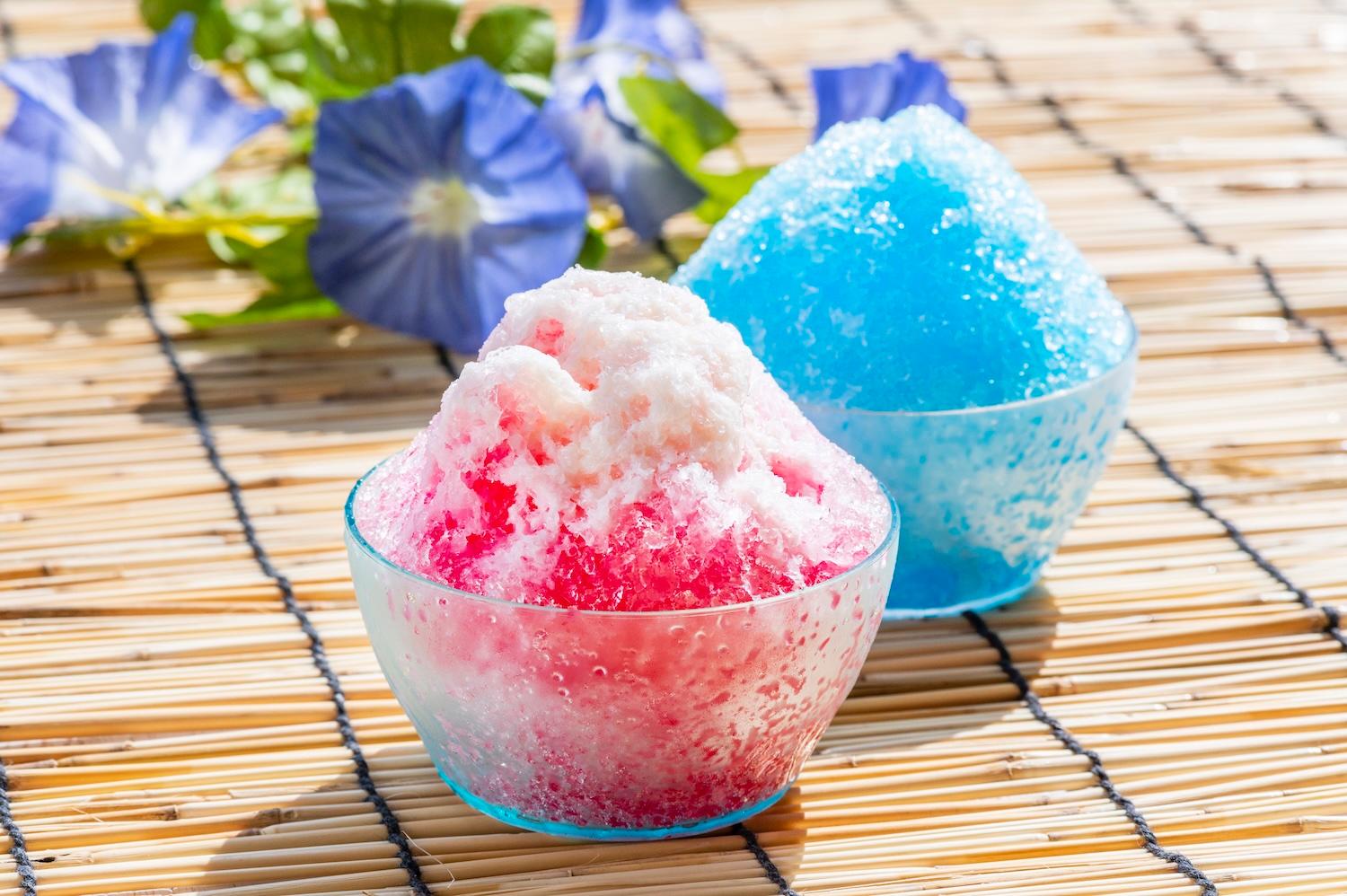
When the evening humidity is making you melt, you need kakigori. You can spot these stalls instantly by looking for the classic koribata (ice flag)—that recognizable white banner featuring the red kanji (Japanese character) for ice (氷, kori) waving over blue waves.
This isn’t your standard crunchy American snow cone. Traditional machines shave the ice block so microscopically thin that it truly mimics fresh winter powder. At standard stalls, you can choose from bright, neon syrups like blue Hawaii, melon or strawberry. If you want to level up, ask for a drizzle of condensed milk on top.
4. Choko Banana (Chocolate Bananas)
[

](http://cdn.gaijinpot.com/app/uploads/sites/4/2022/07/istock-y-studio-choco-banana-summer-food-festival.jpg)Fancy chocolate bananas
This is the ultimate sweet treat to eat while walking. It is a whole banana skewed on a thick stick, dipped in a rich chocolate shell and heavily decorated with colorful sprinkles.
While classic milk chocolate is always available, modern stalls get incredibly creative with pink strawberry chocolate, green matcha coatings and even bananas designed to look like popular anime characters. They are sweet, cold and look fantastic in photos.
5. Hashimaki (Chopstick Pancakes)
[

](http://cdn.gaijinpot.com/app/uploads/sites/4/2014/07/Pixta-Sasazawa-Hashimaki-japanese-summer-festival-food.jpeg)Japan loves its sauces!
Think of hashimaki as an okonomiyaki (savory cabbage pancake) redesigned explicitly for mobile festival consumption. Because trying to eat a messy pancake with a paper plate while walking through a massive crowd is a recipe for disaster, vendors wrapped the pancake around a pair of disposable chopsticks!
The savory batter is loaded with green onions, pickled ginger and various toppings before being rolled up. It is then smothered in savory sauce, Japanese mayo, seaweed powder and sometimes a fried egg. It is incredibly filling, cheap and genius street-food engineering.
Coastal and Regional Specialties
If you are checking out local community festivals or heading down toward the coast in Kanagawa, keep an eye out for these traditional favorites.
6. Ayu no Shioyaki (Salt-Grilled Sweetfish)
[

](http://cdn.gaijinpot.com/app/uploads/sites/4/2014/07/iStock-yamasan-japan-summer-food-Ayu-no-Shioyaki-Salt-Grilled-Sweetfish.jpeg)A staple street food—especially around rivers.
This is easily the most photogenic food at the festival. Ayu is a freshwater river fish known for its unique, clean diet of river algae, which gives its flesh a distinctly sweet, melon- or cucumber-like scent.
Vendors skewer the fish in a dramatic, undulating wave pattern called uneri-gushi so it looks like it is actively swimming upstream. They coat the tail and fins in thick, coarse salt to keep them from burning, and roast them vertically in a circle around glowing-hot charcoal. The skin gets incredibly crispy while the inside stays tender. You can comfortably eat the entire fish from head to tail.
7. Ika no Sugayaki (Grilled Whole Squid)
[

](http://cdn.gaijinpot.com/app/uploads/sites/4/2014/07/iStock-Jonathan-Austin-Daniels-grilled-squid-in-japan.jpeg)It’s not to everyone’s taste.
If you love seafood, this is your holy grail. A whole squid is skewered, heavily scored so it cooks evenly and slapped onto an open flame grill.
As it cooks, the vendor repeatedly brushes it with a simple, potent glaze of soy sauce, sake and mirin. The wonderful sugar in the sauce caramelizes against the hot grill grate, creating a chewy, smoky snack with a umami depth. It pairs perfectly with a crisp beer or a cold green tea.
Deep-Cut Festival Traditions
Want to prove your deep cultural knowledge to your local friends? Seek out these historic, specialized treats.
8. Kawasaki Daishi Kuzumochi (Fermented Mochi)
[

](http://cdn.gaijinpot.com/app/uploads/sites/4/2014/07/Pixta-kikisorasido-Kuzumochi.jpeg)Traditional street food.
While you can buy this year-round near Kanagawa’s famous Kawasaki Daishi Temple, it becomes a major highlight at local summer festivals. In Western Japan, kuzumochi is a translucent jelly made from arrowroot starch. But in Eastern Japan, it is the only fermented sweet in traditional Japanese confectionery.
It is made from wheat starch fermented with lactic acid bacteria for a massive 15 months. The resulting firm, bouncy triangles are covered in sweet kuromitsu (black sugar syrup) and kinako (roasted soybean flour). It has a subtle, refreshing tang that acts as an incredible palate cleanser after eating heavy, greasy festival noodles.
9. Herahera Dango (Paddle Dumplings)
If you find yourself at a summer festival around the Sajima fishing district of Yokosuka, you have to look for this hyper-local sweet. These are rustic, flat flour dumplings named herahera because they resemble local fishing boat paddles, called hera.
Every July, during the Sajima Boat Festival, known as Funamatsuri, local families make them as offerings to maritime deities to pray for safe seas and large catches before enjoying them together. They are boiled, drained and smothered in a rich, sweet anko (red bean paste).
10. Kenbiki Yaki (The “Shoulder-Healer” Dumpling)
This historic treat comes straight out of Okayama Prefecture and is tied to traditional summer farming celebrations. Historically, after finishing the exhausting rice-planting season, farmers needed to recover from their intense physical labor.
To heal their aching, hunched-over shoulder and upper back muscles—colloquially called kenbiki muscles—they fried up flour dumplings stuffed with sweet bean paste and wrapped them inside aromatic, medicinal myoga (Japanese ginger) leaves.
Farmers believed that the heat-releasing oils from the pan-fried dumplings, combined with the refreshing properties of the myoga leaf, would physically melt away shoulder tension
Which street food stall are you heading to first? Do you prefer a classic plate of smoky yakisoba, or are you tracking down some traditional kuzumochi? Let us know in the comments below, and stay cool!
Note: This article content is being automatically formatted. For the original source formatting, visit the link below.
Original source:GaijinPot Blog ↗
More Japan News

How a British Man Became Japan’s Cheese Guy in Okinawa
Looking for the best cheese in Japan? Discover the story of John Davis, the cheese guy in Okinawa, and his artisan shop.

Ricchaadotv on Comedy, Music and Expat Life in Japan
Viral creator @Ricchaadotv sits down with GaijinPot to talk about his alter-egos, couch surfing in Tokyo and making it in Japan.

What Talking to Taxi Drivers Taught Me About Life in Japan
Ordinary taxi conversations revealed a more personal side of daily life, curiosity and human connection.