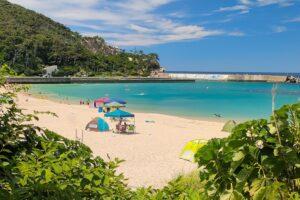
Celebrating Marine Day with 12 Hidden Beaches in Japan
Celebrate Ocean Day in Japan with 12 hidden beaches boasting crystal-clear water. Find how to get there, maps and safety tips!

Every year on the third Monday of July, Japan celebrates Marine Day (Umi no Hi, Marine Day). This national holiday is dedicated to giving thanks to the ocean’s bounty and appreciating the seas that surround this beautiful island nation. What better way than to seek out the best hidden beaches in Japan?
Most locals flock to crowded resort beaches. But modern travelers are looking past traditional guidebooks, instead relying on social media and personal blogs to find “hidden gem beaches.” However, many of these secluded paradises lack the public infrastructure (like toilets, parking, and rescue teams) to handle sudden surges in visitors.
To celebrate Marine Day sustainably, we’ve put together the ultimate insider guide to Japan’s most transparent, hidden beaches.
Near-Tokyo Coastal Escapes
You don’t have to travel far from Tokyo to find pristine waters. The complex ria coastlines and protruding peninsulas of Kanagawa and Chiba act as natural barriers, keeping these spots peaceful and biologically rich.
Araihama Beach (Aburatsubo, Kanagawa)
[

](http://cdn.gaijinpot.com/app/uploads/sites/4/2014/07/d3_plus-PIXTA-hidden-beaches-in-Japan-Araihama-Beach.jpeg)Crystal clear water in Kanagawa.
Located at the southwestern tip of the Miura Peninsula, Araihama Beach is a tranquil, bay-shaped haven. Unlike the crowded beaches of Shonan, it offers calm waves and incredible visibility. You can easily spot marine life, including yellow-and-black striped butterflyfish, around the rocky reefs.
During summer, beach houses* bring* Hawaiian-style tropical vibes. In mid-summer, the sun warms up the large tide pools, making them feel like natural open-air baths! You can also combine your swim with a soak at the nearby Aburatsubo Onsen Kanchoso hot spring to soothe your skin, or take a tiny boat ride to walk the boardwalks of a nearby uninhabited island.
How To Get There
To get there by train, take the Keikyu Rapid Express from Shinagawa Station to Misakiguchi Station (~67 minutes), catch a local bus to the “Aburatsubo” stop (~20 minutes), and walk 5 minutes through a beautiful, Totoro-like forest tunnel. If you are driving, set your GPS to “Aburatsubo Marine Park” to find the parking lot right next to the bus stop.
Morito Beach (Hayama, Kanagawa)
[

](http://cdn.gaijinpot.com/app/uploads/sites/4/2022/08/iStock-y-studio-Morito-Beach-hayama-kanegawa.jpg)Not exactly hidden, but way better than Zushi Beach.
If you are looking for an easy escape from Tokyo but want to avoid the hectic, party-heavy crowds of nearby beaches, the stylish enclave of Hayama is your best alternative. Morito Beach is the social hub of Hayama, offering a wide sandy beach and incredible scenic views.
Floating just offshore, you’ll see a picturesque vermilion torii gate belonging to the historic Morito Shrine, set against the silhouette of Enoshima and, on a clear day, even Mt. Fuji.
The waters here are remarkably clean compared to most Tokyo-adjacent shores, making it perfect for stand-up paddleboarding (SUP) and kayaking. During the summer, upscale seasonal beach huts line the coast, serving cold drinks and food. While it is livelier than some other secret spots, it maintains a highly sophisticated, artistic local community vibe that feels miles away from the city.
How To Get There
To get there by train, take the JR Yokosuka Line to Zushi Station (~50 minutes) or the Keikyu Line from Shinagawa to Zushi-Hayama Station. From either station, take the local Keikyu bus bound for Hayama (via Kaigan) to the “Morito Kaigan” stop (~15 minutes), and walk 2 minutes to the beach. If driving, take the Yokohama-Yokosuka Road and head toward the Hayama coast.
Isshiki Beach (Hayama, Kanagawa)
[

](http://cdn.gaijinpot.com/app/uploads/sites/4/2025/06/Pixta-Hanaasagi-Isshiki-Beach-in-Hayama-alternative-to-zushi-beach.jpeg)A local favorite in Hayama. Isshiki Beach.
Isshiki Beach sits right in front of the elegant Hayama Imperial Villa. CNN once ranked this pristine spot among the “100 Best Beaches in the World.” Lush pine trees and the Sangaoka hills shelter the crescent-shaped shore.
This natural barrier keeps the water surprisingly clear and creates a serene, noble atmosphere. Families love this beach because the calm, shallow bay offers a highly secure swimming environment. At the southern end of the beach, you will find Koisonohana. This rocky outcrop features a tiny Shinto shrine and turns into a playground of tide pools at low tide.
Here, kids and snorkelers can easily search for crabs and small marine life. Just behind the sand sits a gorgeous grassy lawn, perfect for a midday picnic. If you need a break from the heat, visit the adjacent Kanagawa Museum of Modern Art for a cool, air-conditioned escape.
How To Get There
To get there by train, take the JR Yokosuka Line to Zushi Station or the Keikyu Line to Zushi-Hayama Station. Catch the Keikyu Bus headed for Hayama (via Kaigan) and get off at the “Isshiki Kaigan” bus stop (~20 minutes), then walk past the Imperial Villa walls to reach the beach in under three minutes. If driving, navigate to the public parking options near the Hayama Sangaoka area.
Moriya Beach (Katsuura, Chiba)
[

](http://cdn.gaijinpot.com/app/uploads/sites/4/2014/07/iStock-Dane-Gillett-Moriya-Beach-Katsuura-Chiba-Prefecture.jpeg)Located in Katsuura City, the beach is popular for snorkeling.
This stunning spot boasts some of the cleanest waters in Chiba’s Sotobo area and is officially recognized as one of “Japan’s 88 Best Beaches.” Moriya Beach is famous for the stunning “Watashima”—a majestic island floating 150 meters offshore.
Nearby, you’ll find the historic Moriya Cave, a geological site where you can take in gorgeous ocean views from within its dark stone entrance.
How To Get There
To get there by train, take the JR Sotobo Line to Kazusa-Okitsu Station and walk just 8 to 15 minutes to the beach, making it highly accessible for non-drivers. If driving, take the Ken-O Expressway to the Ichihara-Tsurumai Interchange, then drive approximately 50 minutes to reach the coast.
Banda Beach (Tateyama, Chiba)
[

](http://cdn.gaijinpot.com/app/uploads/sites/4/2014/07/Pixta-yanpon-hidden-beaches-in-Japan-chiba-Banda-Sakata-Beach.jpeg)At the very least, enjoy the view.
The sandy shallows have very few fish. However, you can swim out to the rocky shores at either end to find a dynamic underwater world. Large, shimmering schools of horse mackerel and sardines swim right before your eyes.
Keep in mind that local line fishermen and pleasure boat anglers actively use this area. Snorkelers and divers must stay alert and show proper etiquette.
How to Get There
To get there, driving is highly recommended as public buses to this area are extremely infrequent. Take the Tokyo Bay Aqua-Line toward Tateyama and follow the signs toward the southern tip of the peninsula. If you do take public transit, catch a local bus from JR Tateyama Station bound for the Suzaki direction and get off at the “Banda” stop (~40 minutes).
The Natural Barriers of Tokai and Hokuriku
The region stretching from central Honshu to the Sea of Japan side boasts some of the most dramatic “natural isolation walls” on Honshu, characterized by steep ria coastlines and isolated uninhabited islands.
Hirizo Beach (Minamiizu, Shizuoka)
[

](http://cdn.gaijinpot.com/app/uploads/sites/4/2014/07/iStock-okimo-Hirizo-Beach-Shizuoka-hidden-beaches-in-Japan.jpeg)Accessed by service boat from the Nakagi Port.
Towering, sheer cliffs cut off Hirizo Beach from the mainland. This legendary, landlocked sanctuary sits at the southernmost tip of the Izu Peninsula. The warm Kuroshio Current flows directly past the coast. These fast currents instantly sweep away sediment, leaving unparalleled underwater visibility of over 10 meters year-round.
The beach is a true skin-diving wonderland. You can find vibrant coral colonies, damselfish, and anemonefish everywhere. Adventurous swimmers can even explore unique rocky caves like “Heigorou” by squeezing through narrow gaps in the stone.
Massive crowds pack the area during the peak summer months. So spend your morning snorkeling at the adjacent Togai Beach. Once the morning rush subsides, board the boat to Hirizo Beach.
Because the beach is entirely rocky and has strong currents, wearing a life jacket is mandatory. Under local fisheries regulations, bringing harpoons, nets, or shellfish-gathering gear is strictly forbidden.
How To Get There
To get there, you must take a 2-minute ferry ride from Nakagi Port. If using public transport, take a bus from Izukyu Shimoda Station (~1 hour), but make sure to catch the limited return buses between 4:00 PM and 5:00 PM to avoid a very expensive taxi ride back. If driving, navigate directly to Nakagi Port to find the local parking lot.
Kujuppama Beach (Shimoda, Shizuoka)
[

](http://cdn.gaijinpot.com/app/uploads/sites/4/2026/07/iStock-yukihipo-Kujuppama-Beach.jpeg)Probably the most hidden beach on the list.
Kyujuhama (also known as Kujuppama Beach) offers a calm, arc-shaped cove surrounded by bright green forests. This peaceful, sandy landscape stands in stark contrast to the wild rock formations of nearby Hirizo. The beach borders directly the heavily guarded grounds of the Suzaki Imperial Villa, which serves as a private summer retreat for the Imperial family.
The trail leading down from the parking lot to the shore is a steep, paved road. Walking back up while wet and tired is exhausting. Avoid wearing cheap flip-flops on the walk down, as your feet will slide forward.
How To Get There
To get there by public transport, take a bus from Izukyu-Shimoda Station toward the Suzaki Peninsula. If driving, head toward the tip of the peninsula and park in the local lot at the top of the cliff, then descend the steep walking path to reach the shoreline.
Suishohama Beach (Mihama, Fukui)
[

](http://cdn.gaijinpot.com/app/uploads/sites/4/2014/07/iStock-Gyro-Suishohama-Beach-Fukui.jpeg)Said to be one of the best beaches for swimming in Japan.
True to its name (Suisho means crystal), this beach features sparkling, fine-grained sand and emerald-green waters. It is widely celebrated as the “Hawaii of the Hokuriku Region” and is a massive hotspot for young beachgoers and scenic coastal road trips.
The fine-grained sand has garnered enthusiastic support from young beachgoers and those seeking a scenic drive. The emerald green of the Sea of Japan here is truly spectacular, matching the clarity of Okinawa’s seas on a bright sunny day.
How To Get There
To get there, driving is the primary and most convenient method. The beach is a popular stop on weekend drives from the Kansai and Chubu regions via the Hokuriku Expressway.
Mizushima (Tsuruga, Fukui)
[

](http://cdn.gaijinpot.com/app/uploads/sites/4/2014/07/Pixta-axell-fukui-Mizushima-hidden-beaches-in-Japan.jpeg)Small but amazing!
This breathtaking, uninhabited island features a narrow 500-meter sandbar stretching into the sea. Locals call it the “Amanohashidate of Hokuriku.” Authorities cleared the island of all commercial structures, leaving only a basic temporary toilet.
The eastern side offers pristine sandy beaches. In contrast, the western side features a rocky zone covered in seaweed and teeming with small fish.
Ferries depart from the mainland every 30 minutes. However, operators completely suspend ferry services from 12:00 PM to 1:15 PM for staff rest. Local rules strictly prohibit barbecuing and bringing pets on the ferry or the island. Buy all your food and water on the mainland beforehand, and always pack out your trash.
How To Get There
To get there, you must take a regular ferry service departing from Irogahama Pier. To reach the pier, drive or take a local bus from JR Tsuruga Station.
Shiraki Beach (Tsuruga, Fukui)
[

](http://cdn.gaijinpot.com/app/uploads/sites/4/2014/07/Pixta-Paseo-Shiraki-Beach-in-Fukui-hidden-beaches-in-Japan-.jpeg)One of Fukui’s best beaches.
Located at the northern end of Prefectural Road 141, Shiraki is a serene, little-known beach. It features a striking, unique backdrop of the dome-shaped Monju fast breeder reactor. Shielded by Tsuruga Bay, the waves are incredibly calm, offering a quiet, private escape from the nearby crowded Suishohama.
It includes free parking with toilets. There’s a short walk west to the Kadogasaki Observatory, a gorgeous spot for dramatic sunsets. Prepare for self-sufficiency. There are very few restaurants or retail facilities in the surrounding area, so you will need to carry your trash home.
How To Get There
To get there, driving is the primary mode of access. From Suishohama Beach, continue driving north along Prefectural Road 141 to the very end of the coastal road (or take a taxi).
Subtropics of Western and Southern Japan
As we head south to Shikoku, Kyushu and Okinawa, water quality reaches world-class levels, but the local terrain and wildlife demand heightened safety awareness.
Kashiwajima Island (Otsuki, Kochi)
[

](http://cdn.gaijinpot.com/app/uploads/sites/4/2014/07/Pixta-Two-Fish-Kashiwajima-Island-Kochi.jpeg)Kochi Prefecture has a knack for always looking beautiful.
Reigning as a sacred site for Japanese divers, Kashiwajima boasts water so ridiculously clear that boats appear to float in mid-air. Located at the southwestern edge of Shikoku, this paradise is highly isolated.
This beach lacks proper infrastructure. Swimmers rely on makeshift temporary toilets on the east side. Wind and tide patterns can wash untreated waste into the swimming area, creating poor sanitary conditions. Watch out for a sudden, steep drop-off about 10 to 15 meters from the shore. This deep water is highly dangerous for children.
On your way home, you can relax at the nearby Yashi no Yu hot spring. However, hotels give priority to guests during busy weekends and evening check-in hours, so staff may refuse pass visitors.
How to Get There
To get there, drive by private car along winding mountain and coastal roads from either Kochi Airport or Matsuyama Airport (approx. 3 to 4 hours). Cross over the Shin-Kashiwajima Ohashi Bridge to access the island.
Keya Beach (Itoshima, Fukuoka)
[

](http://cdn.gaijinpot.com/app/uploads/sites/4/2014/07/Pixta-TOSHI.K-Fukuoka-Keya-Beach.jpeg)As if you need another reason to visit Fukui.
Itoshima Peninsula is incredibly popular for its sophisticated beach cafes and coastal drives along the Genkai Sea. Keya Beach is a spectacular cove flanked by the scenic rock formation “Keya no Oto” to the east and “Tateishiyama” to the west. It has excellent facilities and beach huts, making it beginner-friendly.
Also, after the mid-August Obon festival, Keya Beach experiences massive jellyfish blooms. Wearing a long-sleeve rash guard is essential to prevent painful stings.
How to Get There
To get there, take a local bus or drive from central Itoshima City. Be aware that the surrounding roads can become congested during summer weekends.
John Man Beach / Odo Coast (Itoman, Okinawa)
[

](http://cdn.gaijinpot.com/app/uploads/sites/4/2014/07/Pixta-TM-Photo-album-John-Man-Beach-Okinawa.jpeg)Gorgeous scenery in Okinawa.
Located in southern Okinawa, John Man Beach is a completely wild, natural learning ground with dramatic tidal changes and untouched coral reefs. During low tide, the shallow lagoon within the reef acts as a giant natural pool completely protected from open waves. You can feed and swim among schools of damselfish, surgeonfish, and wrasses.
Despite the calm lagoon, localized undertows and crashing waves flow directly through gaps in the reef. Never venture past the reef offshore without a guide or a life jacket.
How to Get There
To get there, drive directly from Naha Airport, located roughly 20 kilometers to the north (a 45-minute drive). Public buses are highly impractical due to complex transfers and long walking distances. If driving during morning or evening rush hours, plan for extra travel time.
Leave No Trace
[

](http://cdn.gaijinpot.com/app/uploads/sites/4/2014/07/iStock-yamasan-people-cleaning-up-the-beach.jpeg)Don’t be a punk—pick up your junk!
Japan’s oceans give us incredible beauty. Secluded beaches lack the infrastructure to handle heavy tourist foot traffic. It’s one of the reasons Zushi Beach has become a “no-go” for many people. It’s kind of gross. On Marine Day, let’s give back by actively protecting these shores.
-
Pack Out All Your Trash: Most hidden beaches lack trash cans. Never leave plastic, food scraps or gear behind. Sea breezes and high tides will sweep your garbage into the ocean, killing local life.
-
Protect Marine Habitats and Coral: Keep your hands and feet off delicate underwater ecosystems. Never touch, grab or step on coral reefs, as even a light touch can cause irreversible bleaching and death. Observe fish, sea glass, and shells gently, but leave them exactly where you find them.
-
Minimize Your Chemical Footprint: Standard sunscreens contain chemicals that poison coral reefs and cloud the crystal-clear water. Switch to reef-safe, biodegradable sunscreen before you swim. Avoid using soaps, shampoos or dish detergents in or near the ocean water.
This Marine Day, let’s enjoy Japan’s breathtaking seas with a spirit of gratitude. By leaving each beach cleaner than we found it, we can preserve these hidden paradises for years to come!
Note: This article content is being automatically formatted. For the original source formatting, visit the link below.
Original source:GaijinPot Blog ↗
More Japan News

How a British Man Became Japan’s Cheese Guy in Okinawa
Looking for the best cheese in Japan? Discover the story of John Davis, the cheese guy in Okinawa, and his artisan shop.

Ricchaadotv on Comedy, Music and Expat Life in Japan
Viral creator @Ricchaadotv sits down with GaijinPot to talk about his alter-egos, couch surfing in Tokyo and making it in Japan.

What Talking to Taxi Drivers Taught Me About Life in Japan
Ordinary taxi conversations revealed a more personal side of daily life, curiosity and human connection.