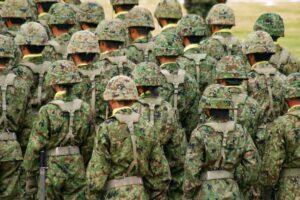
Japan Hiring Ex-Military to Crack Down on Foreigners Overstaying Their Visa
Is Japan hiring ex-military SDF officers for immigration enforcement? What foreign residents need to know.

The LDP-led government kicked things off with a massive 5x hike to visa fees. Then came the sweeping overhaul of the Business Manager Visa. That move jacked up the minimum capital requirement from ¥5 million to a staggering ¥30 million. There are now strict Japanese-language and hiring mandates. It is also now possible to revoke Permanent Residency. What’s next on Takaichi’s list? Japan is hiring ex-military officers to crack down on foreign overstayers.
Naturally, the expat community is comparing this move to U.S. ICE—the armed federal agency notorious for high-profile raids and aggressive deportation sweeps. You might picture silent, middle-of-the-night raids. Except in Japan, you’d probably just see a tiny white kei truck driving down your street. A loudspeaker would blast: “Attention residents, the immigration squad is now in your neighborhood. Please have your visa cards ready for inspection. We apologize for the inconvenience.”
So, is Japan actually building its own military-grade border force? Or is this just another case of administrative reshuffling paired with terrifyingly bad PR? Let’s break down what’s actually happening and why.
- Wait, This Isn’t ICE?
- Why SDF Retirees?
- What Do Japanese People Think?
- A Priority Crisis
- The Bottom Line for Legal Residents
Wait, This Isn’t ICE?
For many Westerners, hearing “the government is hiring retired military to enforce immigration laws” immediately triggers comparisons to U.S. Immigration and Customs Enforcement (ICE).
While the headline sounds awful, the actual operational scope is a bit more restrained:
-
The Numbers: The Japanese government is adding roughly 230 new immigration personnel. Of those, around 180 are standard administrative inspectors (Nyukoku Shinsakan) hired to audit desk paperwork and investigate suspicious employer sponsorships.
-
The “Ex-Military” Part: About 50 field enforcement officers (Nyukoku Keibikan) are being recruited from among retired members of the Self-Defense Forces (SDF). They will primarily be deployed to high-density regional crackdown zones (most notably Ibaraki Prefecture) to handle forced deportations and high-risk field apprehensions.
So, no. Japan isn’t deploying active-duty troops to the streets of Tokyo. Retired SDF members are being hired for civilian civil service roles. Still, introducing military-trained muscle into civilian immigration control significantly changes the optics.
That said, Japan has an estimated 68,000 overstayers. However, that figure has dropped by 8.5% year-over-year and represents less than 1.7% of the nation’s record 4.12 million foreign residents. Yet, with Ibaraki Prefecture alone driving a quarter of all unauthorized labor cases, the government is leveraging these regional hot spots to justify bringing in specialized ex-military teams.
**Why SDF Retirees? **
From the government’s perspective, sourcing retired SDF personnel solves two problems at once:
-
The Muscle: The Ministry of Justice cited the need for officers trained to handle unpredictable or aggressive situations during forced deportations. Because if there’s one group known for mounting violent, guerilla-style resistance against law enforcement, it’s exhausted 24-year-old cabbage farmers in Ibaraki who overstayed an agricultural visa.
-
Early SDF Retirements: Enlisted members of Japan’s Self-Defense Forces retire surprisingly young—often in their late 40s or early 50s. The government has maintained institutional pipelines to funnel early-retiring state workers into secondary security jobs like prison guards, airport security and civil defense.
Part of this is just the bureaucracy finding re-employment for ex-soldiers. But let’s be honest. The optics are 100% intentional. In a political climate where anti-immigrant rhetoric is picking up steam, flexing “military-trained” enforcement gives the government an easy, tough-on-crime win with its conservative base.
What Do Japanese People Think?
Foreign residents on Reddit naturally reacted to the news with anxiety. Meanwhile, Japanese social media offered a very different—and often unhinged—window into domestic sentiment.
In Japan, the Yahoo! Japan News comment section (Yafukome) shares a reputation with Fox News or Daily Mail comment sections in the West. Users skew heavily conservative and frequently indulge in wild, action-movie fantasies. You should take these comments with a massive grain of salt. They reflect a very loud online bubble rather than the actual Japanese zeitgeist.
That said, I’ll start with my favorite.
- “Foreigners often attack with concealed weapons like knives…Even if you hear there’s only one person, there are probably around ten more nearby, so you need a team of ten on your side as well*.”
Immigration squads shouldn’t just carry handguns—they should be deployed with machine guns, combat knives, body armor and tactical sunglasses. They also suggest the government should arm local Japanese villagers so ordinary citizens can presumably join night-patrol posses to hunt down fleeing farmworkers.
2. The “Jobs for the Boys”
For less theatrical commenters, the policy was celebrated not for national security, but as a cozy state-sponsored re-employment program (amakudari). Because enlisted SDF personnel retire in their mid-50s—a decade before they can collect a full state pension—readers cheered the move as a great way to employ veterans who would otherwise end up working as parking lot attendants.
3. The SDF Reality Check
Amidst the calls for tactical gear and militia squads, an actual former SDF officer jumped into the thread to deliver a reality check to the keyboard warriors:
“Only a very small number of Self-Defense Forces personnel are muscular and skilled in martial arts. The truth is that most of them have become accustomed to desk management, have potbellies and lack self-control.”
See? We’re not so different, Japan.
A Priority Crisis
This is where the real frustration lies for legal foreign residents.
If you live in Japan legally, you’ve likely experienced the soul-crushing administrative backlogs. Permanent Residency (PR) applications currently sit on immigration desks in Tokyo for 12 to 24 months or longer. Simple visa renewals and status changes drag on for months. Foreigners sit endlessly in crowded bureaus because agencies claim they are “drowning in paperwork and understaffed.”
Yet, when the government wants to enforce the law, it acts fast. Officials magically summon the resources to recruit, train and deploy ex-military field teams in record time.
This leaves legal, tax-paying foreign residents asking a simple question: Why is it so easy to fund enforcement, but so hard to fund processing?
The Bottom Line for Legal Residents
[

](http://cdn.gaijinpot.com/app/uploads/sites/4/2026/02/Pixta-imageteam-immigration-Japan-Visa-Fees.jpeg)Another day, another line.
If you are in Japan on a valid visa, you do not need to panic. You won’t be facing nighttime tactical raids or militarized checkpoints on your morning commute.
However, you should expect:
-
Strict card checks: Always carry your Zairyu Card (Residence Card). Police and immigration field officers have full legal authority to request it at any time.
-
Tighter employer scrutiny: Companies sponsoring foreign labor—especially in agriculture, construction and manufacturing—will face deeper audits.
Japan’s decision to hire ex-SDF personnel isn’t the start of a military crackdown on everyday expats. However, it sends a clear message about government priorities. So, keep your paperwork up to date, carry your Zairyu card and get right back in line for that two-year PR approval wait.
What do you think? Is this a good idea? Bad idea? Let us know in the comments below.
Note: This article content is being automatically formatted. For the original source formatting, visit the link below.
Original source:GaijinPot Blog ↗
More Japan News
How a British Man Became Japan’s Cheese Guy in Okinawa
Looking for the best cheese in Japan? Discover the story of John Davis, the cheese guy in Okinawa, and his artisan shop.

Ricchaadotv on Comedy, Music and Expat Life in Japan
Viral creator @Ricchaadotv sits down with GaijinPot to talk about his alter-egos, couch surfing in Tokyo and making it in Japan.

What Talking to Taxi Drivers Taught Me About Life in Japan
Ordinary taxi conversations revealed a more personal side of daily life, curiosity and human connection.