Across most of Japan, the tenth month of the old lunar calendar has the name Kannazuki, "the month without gods". In Izumo, in Shimane Prefecture, it is Kamiarizuki, "the month with gods", because tradition says the gods of the whole country meet there. In 2026, Izumo Taisha's festival for them runs from the evening of Wednesday, November 18 to the evening of Wednesday, November 25. Here is what the festival is, what visitors can and cannot see, and how to get there without spending hours in traffic.
The dates, times and meanings below come from Izumo Taisha's own 2026 announcement. Travel details come from the Izumo Tourism Association, Shimane Prefecture's official tourism site, the shrine's traffic map and Ichibata Railway. Links, with dates, are at the end.
The short answer
-
The dates
Izumo Taisha's Kamiari festival runs from the evening of November 18 to the evening of November 25, 2026. It follows the lunar calendar, so the dates change every year.
-
What it is
Tradition says the gods of all Japan gather at Izumo Taisha once a year for a meeting, kamihakari, about people's happiness and the ties, or en, between them.
-
Why the name
Elsewhere the lunar tenth month is Kannazuki, "the month without gods". In Izumo it is Kamiarizuki, "the month with gods". In 2026 that lunar month runs from November 9 to December 8.
-
What you can see
Most rites are closed, but the grounds stay open for normal worship. The farewell rite, Karasade-sai, is on November 25 at 4 p.m.; you can pray from outside the hall.
-
The travel catch
Roads are expected to be very busy on November 19 and November 21–23. Take the train if you can; there are extra trains and a free shuttle bus on November 21–23.
Why do Japan's gods go to Izumo?
Izumo Taisha (出雲大社, officially read Izumo Ōyashiro) enshrines Ōkuninushi no Ōkami. The shrine describes him as the god who looks after kamigoto, the unseen work of the gods, and who ties together the good connections in people's lives. That is why Izumo Taisha is so closely linked with enmusubi: "tying en", the bonds of marriage, friendship and good fortune.
The shrine's own explanation of the festival goes like this. The tenth month of the old calendar is widely called Kannazuki. The reason, it says, is that once a year the gods who live in villages all over Japan travel to Izumo Taisha, where Ōkuninushi is enshrined, to hold kamihakari, a meeting that ties people's happiness together. Because the gods are all in Izumo, the people of the Izumo region have long called this month Kamiarizuki, the month with gods.
The festival follows the lunar calendar. The Izumo Tourism Association gives the 2026 festival as the 10th to the 17th day of the tenth lunar month, which this year falls on November 18 to 25. Next year's dates will be different, so do not plan around this year's.
What happens during the festival, and when?
Izumo Taisha's announcement lists these 2026 rites. "Public?" summarises what the Izumo Tourism Association says ordinary visitors can do.
| Date (2026) | Time | Rite | Where | Public? |
|---|---|---|---|---|
| Wed, Nov 18 | 7 p.m. | Kamimukae Shinji, the welcoming of the gods | Inasa-no-hama beach | Yes: you may attend at the beach and walk behind the procession |
| Wed, Nov 18 | After the beach rite | Kamimukae-sai, welcome ceremony | Worship hall (Haiden) | You can pray from outside; you cannot enter |
| Thu, Nov 19 | 9 a.m. | Kamiari-sai | Main hall (Honden) | Invited guests only |
| Nov 19–24 | 5 p.m. daily | Yokagura kitō, evening kagura prayers | Kagura-den hall | Prayer service; ask the Kagura-den |
| Mon, Nov 23 | 10 a.m. | Kenkoku-sai, Kamiari-sai, Enmusubi Taisai | Main hall | Enmusubi Taisai places are full |
| Wed, Nov 25 | 10 a.m. | Kamiari-sai, Enmusubi Taisai | Main hall | Enmusubi Taisai places are full |
| Wed, Nov 25 | 4 p.m. | Karasade-sai, the gods' farewell | Worship hall | You can pray from outside; you cannot enter |
Izumo City's festival calendar also lists a second farewell rite, the Dai-ni Karasade-sai, on Friday, December 4.
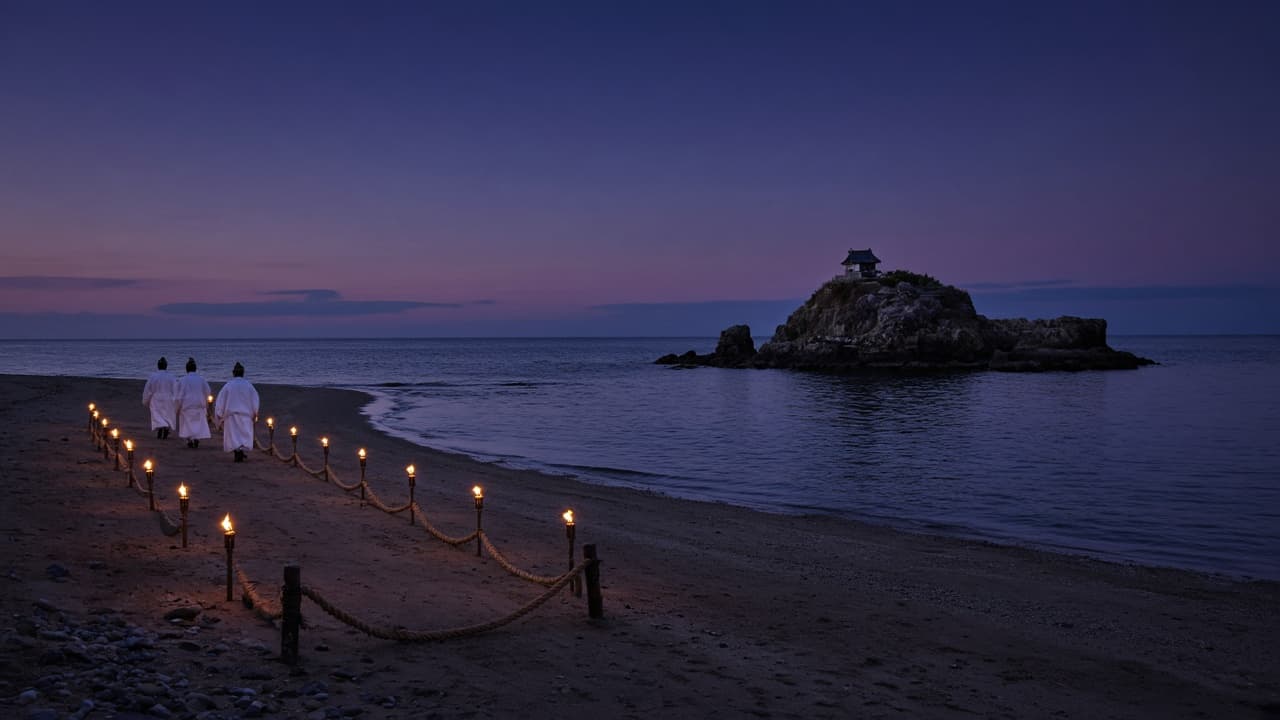
Welcoming the gods (November 18). Inasa-no-hama is a beach about 1 km west of the shrine. The shrine says the gods arriving from across Japan are welcomed there in an old-style rite, then travel to Izumo Taisha led by their messenger, the dragon-serpent god Ryūjashin. The welcome ceremony follows in the worship hall. Visitors can attend at the beach and walk with the procession, and white gohei (paper wands) are handed out at the entrance to the beach ritual ground. For safety, this year's procession route turns left at the Inasa-no-hama crossing, follows Route 431 and turns left at the Miyauchi crossing. It does not use the road known as Kamimukae-no-michi.
The gods' meeting (November 19–25). The shrine says the gods' meeting is held at the Kami-no-miya, a hall that serves as their meeting place, where a rite is held every day. Ōkuninushi presides.
The farewell (November 25). At 4 p.m. on the last day, the shrine holds Karasade-sai (神等去出祭) to thank the gods and send them on their way. The gods, who stay in the Jūkusha halls on the east and west sides of the grounds, are moved to the worship hall. When a priest calls out "O-tachi!" ("Departure!"), the gods leave Izumo Taisha.
Can visitors still go after the opening night?
Yes. The Izumo Tourism Association says the grounds stay open for normal worship throughout the festival, although they get crowded. Its listed hours for 2026 are:
| What | Hours |
|---|---|
| Worship in the grounds | 6:00 a.m. to 7:00 p.m. |
| Soga-no-yashiro shrine within the grounds | 6:00 a.m. to 4:30 p.m. |
| Prayer services (kitō) | 9:15 a.m. to 4:30 p.m., reception 8:40 a.m. to 4:00 p.m. |
The association notes that hours can change on some days. Prayers for enmusubi and other wishes continue during the festival in the worship hall and the Kagura-den.
If you come for the atmosphere rather than a rite, the best moments are the 4 p.m. farewell on November 25, which you can watch from outside the hall, and the evening kagura prayers from November 19 to 24.
What are the rules for visitors?
The Izumo Tourism Association asks visitors to remember four things:
- It is not a tourist event. There are no food stalls, and some areas are closed to the public.
- The welcoming rites happen in the dark. Watch your footing on the beach and the roads.
- No flash photography in the dark. The association asks visitors not to use flash, because it disturbs other people.
- Some places are off limits. You can pray from outside the worship hall during the welcome and farewell rites, but you cannot go inside.
Izumo Taisha also bans drones in its grounds, to protect its buildings, which include a National Treasure and Important Cultural Properties, and to keep people safe. It bans smart glasses in the grounds too, for privacy reasons.
How do I get there without sitting in traffic?
Shimane Prefecture's tourism site and the Izumo Tourism Association both expect very heavy traffic on Thursday, November 19 and Saturday, November 21 to Monday, November 23 (the Labor Thanksgiving Day long weekend). They warn that driving from central Izumo to the shrine could take two to three hours, and that almost every parking lot near the shrine is usually full between about 10 a.m. and 3 p.m.
Their advice is to use public transport. The practical options:
| Option | What to know |
|---|---|
| Ichibata Railway | Its Izumo Taisha-mae Station serves the shrine. For November 21–23 the railway is running extra trains, all limited express, that stop only at listed stations. Trains from the Izumo, Taisha and Matsue directions meet at Kawato Station for an easy change. |
| Park and ride at Unshu-Hirata | The shrine's traffic map points drivers to free parking near Ichibata's Unshu-Hirata Station (about 110 spaces), then a train of about 20 minutes to Izumo Taisha-mae. At the station's west lot, take your parking ticket to the station and buy a train ticket to have it made free. |
| Free shuttle bus | November 21–23 only, 9:00 a.m. to 4:00 p.m., every 30 minutes, between the north parking lot of the Izumo Bunka Denshōkan and the Michi-no-eki Goen Hiroba roadside station near the shrine. |
| Live traffic and parking | The official site, taisha-traffic.net, posts congestion and parking updates on the busiest days. |
Two more points from the official guidance. The Inasa-no-hama No. 1 parking lot near the beach is closed on November 17 and 18. And the local lanes around the shrine are very narrow, so drivers are asked to stay on main roads.
Which other shrines hold Kamiari festivals?
Izumo Taisha is the best known, but several other shrines in Shimane hold their own festivals for the visiting gods. Izumo Taisha lists these dates for 2026:
| Shrine | Place | 2026 dates |
|---|---|---|
| Asayama Shrine | Asayama, Izumo | November 9–18 |
| Hinomisaki Shrine | Hinomisaki, Taisha, Izumo | November 19–25 |
| Kumano Taisha | Yakumo, Matsue | November 19 to December 4 |
| Mankusen Shrine | Hikawa, Izumo | November 25 to December 4 |
Izumo City says Mankusen Shrine holds its own farewell rite, Karasade-sai, on December 4. If you plan to visit one of these shrines for a rite, check its times with the shrine first.
FAQ
When is the Kamiari festival at Izumo Taisha in 2026?
From the evening of Wednesday, November 18 to the evening of Wednesday, November 25, 2026. The welcoming rite was set for 7 p.m. on November 18 at Inasa-no-hama beach, and the farewell rite, Karasade-sai, is at 4 p.m. on November 25.
What is the difference between Kannazuki and Kamiarizuki?
Both are names for the tenth month of the old lunar calendar. Kannazuki, "the month without gods", is the common name. In the Izumo region the same month is Kamiarizuki, "the month with gods", because, the shrine explains, the gods of all Japan are said to gather at Izumo Taisha then.
Why does the date change every year?
Because the festival follows the lunar calendar. In 2026 the festival days are the 10th to the 17th of the tenth lunar month, which fall on November 18 to 25.
Can tourists watch the festival rites?
Some. Visitors may attend the welcoming rite on the beach and walk with the procession, and can pray from outside the worship hall during the welcome and farewell ceremonies. The Kamiari-sai rites in the main hall are for invited guests. The grounds stay open for normal worship all week.
Can I join the Enmusubi Taisai?
Not this year. The shrine says applications for both the November 23 and November 25 ceremonies are full. Prayer services for enmusubi still run during the festival.
Are there food stalls?
No. The Izumo Tourism Association says this is not a tourist event and there are no stalls.
Can I take photos?
Photography is not banned outright, but do not use flash in the dark, and do not fly a drone or use smart glasses in the shrine grounds, which the shrine bans.
What is the best way to get there during the festival?
By train. Ichibata Railway runs to Izumo Taisha-mae Station and has extra trains on November 21–23. Drivers can park free near Unshu-Hirata Station and take the train, or use the free shuttle bus on November 21–23.
Bottom line
For one week a year, Izumo is said to host every god in Japan. You will not see most of the rites, and that is the point: the festival belongs to the gods and the worshippers. Go to pray, stay for the 4 p.m. farewell on November 25 if you can, keep your flash off, and leave the car at home.
Elsewhere it is the month without gods. In Izumo, it is the month with them.
Sources and further reading
- Izumo Taisha — Kamiari festival 2026 announcement (Japanese) (dates and times of each rite; meaning of Kannazuki and Kamiarizuki; Enmusubi Taisai full; other shrines' 2026 dates); Traffic and parking map, November 2026 (Japanese, PDF) (Unshu-Hirata park and ride; free shuttle bus); Notice on drones and smart glasses (Japanese)
- Izumo Tourism Association — Kamiari festival and traffic information, October 9, 2026 (Japanese) (lunar dates; worship and prayer hours; public access to each rite; visitor rules; congestion warnings)
- Shimane Prefecture official tourism site — Traffic and parking during the Kamiari festival, updated November 11, 2026 (Japanese) (busiest days; parking closures; free shuttle bus dates)
- Izumo City — Kamiarizuki events 2026 (Japanese) (festival calendar, including the December 4 rites)
- Ichibata Railway — Extra trains during the festival, October 26, 2026 (Japanese) (November 21–23 limited express trains; change at Kawato); English guide
- Izumo Taisha traffic and parking guide — taisha-traffic.net (Japanese) (live congestion and parking updates)
- The Japanist — Labor Thanksgiving Day 2026 guide; Japan's autumn leaves (koyo) guide
Method note: Dates, times and access rules are those published by Izumo Taisha, the Izumo Tourism Association, Shimane Prefecture, Izumo City and Ichibata Railway as of November 16, 2026. They can change, for example in bad weather. Translations of Japanese sources and English renderings of rite names are ours. Check the shrine's and operators' own sites before you travel.
Continue Reading
 Illustration, not a photo: this image was generated with AI.
Tori no Ichi 2026: Tokyo’s Rooster-Day Fair, Lucky Kumade Rakes and How to Visit
Tokyo’s rooster-day fair falls on Saturday, November 7 and Thursday, November 19 in 2026. At the Asakusa Otori Shrine each fair day runs from midnight to midnight, with about 150 kumade stalls and 700,000–800,000 visitors. What kumade are, how to haggle and clap the deal, ceremony times, stations and Shinjuku’s Hanazono fair.
 Illustration, not a photo: this image was generated with AI.
Labor Thanksgiving Day 2026 in Japan: The November 21–23 Long Weekend, Explained
Labor Thanksgiving Day is Monday, November 23, 2026, making a three-day weekend from November 21. What the holiday celebrates, its harvest-ritual roots in Niinamesai, and the travel catch: every Tokaido and Sanyo Shinkansen Nozomi is all-reserved, with no non-reserved seats.
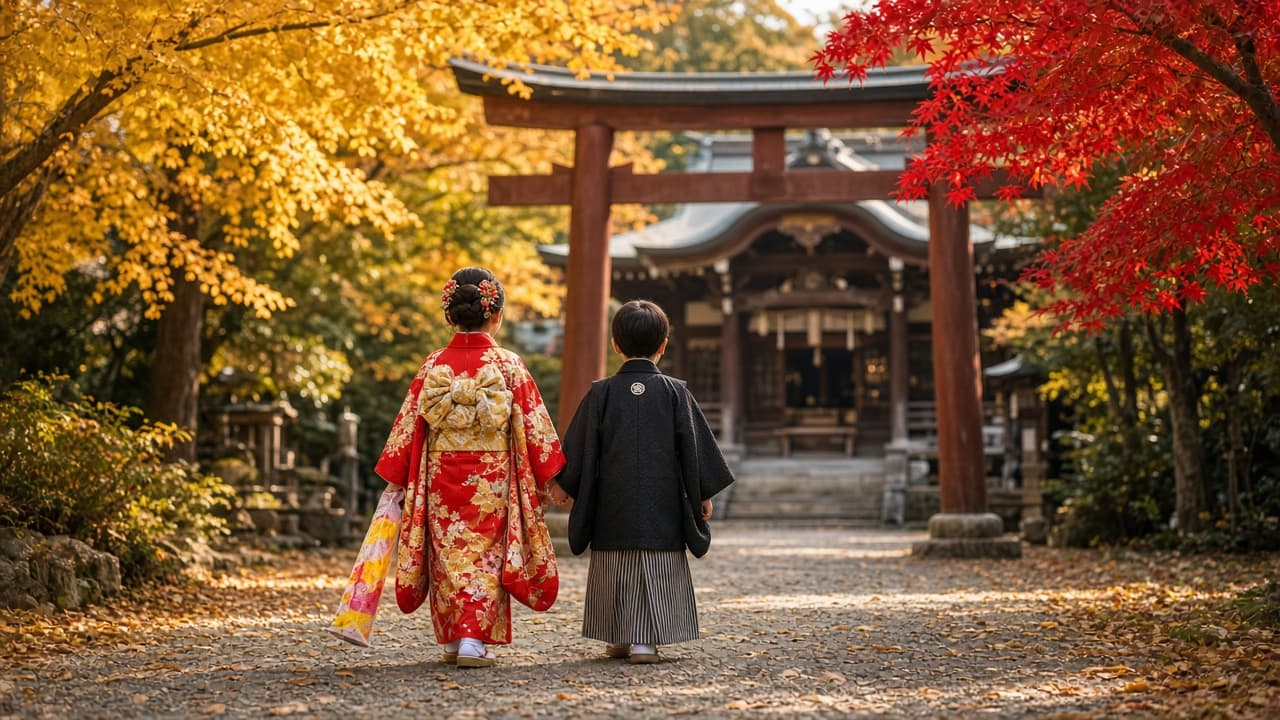 Illustration, not a photo: this image was generated with AI.
Shichi-Go-San 2026: Japan’s Day for Children Aged 3, 5 and 7, Explained
Shichi-Go-San’s traditional date, November 15, falls on a Sunday in 2026 and is not a public holiday. Which ages celebrate, what children wear, why chitose-ame candy matters, and how a family prayer works at Meiji Jingu: no booking, offerings from ¥5,000, gates closing at 16:10 in November.