Last autumn was the worst on record for bear attacks in Japan. This year started busy too, but from April to September 2026 the number of people hurt fell by more than a third. October was the peak month last year, so the season is not over. Here is what the Ministry of the Environment's latest figures show, where bears live, what changed in the law, and the simple steps that keep hikers and leaf-peepers safe.
Every number here comes from the Ministry of the Environment's preliminary bear figures, updated on October 14, 2026, and its official safety advice. Links are at the end.
The short answer
-
Fewer attacks so far in 2026
April to September 2026: 64 attacks, 68 people hurt, 6 deaths. That is 35 fewer attacks than the same months of 2025.
-
October is the danger month
In fiscal 2025, October alone had 78 attacks and 7 deaths, more than a third of the year's total.
-
2025 was the worst year on record
Fiscal 2025 (April 2025 to March 2026) had 216 attacks, 238 people hurt and 13 deaths, the highest in the ministry's figures back to 2008.
-
Bears live in most of Japan
Brown bears in Hokkaido, Asian black bears on Honshu and parts of Shikoku. There are none in Kyushu or Okinawa.
-
Make noise, never run
Use a bell or your voice, avoid hiking alone, and if you meet a bear, back away slowly while watching it.
-
Bear spray can't fly
You can't carry bear spray on a plane or put it in checked bags. Buy or rent it after you land.
How many bear attacks has Japan had in 2026?
Between April and September 2026, Japan recorded 64 bear attacks (the ministry calls them "human injury incidents"), with 68 people hurt, 6 of whom died (Ministry of the Environment, FY2026 preliminary figures).
Japan counts by fiscal year, which runs from April to March. Here is how this year compares with the same six months of last year:
| April–September | Fiscal 2025 | Fiscal 2026 |
|---|---|---|
| Attacks | 99 | 64 |
| People hurt | 108 | 68 |
| Deaths | 5 | 6 |
The early months were just as bad as last year. June 2026 had 19 attacks, more than June 2025's 13. Then things calmed down: September 2026 had just 6 attacks, against 37 a year earlier (FY2025 figures).
Bear attacks in Japan, month by month
Human injury incidents. Fiscal 2025 peaked in October with 78. Fiscal 2026 data runs to September.
Fiscal 2025 Fiscal 2026 (to September)
Source: Ministry of the Environment, bear human injury incidents (preliminary), updated 14 October 2026.
Iwate had the most attacks this year (12, including 3 deaths), followed by Akita (8) and Fukushima (7 attacks, 10 people hurt).
Why was 2025 so bad, and why is October the peak?
Fiscal 2025 broke every record. There were 216 attacks, 238 people hurt and 13 deaths. That is more than the previous high of 198 attacks in fiscal 2023, and the most deaths in any year of the ministry's figures, which go back to fiscal 2008 (Ministry of the Environment, all years).
Bear attacks in Japan by fiscal year
Fiscal years run April to March. Fiscal 2025 set records for both attacks and deaths.
Source: Ministry of the Environment, bear human injury incidents (preliminary), updated 14 October 2026.
Autumn is the risky season. Bears eat as much as they can before they hibernate, roughly from December to February (Ministry of the Environment, national parks). In fiscal 2025, October alone had 78 attacks, 89 people hurt and 7 of the year's 13 deaths.
Sightings rose too. Prefectures reported 50,801 bear sightings in fiscal 2025, about two and a half times the 20,513 of the year before. From April to August 2026 there were already 19,789, and June 2026 alone had 6,260 (sightings data). These counts leave out Hokkaido, which does not publish a figure, and each prefecture counts in its own way.
Why are numbers lower now? Japan Agricultural News (Nihon Nogyo Shimbun) reported that acorns appear to be plentiful in Tohoku this year, so bears have more food in the forest. It also noted that the ministry is still urging caution, because last year's attacks peaked in October (Nihon Nogyo Shimbun, October 14, 2026).
Where in Japan do bears live?
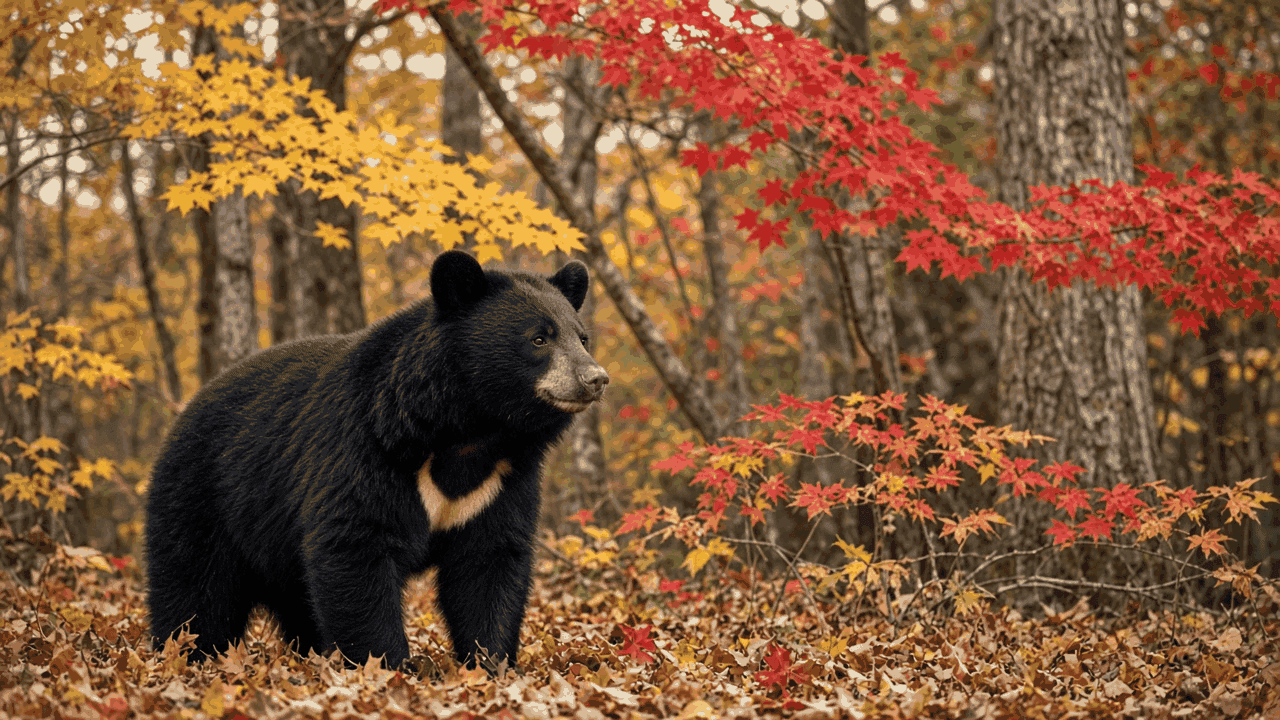
Japan has two kinds of bear (Ministry of the Environment):
| Where | Honshu, and parts of Shikoku | Hokkaido |
|---|---|---|
| Look | Black, often with a pale crescent on the chest | Black or reddish brown |
| Diet | Plants, nuts and fruit, plus insects | Plants, nuts and fruit, plus insects |
| Active | Roughly March to November | Roughly March to November |
There are no bears in Kyushu or Okinawa, so the ministry does not survey them there (sightings data, note 2).
Bears are not only a problem in remote areas. In fiscal 2026 so far, 2 attacks have been recorded in Tokyo and 1 in Kyoto Prefecture.
What should I do to avoid meeting a bear?
The ministry's advice for hikers and visitors to national parks comes down to a few habits (Ministry of the Environment):
-
1
Check before you go
Look up recent sightings on the prefecture's website and stop at a visitor centre for local rules and news.
-
2
Don't go alone
Hike with others where you can.
-
3
Let bears know you're there
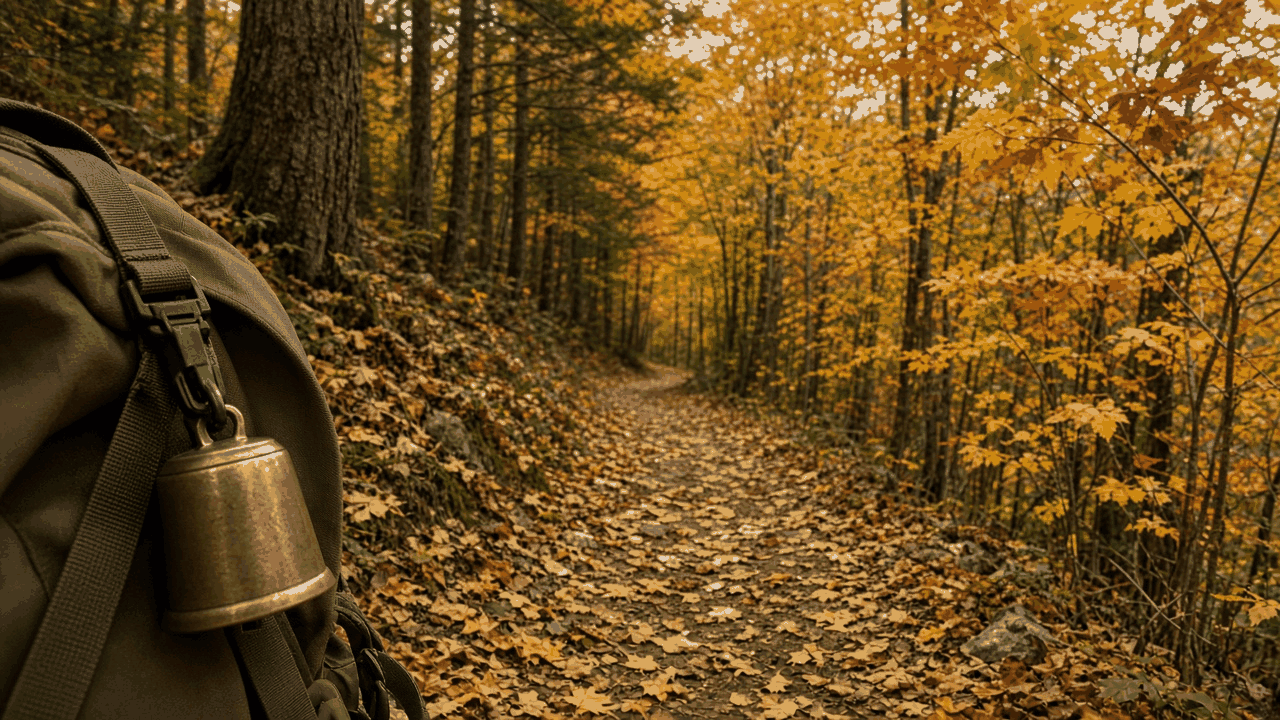
A bell, a radio, clapping or talking all help. Bears usually avoid people if they hear them coming.
-
4
Take extra care in certain spots
Where you can't see far, along streams, and in strong wind or rain, when bears may not hear you.
-
5
Keep it up until the end
Don't drop your guard on the way down.
-
6
Manage food and rubbish
At campsites, never leave food, bags or rubbish out, not even in front of your tent. Use food lockers if there are any.
Bear spray: the ministry says to find out in advance where you can buy or rent it. You can't take it on a plane, in your hand luggage or in checked bags, so get it after you land.
What should I do if I see a bear?
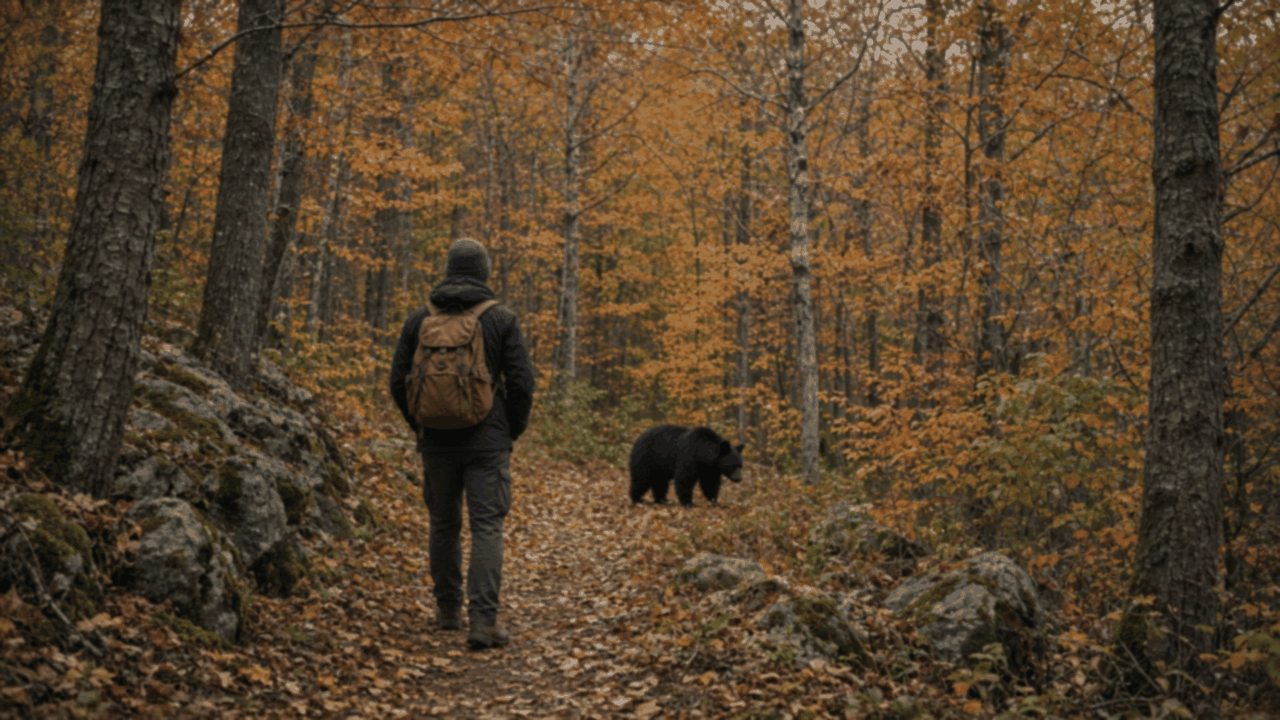
Stay calm. A startled or excited bear is the most dangerous kind. The ministry recommends (Ministry of the Environment):
- Never go closer, and never approach to take a photo.
- Back away slowly, keeping your eyes on the bear.
- Don't force your way past. Wait for the bear to leave.
- Don't shout, don't turn and run (bears instinctively chase), and don't throw bags or stones.
If a bear attacks, lie face down and protect your neck, face and stomach. If you have bear spray, use it, and learn how it works before your trip.
What is "emergency shooting", and what changed in the law?
Until 2025, hunters were generally not allowed to fire guns in built-up areas, even at a bear. A change to Japan's wildlife law, in force since September 1, 2025, created emergency shooting (kinkyu juryo) (e-Gov law database).
Under it, a town's mayor can have trained shooters fire at a bear or wild boar that has entered, or is about to enter, places where people live and move about. That includes homes, public spaces and even vehicles. It applies only when there is no other quick way to deal with the animal and safety steps, such as closing roads, can stop people being hit (Ministry of the Environment, emergency shooting).
It is now used regularly. The ministry knows of 60 cases in fiscal 2025 where shots were fired, and 36 so far in fiscal 2026, as of October 13 (FY2025, FY2026). A few of these involved wild boar rather than bears.
If you are near a bear incident, police or town staff may close roads or tell you to keep indoors. Follow their instructions.
FAQ
How many bear attacks has Japan had in 2026?
From April to September 2026, the Ministry of the Environment's preliminary figures show 64 attacks, 68 people hurt and 6 deaths. That is 35 fewer attacks than the same period in 2025.
Was 2025 the worst year for bear attacks in Japan?
Yes. Fiscal 2025 (April 2025 to March 2026) had 216 attacks, 238 people hurt and 13 deaths, the most in the ministry's figures going back to fiscal 2008.
When are bear attacks most common in Japan?
In autumn, especially October, when bears feed heavily before hibernating. In fiscal 2025, October alone had 78 attacks and 7 deaths.
Are there bears in Tokyo, Kyoto or Hokkaido?
Brown bears live in Hokkaido. Asian black bears live on Honshu and in parts of Shikoku, and attacks were recorded in both Tokyo and Kyoto prefectures in 2026. There are no bears in Kyushu or Okinawa.
What should I do if I see a bear in Japan?
Don't go closer or take photos. Back away slowly while watching the bear, and wait for it to leave. Don't shout, run or throw things. If it attacks, lie face down, protect your neck, face and stomach, and use bear spray if you have it.
Can I bring bear spray to Japan on a plane?
No. Bear spray can't be carried on board or put in checked bags. Buy or rent it after you arrive.
What is emergency shooting in Japan?
A system in force since September 1, 2025, that lets a town's mayor have trained shooters fire at a bear or wild boar in or near places where people live, when there is no other quick way and safety steps are in place.
Bottom line
Bear numbers are down from last year's record, but October is the month that matters most. If you're heading into the mountains for autumn colours, check local sightings, make noise, don't hike alone, and know what to do if you meet a bear.
Don't run, don't shout, don't get closer for a photo: back away slowly and let the bear leave.
Sources and further reading
- Ministry of the Environment: bear data — Bear information and measures (hub page); FY2026 injury incidents, preliminary (updated October 14, 2026: April–September, 64 incidents, 68 people, 6 deaths; by prefecture); FY2025 injury incidents (216 incidents, 238 people, 13 deaths; October 78, 89 and 7); Injury incidents, all years (October 14, 2026: fiscal 2008 onwards); Bear sightings, preliminary (October 14, 2026: fiscal 2022–2026, to August 2026; Hokkaido not published; no bears in Kyushu or Okinawa)
- Ministry of the Environment: safety and law — Bears: what to know before visiting a national park (Japanese) (species and range; active March to November; prevention; what to do on meeting or attack; bear spray on planes); Emergency shooting system; Emergency shooting cases, FY2025 (60 cases, updated March 27, 2026); FY2026 (36 cases, updated October 13, 2026)
- e-Gov law database — Wildlife Protection, Control and Hunting Act (Chapter 3-2, Emergency shooting; amendment in force September 1, 2025)
- Nihon Nogyo Shimbun (Japan Agricultural News) — Bear injury cases fall in first half of fiscal 2026 (Japanese) (October 14, 2026: acorn crop in Tohoku; ministry still urging caution)
- The Japanist — Japan's autumn leaves (koyo) guide; Kanji of the Year 2025: kuma (bear)
Method note: All figures are the ministry's preliminary numbers, compiled from prefectures, and may be revised. "Attacks" means the ministry's count of human injury incidents; one incident can involve more than one person. Fiscal years run from April to March. Sightings are counted differently in each prefecture, so compare them with care.
Continue Reading
 Illustration, not a photo: this image was generated with AI.
Japan’s Tax-Free Shopping Changes on November 1, 2026: How the New Refund System Works
From November 1, 2026, visitors to Japan pay full price at tax-free shops and get the consumption tax back after a customs check at the departure airport, before checking bags, within 90 days. Old vs new rules, step by step at the shop and airport, the mistakes that cost you the refund, and official sources.
 Illustration, not a photo: this image was generated with AI.
Japan’s Konbini, Explained: What 56,000 Convenience Stores Actually Do—and How to Use One Like a Local
Japan has 56,189 convenience stores (JFA, August 2026) handling over a billion bill payments a year. Why konbini became national infrastructure, the three chains that run 94% of them, what you can do there—cash, taxes, pension, parcels, tickets, printing—the etiquette, and why the network has stopped growing.
 Illustration, not a photo: this image was generated with AI.
Silver Week in Japan: What It Is, Why 2026 Is Five Days, and What People Actually Do
Japan’s third full five-day Silver Week since 2009 and 2015 runs 19–23 September 2026: Respect for the Aged Day, a Citizens’ Holiday sandwich, and the Autumnal Equinox—what it is, what families do, and how travellers should handle trains, Tokyo, and Nagoya.

If you're looking for nicely crafted Japan tours, check out: Arigato Travel's experiences.Partner link