Japan's Tax-Free Shopping Changes on November 1, 2026: How the New Refund System Works
For years, tax-free shopping in Japan was simple: show your passport, and the tax came off at the till. From November 1, 2026, that ends. Visitors will pay the full price, tax included, and get the tax back only after a quick customs check at the airport or seaport when they leave. Here is exactly what changes, what to do at the shop and at the airport, the mistakes that will cost you your refund, and what stays the same.
Japan's consumption tax is 10% on most things and 8% on food and non-alcoholic drinks (National Tax Agency). For a visitor buying a camera, a kimono or a suitcase full of skincare, that is real money. The good news is that you can still get it back. The difference is when and how.
We checked every rule in this guide against the official sources: the Japan Tourism Agency's tax-free site, the National Tax Agency's pamphlet and Q&A, Japan Customs, and the Japan National Tourism Organization (JNTO). Links are at the end.
The short answer
-
Starts November 1, 2026
The new rules apply to anything you buy from that day. There is no overlap period.
-
Pay first, refund later
Tax-free shops charge the full price with tax. The tax comes back after customs confirms you are taking the goods out of Japan.
-
Customs check before you check in
At your departure airport or seaport, scan your passport at a tax-free kiosk before you hand over any bags.
-
Within 90 days
You must leave Japan, and do the check, within 90 days of the purchase.
-
Green or red
Green means you are done. Red means you show your goods to a customs officer nearby.
-
No more sealed bags
Food and cosmetics no longer go in special bags. But if you eat or use them in Japan, there is no refund.
-
One missing item spoils the receipt
Customs checks each receipt as a whole. If one item is missing, the whole receipt gets no refund.
Old rules vs new rules
Here is what changes for you, side by side.
| Price at the shop | Tax taken off at the till | Full price, tax included |
|---|---|---|
| When you get the tax back | Straight away | After the customs check when you leave |
| Where the check happens | No kiosk step at the airport | Tax-free kiosk at the departure airport or seaport, before bag check-in |
| Deadline | — | Leave Japan, and do the check, within 90 days of purchase |
| Minimum spend | ¥5,000, with general goods and consumables counted separately | ¥5,000 (before tax) per store per day, all goods counted together |
| Upper limit | ¥500,000 for consumables | No upper limit, but only what you can carry out yourself |
| Food, drinks, cosmetics | Sealed in a special bag | No special bag, but they must leave Japan unused |
| Business use | Goods had to be for personal use | That rule is gone |
The rules follow the day you buy, not the day you fly. If you shop on October 31 and fly home on November 5, that October 31 purchase stays under the old rules (National Tax Agency Q&A, Q8).
Tax-free shopping in Japan: old way vs new way
What you do at the shop and at the airport, before and after the switch to the refund system on 1 November 2026.
Until 31 October 2026
Tax comes off at the till
-
At the shop
Show your passport.
-
At the shop
Pay the price without consumption tax.
-
At the shop
Food, drinks and cosmetics go into a sealed special bag.
-
Leaving Japan
Take everything with you when you leave.
From 1 November 2026
Pay the tax, get it back after customs
-
At the shop
Show your passport.
-
At the shop · new
Pay the full price, tax included.
-
At the shop · new
Ask how the refund will be paid. No special bag.
-
At the airport or seaport · new
Within 90 days, before checking bags: scan your passport at a tax-free kiosk (or use Visit Japan Web at 7 major airports).
-
At the airport or seaport · new
Green: done. Red: show your goods to customs.
-
After the check · new
The shop or its refund service pays back the tax.
Orange steps are new or different. The rules depend on the day you buy, not the day you fly.
Source: Japan Tourism Agency, traveller guide and FAQ on the Refund Method; National Tax Agency, Refund Method pamphlet and Q&A (overview), Q18–Q21.
Step by step at the shop
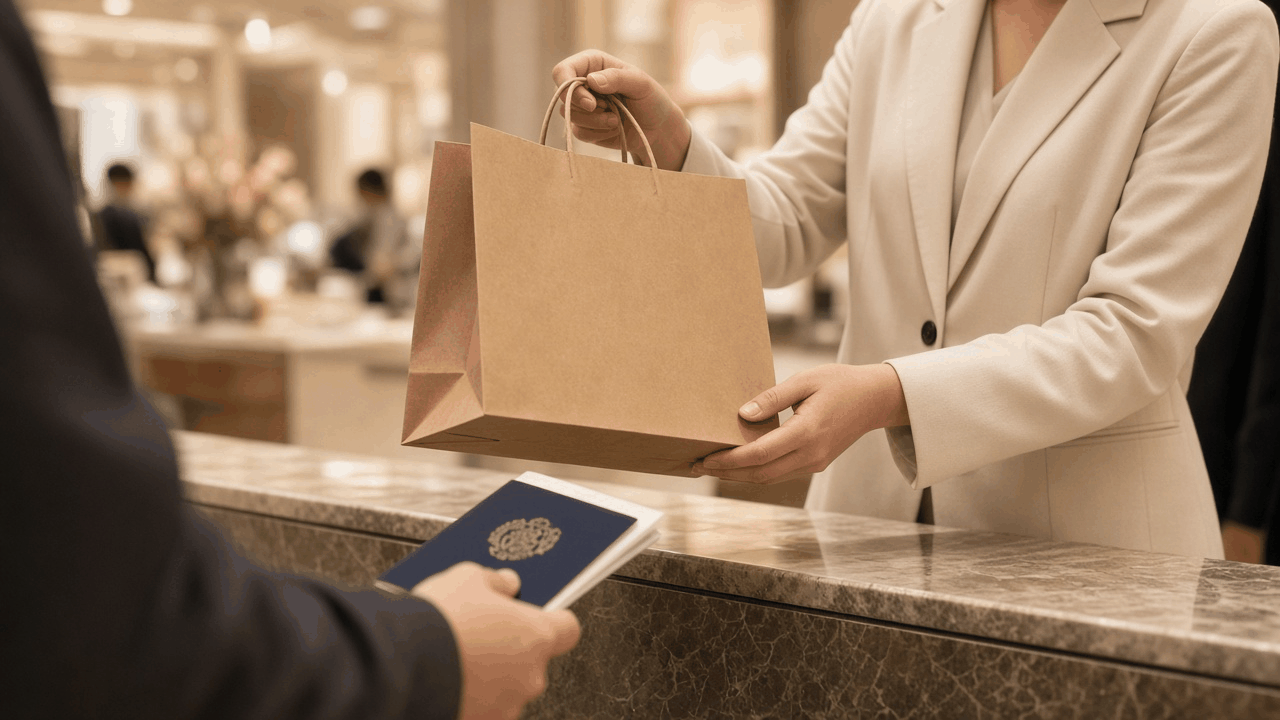
Nothing dramatic changes at the counter. A few things are worth doing every time.
-
1
Bring your passport
Shops still need to see it. Look for the official tax-free sign.
-
2
Spend at least ¥5,000 before tax, in one store, in one day
General goods and consumables now count together toward the ¥5,000.
-
3
Pay the full price
Yes, including tax. That is normal now.
-
4
Ask how the refund will reach you
Each shop, or the refund company it uses, decides this. Options can include bank transfer, credit card, an app, or cash at the airport after the check. Set it up before you leave the shop.
-
5
Keep each receipt's items together
Customs looks at each purchase as one unit. Treat each receipt as a set.
The Japan Tourism Agency says shops will explain the refund steps when you buy, and asks travellers to ask if they are not told (JTA traveller leaflet).
Buying something very expensive? If one item costs ¥1 million or more before tax, customs may ask to see a certificate of authenticity or a warranty with it. Keep those papers handy (JTA FAQ).
Want it shipped home? You can no longer post tax-free goods home yourself from a post office. That option ended on March 31, 2025. Some shops can still ship overseas for you directly from the store. Ask the shop.
Step by step at the airport
This is where the new system lives or dies. The key rule: do the customs check before you check in any bags.
At the airport: how to get your tax back
The customs check happens before you check your bags. Once a bag is checked, you cannot get it back to do the check.
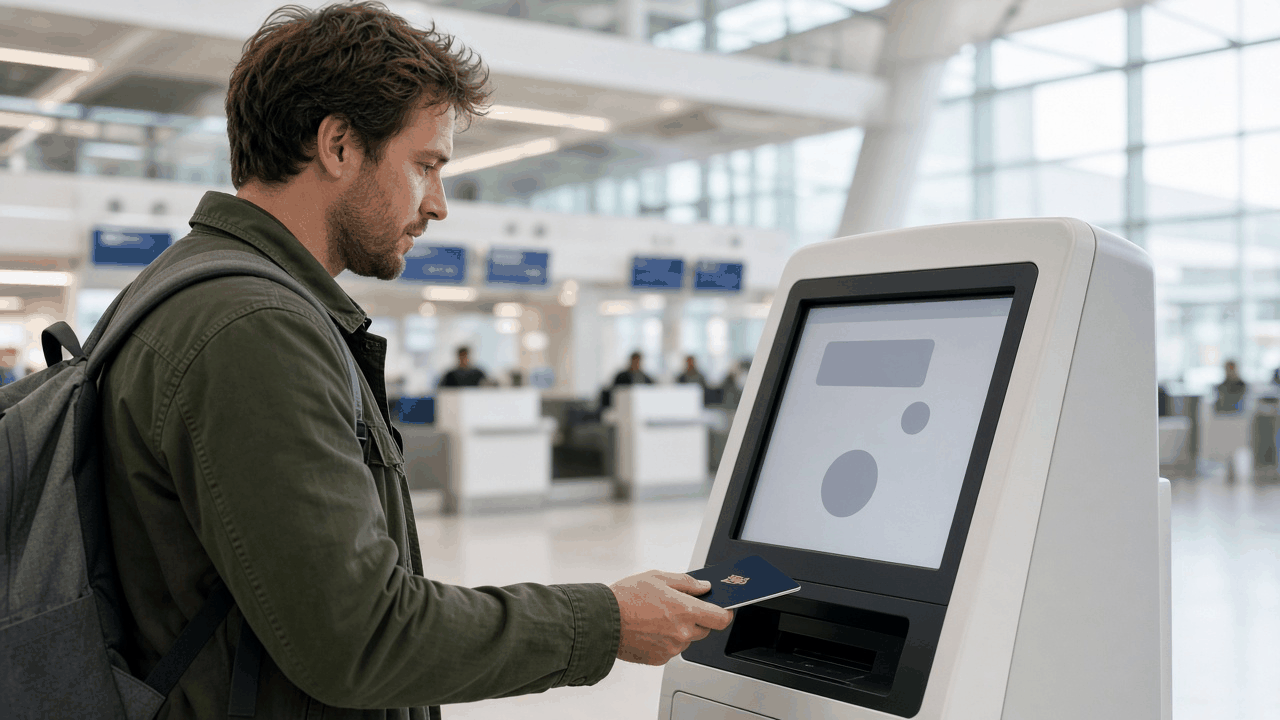
1. Arrive early, with all your tax-free goods
Bring them to the departure lobby with you, before you check any bags. Customs checks each receipt as a whole.
Ate or used something?
If any item on a receipt is gone (say, snacks you ate), skip the kiosk for that receipt and tell a customs officer at the counter. That receipt gets no refund.
2. Scan your passport
At a tax-free kiosk in the international departure lobby, before check-in. At Narita, Haneda, Kansai, Chubu, Fukuoka, New Chitose and Naha you can use Visit Japan Web on the dedicated Wi-Fi instead.
-
Green result
No inspection needed. The customs check is complete.
Red result
Take your goods to the customs inspection area nearby.
3. Check in and fly
Then leave Japan with the goods. The shop or its refund service pays back the tax.
The 90-day clock: it starts the day after you buy. Buy on 1 November 2026 and your customs check must happen by 30 January 2027.
Source: Japan Tourism Agency, traveller guide and FAQ on the Refund Method; National Tax Agency, Refund Method pamphlet and Q&A (overview), Q18–Q21.
- Arrive early. The kiosk itself takes only seconds, says the Japan Tourism Agency. But if you get a red result, you will need time for an inspection.
- Have all your tax-free goods with you in the international departure lobby. Not in a checked bag.
- Scan your passport at a tax-free kiosk. These are in the international departure lobby, before check-in.
- Read the result.
- Green: no inspection needed. You are done.
- Red: take your goods to the customs inspection area. An officer will check them against your purchase records.
- Check in and fly with your goods. The shop or its refund service then pays you back.
Skip the kiosk queue at big airports. At Narita, Haneda, Kansai, Chubu, Fukuoka, New Chitose and Naha, you can do the same step on your phone through Visit Japan Web. You need to be on the special Wi-Fi in the designated areas of the international departure lobby, before security. At Kansai, Osaka Customs even recommends the Wi-Fi method because the kiosks may be busy (Osaka Customs, Kansai Airport guide).
If your trip starts with a domestic flight
Flying, say, Sapporo to Haneda and then on to London? Do the customs check at the airport where you actually leave Japan, Haneda in this example (JTA).
There is a practical catch. The rules say your goods must be with you at the kiosk, and checked bags cannot be taken back. So if you check a bag at Sapporo all the way to London, anything tax-free inside it cannot be checked at Haneda. Plan ahead: keep tax-free purchases with you until you have done the check, and ask your airline how your bags will be handled.
Cruises
- A cruise that starts and ends outside Japan: do the procedure at the last Japanese port, on the electronic terminal, before you check your baggage.
- "Fly and cruise" (a cruise that leaves Japan, visits foreign ports and comes back, and then you fly home): do it all at the airport you fly out from. You do not need to do it when the ship briefly leaves Japan.
Common mistakes that cost you the refund
-
1
Checking your bag first
Once a bag is checked, you cannot get it back to do the tax-free check. No check, no refund.
-
2
Eating the snacks
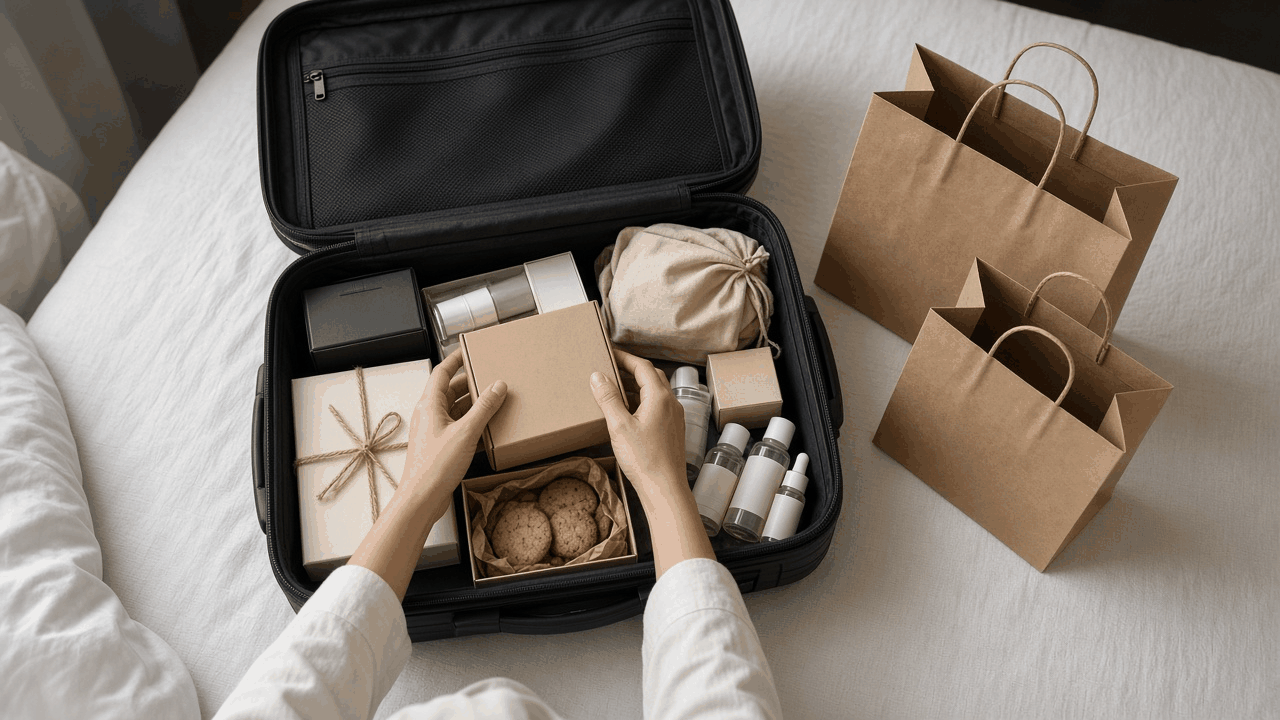
Consumables do not come in sealed bags any more, which makes them easy to open. But if you eat, drink or use any of them in Japan, the receipt they were on gets no refund. Tell a customs officer at the counter instead of using the kiosk for that receipt.
-
3
Splitting up a receipt
Gave one item as a gift in Japan, or packed it in a friend's case? If even one item from a receipt is not with you, none of that receipt is refunded.
-
4
Missing the 90 days
The clock starts the day after you buy. A November 1 purchase must be checked by January 30, 2027.
-
5
Arriving late
You must finish the check, including any inspection, before boarding. The Japan Tourism Agency warns that neither airlines nor customs will compensate you if you run out of time.
-
6
Buying more than you can carry
Purchases are limited to what you can personally carry out of Japan when you leave.
And one rule to respect after the check: take the goods out of Japan. If goods pass the customs check and you do not export them, the tax is collected from you and penalties can apply (National Tax Agency).
Who it affects
Visitors. This is mainly about you. Tax-free shopping is for people who are not residents of Japan. For foreign nationals, that generally means someone who has been in Japan less than six months since arriving, such as a tourist on a Temporary Visitor stay (JTA list of eligible purchasers).
Japanese citizens who live abroad. You can also shop tax-free if you have lived outside Japan for two years or more and have been back for less than six months. You need proof. A My Number Card that shows you moved abroad is now accepted, alongside the residence certificate or family-register attachment. These documents no longer need to show your registered domicile.
People who live in Japan. If you live here, tax-free shopping was never for you, and that has not changed. But you will notice the change if you take visiting family or friends shopping: tell them to expect to pay full price and to leave time at the airport.
Shops. Tax-free shops have had to update their systems and set up refunds. Shops that had not registered for electronic tax-free processing by October 31, 2026 lose their tax-free licence (National Tax Agency).
What stays the same
- Show your passport at the shop.
- The ¥5,000 minimum per store per day, now counted before tax and across all goods.
- The goods must leave Japan with you.
- Gold and platinum bullion are not eligible. Gold and platinum coins are also on the excluded list, along with items that carry no consumption tax.
- Posting goods home yourself does not count. That ended in March 2025.
Before you shop: a quick checklist
-
1
Passport
Carry it when you shop.
-
2
Ask about the refund
How will it be paid, and when? Register before you leave the shop.
-
3
Keep receipts and items together
One receipt is one set at customs.
-
4
Do not open the consumables
Save the snacks and skincare for home, or buy them without tax-free.
-
5
Count the days
Your flight must be within 90 days of the purchase.
-
6
Get to the airport early
Kiosk or Visit Japan Web first, then check-in.
Planning a trip this autumn? Our guide to everything that changed in Japan on October 1 covers the other new rules, from chu-hi tax to visa fees. And our look at Japan's hidden travel costs and taxes covers what else lands on a visitor's bill.
FAQ
When does Japan's tax-free shopping change?
On November 1, 2026. The new refund system applies to purchases made from that day. Purchases made up to October 31 stay under the old rules, even if you leave Japan later.
Do I still get the tax back?
Yes. You pay the tax-inclusive price at the shop, then get the consumption tax back after customs confirms at your departure airport or seaport that you are taking the goods out of Japan.
How do I get my refund?
It depends on the shop. The refund is paid by the shop or a refund service it uses. Methods can include bank transfer, credit card, an app, or cash at the airport after the customs check. Ask the shop when you buy.
Where do I do the customs check?
At your departure airport or seaport, in the international departure lobby, before you check in your bags. Scan your passport at a tax-free kiosk. At Narita, Haneda, Kansai, Chubu, Fukuoka, New Chitose and Naha you can also use Visit Japan Web on the dedicated Wi-Fi.
What do green and red mean at the kiosk?
Green means no inspection is needed, and your customs check is complete. Red means you must show your tax-free goods to customs at the nearby inspection area.
Can I eat the food I bought tax-free?
You can, but you will lose the refund on that receipt. If any item on a receipt has been eaten or used, none of that receipt is refunded. Tell a customs officer at the counter instead of using the kiosk.
I am flying domestic first, then international. Where do I do it?
At the airport where you leave Japan. Make sure your tax-free goods are with you there, before you check in, and not already checked through from your first flight.
Is there a minimum or maximum spend?
The minimum is ¥5,000 before tax, per store, per day. The old ¥500,000 limit on consumables is gone, but you can only buy what you can carry out of Japan yourself.
Bottom line
Tax-free shopping in Japan is not going away. It is moving from the till to the airport. The money is the same. The work is a little more: pay full price, keep each receipt's items together, do not open the snacks, and give yourself time at the airport to scan your passport before you check your bags.
From November 1, the most important thing at the airport is the order you do things in: tax-free kiosk first, check-in second.
Sources and further reading
- Japan Tourism Agency (MLIT) — Tax-free shopping: special page for travellers (Refund Method) (90 days; kiosk before check-in; green and red results; Visit Japan Web at seven airports; domestic connections; cruises; whole-receipt rule; consumed goods; ¥5,000 per store per day; special packaging abolished); FAQ for travellers (refund methods; ¥1 million items; checked bags cannot be retrieved; separate shipment ended March 31, 2025); Traveller leaflet; Changes to tax-free goods; Eligible purchasers
- National Tax Agency — Refund Method: overview pamphlet (April 2025: what changes; abolished ¥500,000 cap, special packaging and personal-use rule; excluded goods; penalties; shops' licences); Q&A, overview (Q8: applies by date of sale, no overlap; Q18: kiosk steps; Q19: 90 days from the day after purchase; Q20: one receipt is one unit; Q21: consumed food; Q23: shipping home; Q29: refund methods); Refund Method information page; English summary; Consumption tax rates (10% standard, 8% reduced)
- Japan Customs (Osaka Customs) — Guide to the tax refund procedure at Kansai International Airport (kiosk or Visit Japan Web Wi-Fi; green and red status; complete before checking baggage)
- Japan National Tourism Organization (JNTO) — Everything you need to know: Japan's new tax-free shopping system (July 20, 2026)
- The Japanist — Everything that changed in Japan on October 1, 2026; Japan's hidden travel costs and taxes
Method note: This guide describes the rules for travellers as published by the Japan Tourism Agency and the National Tax Agency. How and when your refund is paid, and through which service, is decided by each shop, so check at the counter. The domestic-connection packing tip is our practical reading of the official rule that all goods must be with you at the kiosk and checked bags cannot be retrieved.
Continue Reading

Japan 2026: New Rules & Changes Every Tourist Must Know
Major changes are coming for Japan travelers in 2026. From tripled departure taxes to a completely new tax-free shopping system, here's everything you need to know before booking your trip.
Japan’s Konbini, Explained: What 56,000 Convenience Stores Actually Do—and How to Use One Like a Local
Japan has 56,189 convenience stores (JFA, August 2026) handling over a billion bill payments a year. Why konbini became national infrastructure, the three chains that run 94% of them, what you can do there—cash, taxes, pension, parcels, tickets, printing—the etiquette, and why the network has stopped growing.
Silver Week in Japan: What It Is, Why 2026 Is Five Days, and What People Actually Do
Japan’s third full five-day Silver Week since 2009 and 2015 runs 19–23 September 2026: Respect for the Aged Day, a Citizens’ Holiday sandwich, and the Autumnal Equinox—what it is, what families do, and how travellers should handle trains, Tokyo, and Nagoya.

If you're looking for nicely crafted Japan tours, check out: Arigato Travel's experiences.Partner link